

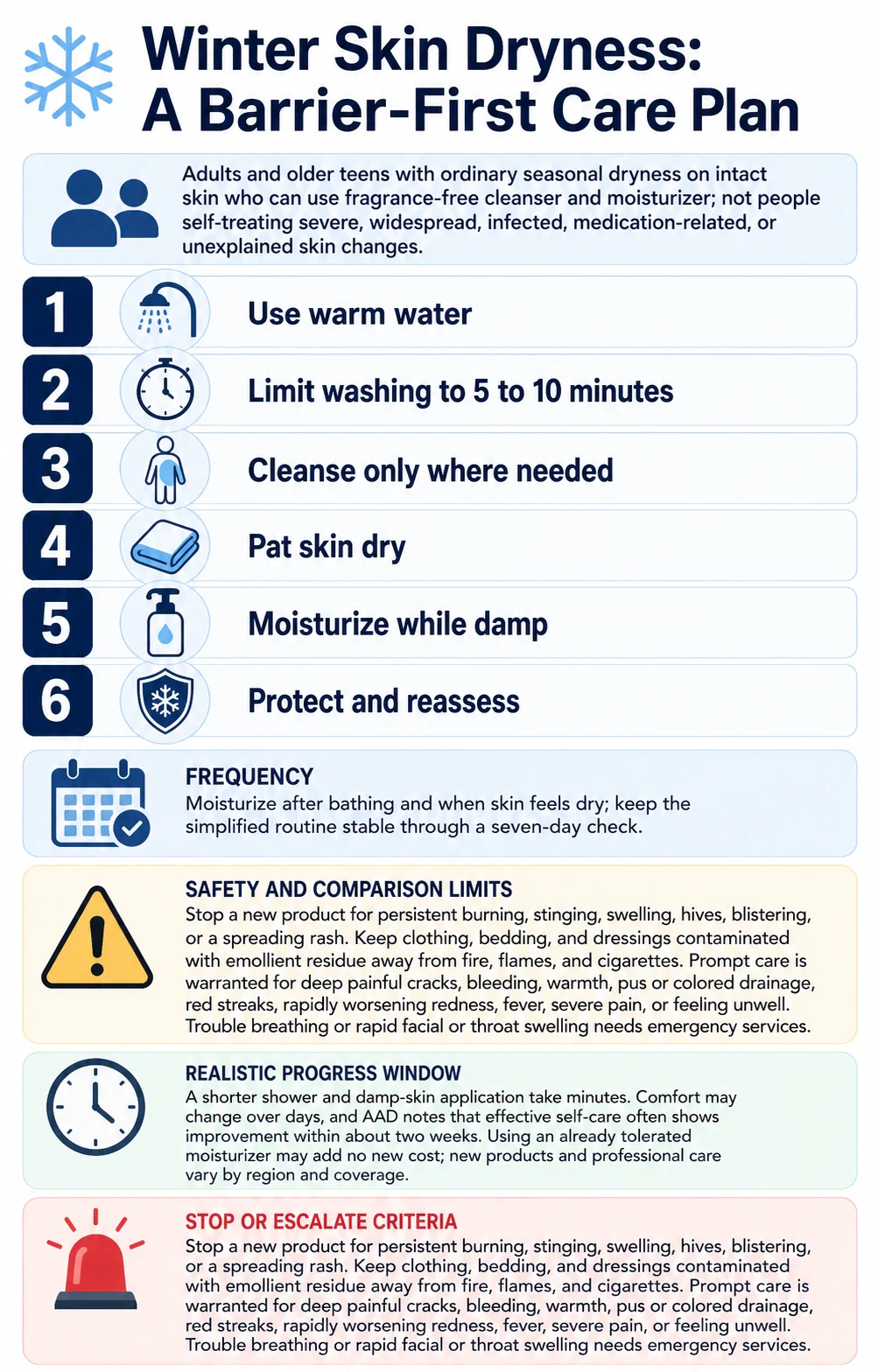
Winter dryness is usually a signal to simplify, not an invitation to build a shelf of stronger products. The practical goal is comfortable, intact skin through a lower-humidity season. It is not perfectly smooth texture under close light.
This guide is general education, not diagnosis or individualized treatment. It does not prescribe a medicine or identify eczema, allergy, infection, psoriasis, or an internal medical cause from symptoms or photographs.
Start with the seasonal baseline
Skin comfort changes with body site, age, baseline skin condition, outdoor air, indoor heating, bathing, hand washing, clothing, work exposure, and product tolerance. Shins may flake while the face stays oily. Hands exposed to water may crack before covered skin changes. Normal texture is not a flaw to erase.
This plan is for adults and older teens with ordinary seasonal dryness on intact skin. Severe or widespread changes, open or infected skin, a new medication-linked rash, or symptoms that interfere with sleep and daily function need a different level of review.
Before changing the routine, choose one or two areas and note tightness, itch, flakes, cracks, and discomfort after washing. Keep the lighting and timing consistent if you use a photo. A wet surface or fresh moisturizer can temporarily hide flakes, while directional light and sharpening can make them look worse.
Why winter can change the skin
AAD guidance explains that skin becomes dry when it loses water too quickly. Cold, dry outdoor conditions, indoor heating, long hot showers, and harsh cleansing products can all contribute. Age, medicines, wet work, and skin or systemic conditions can also matter.
That means a winter pattern is useful context, not a diagnosis. It should not be used to explain away persistent itch, a recurrent rash, pain, bleeding, or a widespread change.
Use the reversible-first order
Start with changes that cost little and are easy to reverse:
- Limit a bath or shower to about five to ten minutes.
- Use warm rather than hot water.
- Use a gentle fragrance-free cleanser only where needed instead of building a thick lather everywhere.
- Pat rather than rub the skin dry.
- Apply a tolerated moisturizer while the skin is still damp.
- Reapply to dry areas when needed and protect exposed skin from cold dry air and irritating fabric.
Keep the rest of the routine stable while testing those changes. Adding a scrub, acid, retinoid, fragranced oil, and new moisturizer together makes the result hard to interpret and can increase irritation.
Choose texture by need and tolerance
AAD guidance generally favors a cream or ointment over a lotion for very dry skin because thicker textures hold more moisture. That is a category tradeoff, not a universal best-product claim. A heavy ointment may feel impractical on a hairy or acne-prone area, while a lighter tolerated cream may be easier to maintain.
“Fragrance-free” and “unscented” do not necessarily mean the same thing. AAD notes that unscented products can contain ingredients that mask odor. Any new product can still sting or cause a reaction, so change one item at a time and stop a new product if it creates persistent burning, swelling, hives, or a spreading rash.
Do not treat price, popularity, an ingredient trend, or “natural” language as evidence that a product is safer. The useful choice is one you tolerate, can apply consistently, and can identify if a reaction occurs.
Emollients also have a practical fire boundary. NHS guidance warns that clothing, bedding, and dressings carrying residue from paraffin-based or paraffin-free emollients can catch fire more easily. Keep contaminated fabric away from fire, flames, and cigarettes; washing may reduce buildup but may not remove it completely.
Protect the barrier outside the bathroom
Cold-weather protection is mostly ordinary. Gloves can reduce exposure to cold dry air, and task-appropriate gloves can reduce repeated wet or chemical work. A smooth layer under rough wool or synthetic fabric may reduce rubbing on sensitive skin.
A humidifier may help when indoor air is dry, but it adds maintenance. Follow the device instructions and clean it regularly to prevent mold. It is optional, not a substitute for treating a persistent skin condition.
Sun protection still matters in winter on exposed skin. Follow the actual sunscreen label and combine it with shade and protective clothing when appropriate. Sunscreen is not a treatment for winter dryness.
Judge progress without overcorrecting
A shorter wash and damp-skin moisturizer take minutes. Comfort may change over several days. AAD’s dry-skin overview says effective self-care often shows improvement within about two weeks, but that is context rather than a promised deadline.
Track less tightness, itch, flaking, cracking, and post-wash discomfort. Intact, comfortable skin is a better signal than a polished photo. If the routine is helping, maintain the simplest version. More product, more frequent washing, or more exfoliation is not automatically better.
If dryness is unchanged or worse despite consistent basic care, do not keep escalating cosmetic products. A dermatologist or primary-care clinician can assess whether eczema, psoriasis, an exposure, a medicine, or another condition is contributing.
Stop and seek care when needed
Stop a new product for persistent burning, stinging, swelling, hives, blistering, or a spreading rash. Prompt care is appropriate for deep painful cracks, bleeding, warmth, pus or colored drainage, red streaks, rapidly worsening redness, fever, severe pain, or feeling unwell.
Trouble breathing, faintness, or rapid swelling of the face or throat requires emergency services. Recurrent or widespread rash, severe itch, medication-linked symptoms, or symptoms that disturb sleep also deserve qualified assessment rather than a stronger home experiment.
For older teens, keep the plan conservative and non-procedural. A parent or guardian and qualified clinician should be involved when symptoms are persistent, severe, or treatment decisions go beyond ordinary moisturizer and barrier protection.
Visual and commercial transparency
Directional winter light, water, fresh moisturizer, close crops, sharpening, filters, and retouching can exaggerate or conceal flakes and cracks. Images cannot diagnose eczema, psoriasis, allergy, infection, or an internal cause.
This article has no affiliate links, sponsor, free-product relationship, brand ranking, retailer recommendation, or paid placement. Bathing changes may cost nothing, and an already tolerated moisturizer can be reused. New products and professional care vary by region and coverage.

Practical summary
- Keep bathing short and warm, not hot; 2. cleanse gently only where needed; 3. pat dry; 4. moisturize while skin is damp; 5. protect from cold, wet work, and rough fabric; 6. stop and escalate warning signs
Frequency: Apply a tolerated moisturizer after bathing and when skin feels dry, while keeping the rest of the routine stable enough to judge the result.
The durable result is not perfect winter skin. It is a routine that reduces discomfort, preserves intact skin, and remains simple enough to maintain.
Decision checkpoint
After seven consistent days, compare the same area in the same ordinary light and ask: Is the skin more comfortable after washing? Are flakes or cracks decreasing without new burning or rash? Is the routine simple enough to continue without adding products? If comfort is not improving, symptoms are spreading, or the routine is creating irritation, stop the newest change and arrange qualified review instead of escalating.

Sources
- S01: Dermatologists’ top tips for relieving dry skin - American Academy of Dermatology; accessed 2026-08-09.
- S02: Dry skin: Overview - American Academy of Dermatology; accessed 2026-08-09.
- S03: How to pick the right moisturizer for your skin - American Academy of Dermatology; accessed 2026-08-09.
- S04: Dry skin: Who gets and causes - American Academy of Dermatology; accessed 2026-08-09.
- S05: Emollients - NHS; accessed 2026-08-09.
FAQ
Common questions
How quickly should winter dryness improve?
Comfort may change over days, and effective self-care often shows improvement within about two weeks, but that is context rather than a guaranteed deadline.
What safety issue is easy to miss with emollients?
Keep clothing, bedding, and dressings contaminated with emollient residue away from fire, flames, and cigarettes because the fabric can burn more easily.
Topic hubs
Tags


