
The outfit already works. Then you notice a little pin in a drawer: a flower, a shape, an old badge with a story. It could change the look of the jacket you were about to wear. It could also pull at the fabric, catch your bag strap or turn a comfortable outfit into something you keep adjusting.
That is the useful way into Brooched, the brooch-focused name in Pinterest’s forecast for 2026. Start with an accessory you already have permission to use and an outfit you trust. Check the piece, the garment and the day before deciding where it belongs. A trend name can suggest an idea; it cannot tell you that an attachment is suitable or that you need to buy one.
The three checks below are an original styling exercise, not a tested formula: what the item needs, where you want the detail, and what your day requires. You can finish with one pin, a different optional detail or no accessory at all. None is a rating of your appearance.
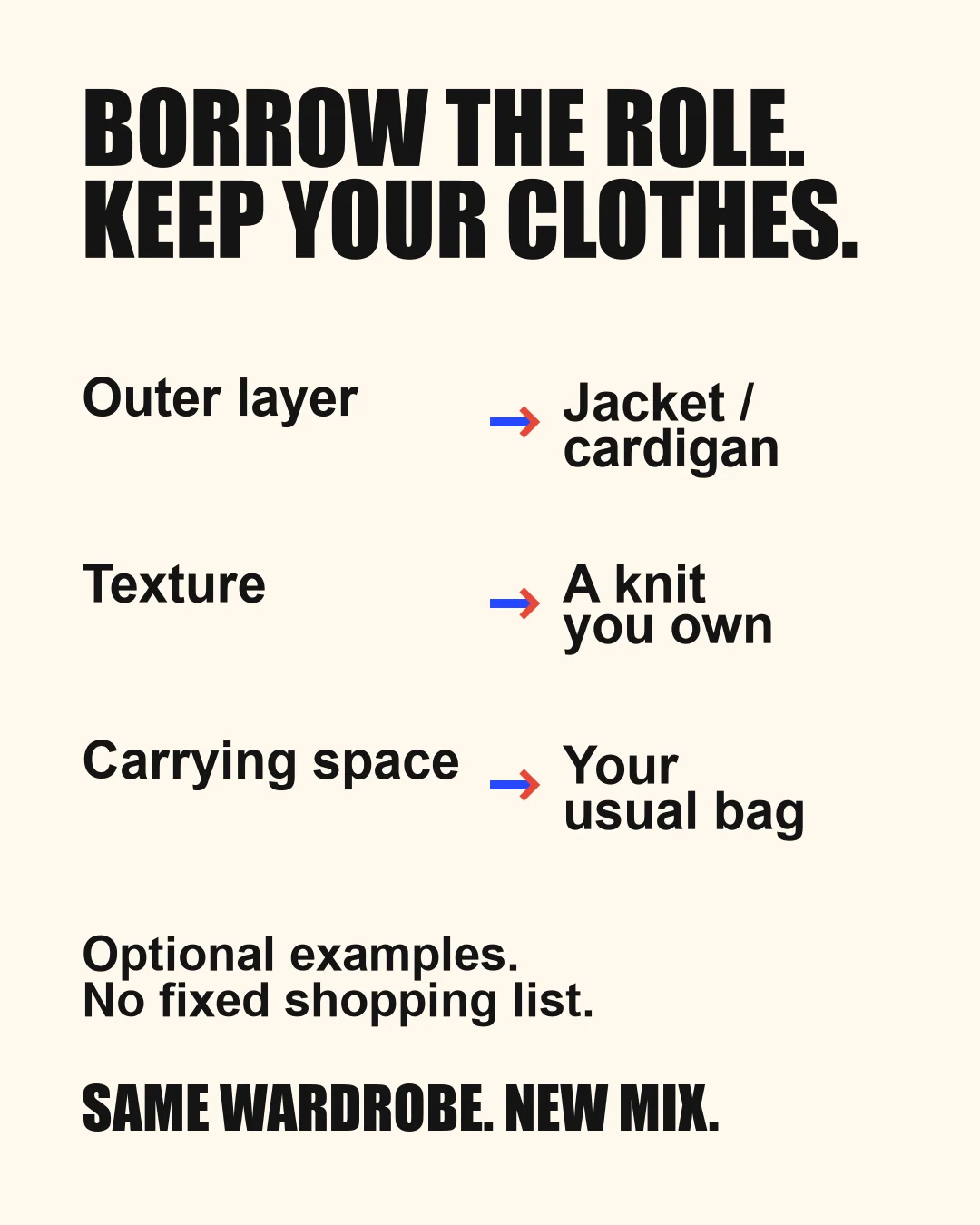
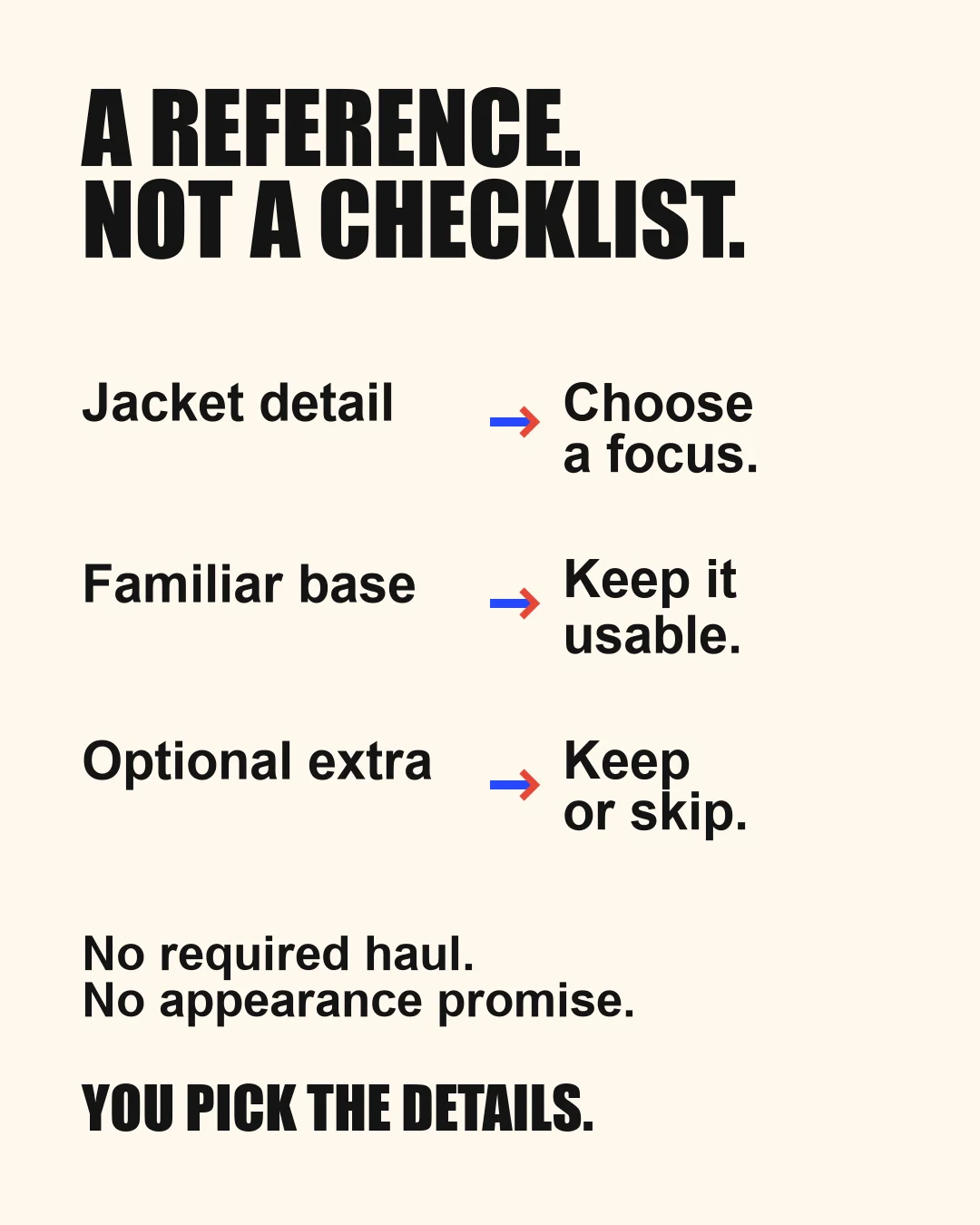
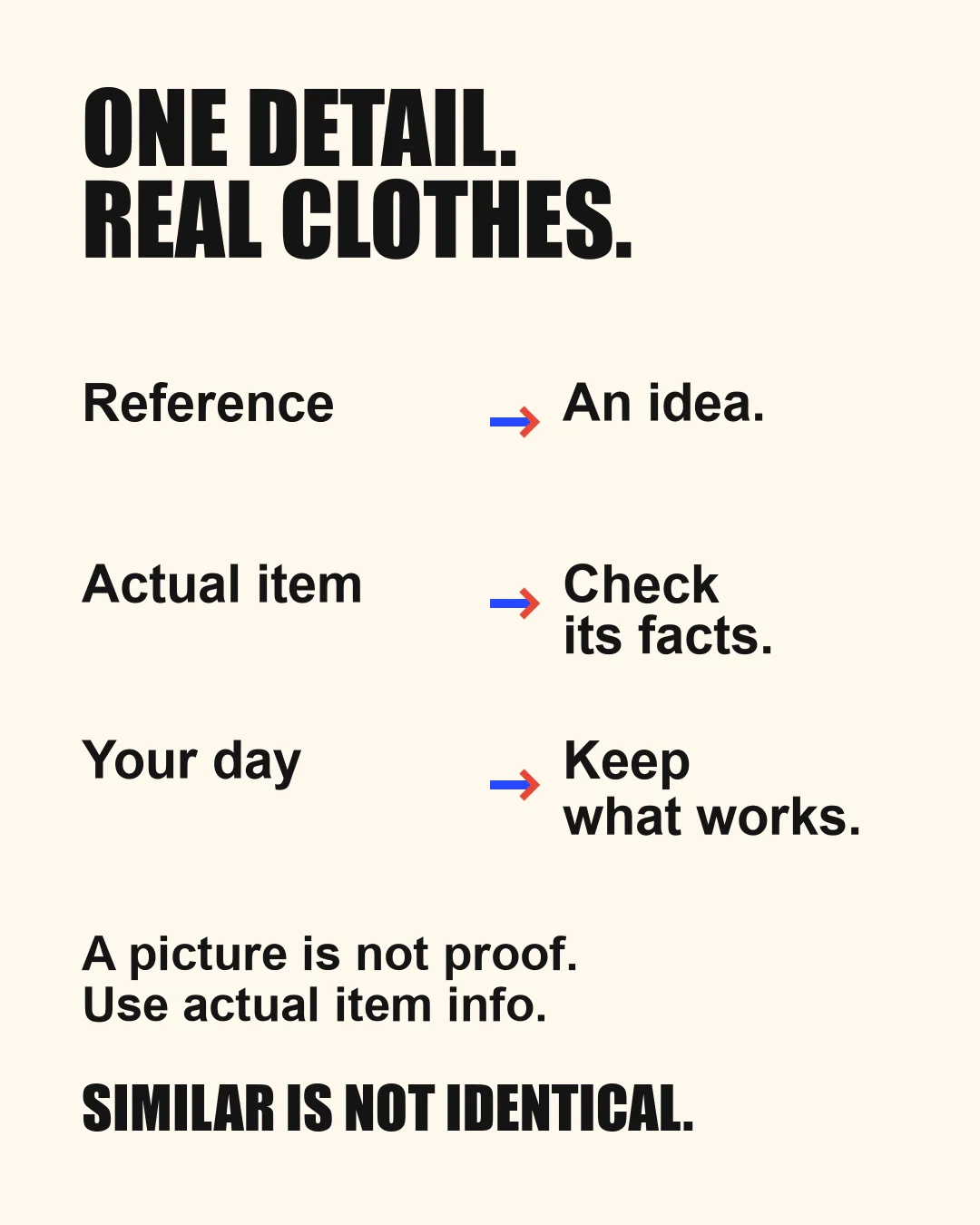
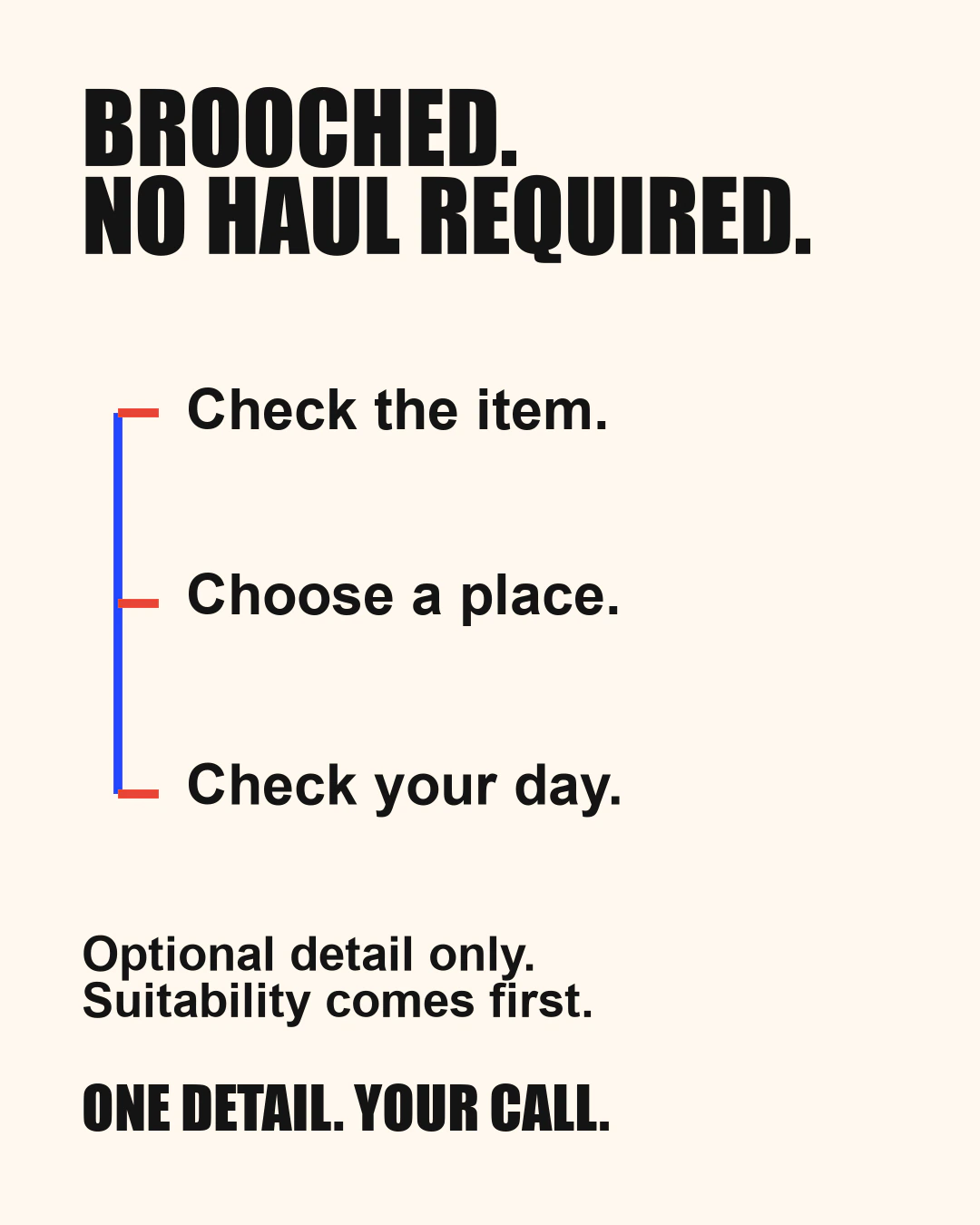
Graphic context — 01-article-hero: This original editorial sequence introduces three checks for an optional owned brooch: item and garment suitability, placement preference and actual day. Pinterest supplies attributed2026forecast vocabulary, not current measured demand, an attachment certificate or a purchase requirement.
Text equivalent: BROOCHED. NO HAUL REQUIRED. Check the item. Choose a place. Check your day. Optional detail only. Suitability comes first. ONE DETAIL. YOUR CALL. Connections organise an optional decision, not a causal effect, measured improvement or style ranking. Check actual mechanism, garment instructions, permission, material/condition and day. Observation beside clothing precedes puncturing; no guaranteed reversible holes or suitable owned inventory. Uncertain or unsuitable means leave off. No body/gender/status prescription or product is endorsed. Five complete primary publisher documents, not independent outfit studies. Pinterest historicalplatformforecast; GeorgJensen commercialissuer care context; V&A updatedmuseumhistory; FTC cleaninginformation explanation; Cohen/Harper’sMarch2026personalstylingeditorial withcommissionlinks. No currentgrowth, demographic/bodyranking, price/product, cleaningrecipe/garmentreshaping, health or observedoutcome adopted.
Who this is for
Use this guide if you are curious about a brooch, badge or decorative pin and want a practical way to try its effect. You do not need a collection, a designer piece, a particular gender presentation or a recognisably vintage outfit. You also do not need to own an heirloom. A sentimental piece may be better kept safely stored than used for an experiment.
Start with clothing that already lets you sit, move, travel and do the tasks you need. Weather protection, uniforms, faith requirements, access needs, sensory comfort and workplace rules take priority. A style reference does not override them. If optional jewellery is unsuitable for your setting, leave it off.
This is a clothing and accessory guide. It does not assess your body, diagnose a condition or prescribe a treatment. It also does not certify a pin, a fabric or an attachment method. For an unfamiliar mechanism, a valuable piece or uncertain garment construction, ask the maker or an appropriate jewellery or garment professional before experimenting.
Before you start
Put the trend in proportion
Pinterest’s December 2025 forecast names Brooched and describes vintage pins, clip-on details and heirloom brooches. That supplies the vocabulary for this guide. It is a commercial platform forecast, not a fresh measurement of October 2026 demand, a universal dress rule or proof of a social benefit. No search-growth percentage is used here.
Brooches also have a much longer history than a feed label. The V&A’s history of jewellery, updated March 2, 2026, includes changing materials, forms and examples of brooch design. The museum provides historical context. Its collection is not a set of instructions for attaching an old object to your clothes, and historical status or gender conventions need not become your rules.
Authored fashion writing can offer another sort of inspiration. In a March 2026 personal styling article, Jaclyn Alexandra Cohen discusses pins on existing clothing. Treat that as an editor’s ideas, with the page’s shopping and commission interests disclosed. This guide does not adopt its products, prices, body-accentuation suggestions or garment-reshaping techniques.
Set out the actual items
Look at the piece on a clear, stable surface before bringing it near clothing. Read any instructions you have. Identify how it opens and closes without forcing it. If something is loose, bent, incomplete or unfamiliar, stop there. An image of a similar-looking pin does not establish how yours works.
Georg Jensen’s issuer care guide advises checking settings, clasps and joins before wear and considering activities that could cause impacts. Those are useful checks to bring to your own item’s instructions. The page concerns that maker’s jewellery; it does not inspect your accessory or guarantee that every clasp will hold.
Then inspect the proposed garment. Its fabric, lining, construction and condition matter more than the label “blazer,” “knit” or “scarf.” Do not assume that a thick-looking material will support a heavy piece or that a small pin cannot leave a mark. If making holes, compressing the material or carrying the weight is unacceptable, keep the accessory off it.
Actions in order
1. Check the item and the garment together
Begin with a visual arrangement on a flat surface, with the pin closed and contained as its instructions require. You can compare the idea beside the garment without attaching it. This is an observation stage, not permission to pierce the fabric. Keep any sharp point away from skin and from other people handling the clothes.
Ask what you know about this exact combination. Does the maker permit the intended use? Is the closure complete and working? Could the proposed position interfere with the garment’s fastening or an essential feature? Is this a piece whose loss or damage you could accept? An unanswered question can be a reason to choose something else.
Keep decoration separate from essential fastening. This exercise does not use a brooch to replace a broken closure, hold a load or secure clothing needed for coverage, access or protection. Removing the optional detail must leave the outfit functional. If that is uncertain, keep the original fastening and leave the accessory off.
Care information has a particular scope. The FTC’s Apparel and Labeling overview explains that care instructions tell consumers how to clean products. Read the actual instructions for your garment and accessory separately. A cleaning label does not certify that a garment tolerates pin holes, pressure or accessory weight. This guide gives no cleaning recipe or legal interpretation.
Do not improvise reinforcement, glue, magnets, stitching or repairs to make an uncertain pairing work. Each changes the materials or the attachment problem and needs its own appropriate instructions. For a delicate, borrowed or irreplaceable garment, choosing a different detail can be the more practical answer. You do not owe the trend a successful pin placement.
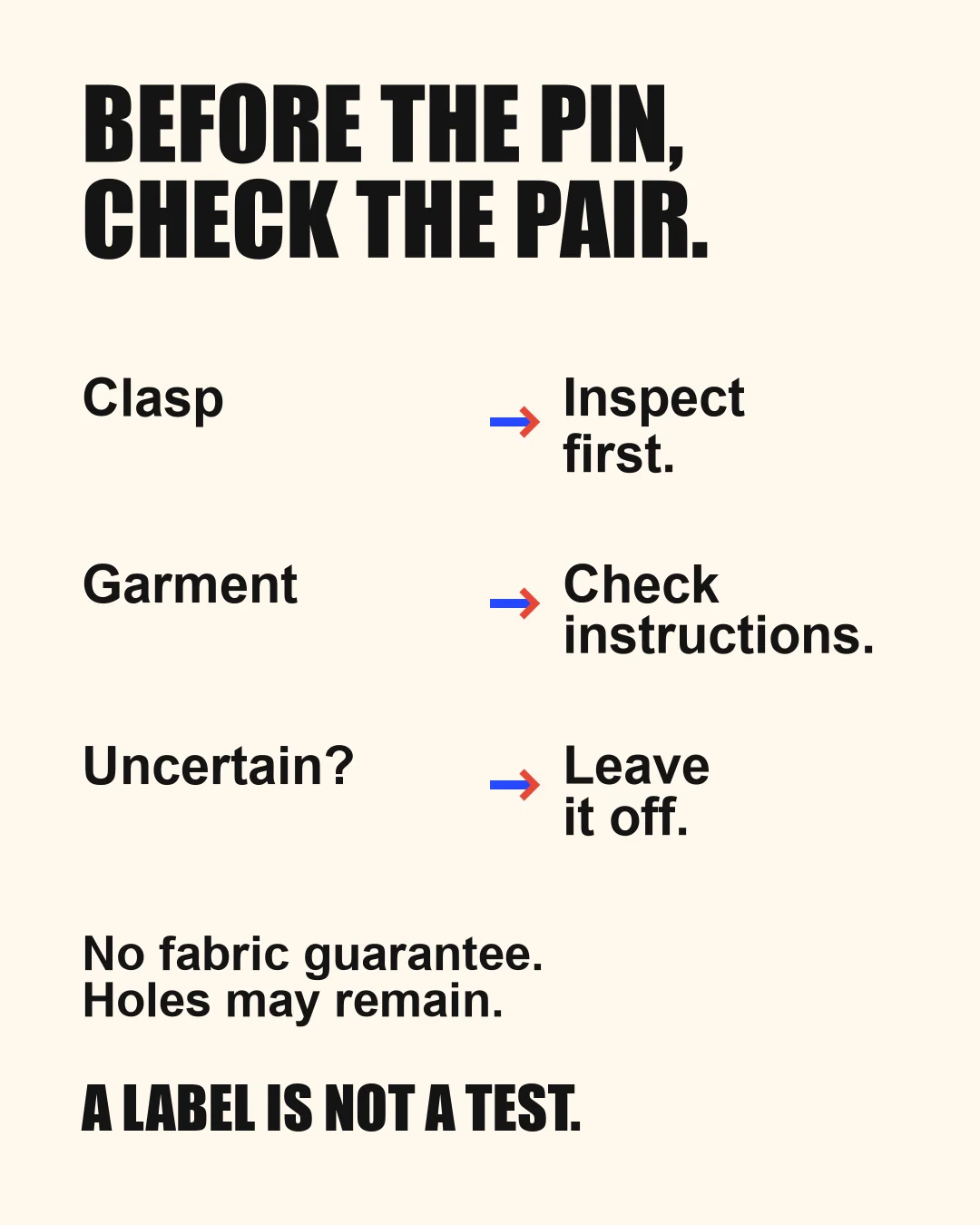
Graphic context — 02-feature-explainer: Original paired checks separate accessory condition, garment information and uncertainty. Georg Jensen provides bounded issuer inspection context; FTC explains cleaning information. Neither supplies a test or approval of this reader’s accessory and garment combination.
Text equivalent: BEFORE THE PIN, CHECK THE PAIR. Clasp Inspect first. Garment Check instructions. Uncertain? Leave it off. No fabric guarantee. Holes may remain. A LABEL IS NOT A TEST. Arrows express decision checks, not fabric-strength equivalence, a tested attachment or a promise of no marks. Cleaning instructions do not certify pin holes/pressure/weight. If actual instructions/suitability or acceptability of loss/marks remain unknown, leave the optional piece off and ask the maker/appropriate jewellery or garment professional. No repair/glue/magnet/stitching workaround or cleaning recipe. Five complete primary publisher documents, not independent outfit studies. Pinterest historicalplatformforecast; GeorgJensen commercialissuer care context; V&A updatedmuseumhistory; FTC cleaninginformation explanation; Cohen/Harper’sMarch2026personalstylingeditorial withcommissionlinks. No currentgrowth, demographic/bodyranking, price/product, cleaningrecipe/garmentreshaping, health or observedoutcome adopted.
2. Choose what the detail is doing
Once the actual pairing is suitable, decide which visual job interests you. Perhaps you want a quiet point on a jacket, a small echo of a colour already in the outfit, or an object that has personal meaning. These are preferences. There is no correct number of compliments, ideal body proportion or compulsory focal point to achieve.
Start with one optional change so you can tell whether you like that change. “One” is a comparison convenience here, not a scientific styling ratio or a ban on wearing several pieces. Keep the rest of your familiar outfit stable while you consider the result. You can add complexity another time if you want it.
Compare the closed piece beside different suitable locations before attaching it. A lapel, another permitted area of a jacket or a separate accessory can offer different visual effects, but none is automatically an appropriate attachment surface. Avoid a position simply because it appears in a photograph. Check the actual object and material each time.
You might decide that the pin is too busy beside a patterned shirt, or that it is the part you enjoy most. You might prefer it against a plain layer. Either reaction is enough. Describe the combination rather than scoring yourself: “The shape stands out here,” “I keep noticing the metal,” or “I prefer the outfit without it.”
3. Check the real day
A standing mirror view only shows part of an outfit’s use. Consider the layers, bags, seating and tasks you expect. Would a strap cross the proposed position? Will you put a coat over it? Does the detail obstruct a pocket you need? If it is unsuitable, remove it or revise the plan before leaving.
Only try a wearable arrangement when the item and garment are suitable and you can follow their instructions. Do not deliberately pull against a pin or stress the fabric to test its strength. Stop if the piece shifts, drags, catches, feels uncomfortable or requires repeated adjustment. A brief successful check is not a guarantee for the rest of the day.
Think about the setting too. Work with machinery, sport, care tasks or another activity may make loose or pointed accessories inappropriate. Follow the relevant rules and preserve protective equipment. Choosing not to wear the pin for that part of your day is a complete styling decision, not a failure to carry the look.
For younger readers, an appropriate responsible adult should handle unfamiliar sharp mechanisms, repairs and valuable pieces. Keep small or pointed accessories safely away from anyone who could swallow or mishandle them. There is no need to practise pinning on the body or turn this into a craft project to participate.
Graphic context — 03-routine-infographic: This original sequence begins with a closed contained piece beside clothing, before any puncture. Attachment remains conditional on actual suitability and instructions. Decorative styling never replaces an essential fastening, load-bearing closure or required protection.
Text equivalent: START WITH A CLOSED PIN. Observe beside it. Follow instructions. Check the real day. Remove or skip. Decoration only. Keep needed fastenings. NO NEED TO FORCE IT. The rail organises observation, item-specific instructions and context, not a manual for piercing fabric or a certified wear test. Removing an optional detail must leave the outfit functional for coverage, access and protection. Do not stress-test fabric, force mechanisms or accept catching/dragging/discomfort. Younger readers need appropriate responsibleadult help with unfamiliar sharp/valuable pieces; no clinical treatment or bodychange. Five complete primary publisher documents, not independent outfit studies. Pinterest historicalplatformforecast; GeorgJensen commercialissuer care context; V&A updatedmuseumhistory; FTC cleaninginformation explanation; Cohen/Harper’sMarch2026personalstylingeditorial withcommissionlinks. No currentgrowth, demographic/bodyranking, price/product, cleaningrecipe/garmentreshaping, health or observedoutcome adopted.
Try three different day decisions
These are invented examples, not observed wardrobes, tested attachment methods or a ranked progression. Real materials, instructions, weather and activities govern your choice.
| Situation | Optional styling decision | What can change the decision |
|---|---|---|
| A familiar jacket for a seated social visit | Consider one owned pin at a permitted location, keeping the rest of the outfit familiar | Unknown construction, a loose clasp or an unacceptable risk of marks means leave it off |
| A day with a shoulder bag and extra outerwear | Compare the idea while accounting for straps and layers; choose another detail if they conflict | A strap crossing the piece, catching or repeated adjustment means revise or remove |
| A practical work or active day | Keep the trusted outfit and skip the pin where the setting makes it unsuitable | Uniform rules, protection and task requirements take priority over the optional decoration |
The first example is not more stylish than the last. The purpose of the table is to show how the same interest can lead to different decisions. You do not need separate purchases for separate days, and an unused item need not become a problem to solve by buying more clothes.
Graphic context — 04-practical-support: These three invented day decisions are alternatives, not tested wardrobes or ranked levels of style. Actual item, material, instructions, straps, outerwear and task rules can lead to keeping, revising, removing or skipping the optional accessory.
Text equivalent: SAME PIN. DIFFERENT DAY. Social visit Check suitability. Straps + layers Avoid conflict. Work + activity Keep task rules. Illustrative options. Actual needs decide. YOUR DAY COMES FIRST. Separate arrows do not imply causal outcomes, equal fabric support or a universally suitable place. A social visit still needs actual item/garment suitability. A crossing bagstrap or addedlayer can make a proposed arrangement unsuitable; active/work settings preserve uniform/equipment/protection rules. A bare outfit is a valid result. No fixedcost, trialduration, socialeffect, guaranteedsecurity/saving or compulsorypurchase. Five complete primary publisher documents, not independent outfit studies. Pinterest historicalplatformforecast; GeorgJensen commercialissuer care context; V&A updatedmuseumhistory; FTC cleaninginformation explanation; Cohen/Harper’sMarch2026personalstylingeditorial withcommissionlinks. No currentgrowth, demographic/bodyranking, price/product, cleaningrecipe/garmentreshaping, health or observedoutcome adopted.
Myth or Real?

Claim
Social paraphrase: A garment cleaning care label, by itself, establishes that a brooch and garment pairing is suitable.
Verdict
FALSE
Facts
Care instructions concern cleaning. Suitability depends on the actual accessory, garment, instructions and intended use; ask an appropriate maker or professional when uncertain.
FALSE rejects a cleaning label as sufficient proof, not every pairing or care instructions. No fabric or attachment is certified.
An archived social question asks whether a brooch suits a cloak and worries about possible marks. It discovers uncertainty, not a verified fabric result or current demand. This card transparently reframes that concern as an editorial care-label sufficiency claim; it is not a quotation or a belief attributed to the questioner. FTC’s original overview describes care instructions as cleaning information, not a brooch-load or puncture certification. Georg Jensen’s issuer page advises checking settings, clasps and joins before wear and considering activities and impacts. That is commercial issuer guidance, not approval of the reader’s pairing. These scopes support rejecting a cleaning label alone as sufficient proof of brooch suitability. FALSE does not mean every pairing is unsuitable or that care instructions should be ignored. Read actual item instructions, consider permission and acceptable marks/loss, and ask the maker or appropriate jewellery/garment professional when uncertain. Observe with a closed contained piece beside clothing before any puncture. No insertion, reinforcement, sewing, glue, magnet or repair method is given. Decoration cannot replace essential fastening, load-bearing function, coverage, access or protection; removing it must leave the outfit functional. Stop for uncertain mechanisms, catching, dragging or discomfort. Forum technical comments, products and remedies are excluded. No material-strength test, body ranking, clinical finding, growth, guaranteed security/saving, compulsory purchase or professional approval is asserted.
Takeaway
Observe before puncturing. If uncertain, leave off and ask; keep essential fastenings, access and protection.
Sources
Claim discussion: Archived original question about brooch and garment suitability.
Evidence: Apparel and Labeling; Product Care.
Checked 2026-10-26. Scope: Optional nonclinical accessory/clothingdecision. Originalsocialquestion discovers fabric/pin uncertainty; editorial care-label sufficiency claim is not a quote or attributed belief. No attachmenttutorial, universally safefabric, damageprevalence/currenttrend, clinicaleffect, legalrule or professionalapproval.
Costs, risks and stop criteria
Keep the experiment smaller than the commitment
Looking at an owned piece with an owned outfit can require no new purchase. That does not make its earlier purchase, care, storage or your time free. It also does not establish an environmental saving or a cash saving. There is no prescribed trial length, accessory price or minimum collection in this exercise.
If you do not have a suitable piece, you can stop with the idea. Borrowing is optional and needs permission, clear care expectations and an acceptable risk to both the object and the garment. A borrowed heirloom is not a free substitute if the owner would not want it used that way. Do not use sentiment as pressure to wear something unsuitable.
If you later consider a purchase, define a practical reason and check the actual total cost, materials, closure, instructions and terms. This guide recommends no retailer, membership or product. A trend forecast does not establish that a particular offer is good value, that an object is authentic or that a listed material suits every wearer.
Remove the detail when it stops working
Stop for a questionable closure, exposed sharp point, loose setting, dragging material, catching, discomfort or interference with an essential task. Do not keep adjusting a failing arrangement while wearing it. Follow the item’s instructions for removing and securing it; get appropriate help if you cannot do so safely.
Do not treat the absence of an immediate visible mark as a promise that the material is unharmed. Do not repair a treasured accessory or garment with an internet shortcut. A maker or appropriate professional may be able to advise, but no service, successful repair or price is guaranteed here.
Remove jewellery when its own instructions or the activity call for it. Keep the piece secure during garment care. Georg Jensen’s guide also recommends separate storage to reduce contact between jewellery items. Apply your own piece’s material-specific care instructions rather than assuming a method for one metal, stone, finish or fastening suits another.
How to assess the result
Ask whether you liked the combination and whether it remained practical for the actual occasion. Could you use the clothing and carry what you needed without fuss? Did you want to wear the detail again? Would another location, another suitable item or the original outfit make more sense? You can answer privately without posting a photograph.
If you use photographs for your own comparison, keep light, camera distance and clothing arrangement reasonably consistent. Lens, pose, reflections, filters and editing change how size, texture and colour appear. A picture cannot assess the closure, certify fabric strength or diagnose anything about your body. Avoid turning the exercise into repeated appearance scoring.
Make a short practical note if it helps: which items you used, which setting worked and what you would change. Reassess when the garment, accessory, conditions or plans change. There is no fixed review schedule or requirement that somebody else recognise Brooched. The useful result is an optional detail you enjoy in circumstances where it fits.


Sources
Five complete original documents from five publisher groups were read for this guide, checked October 26, 2026. They are a platform forecast, issuer guidance, museum history, a regulator overview and authored styling opinion, not five independent outfit studies. The three-check sequence and day examples are original editorial suggestions. No source tests this exercise or establishes a universal appearance, safety or financial outcome.
- Pinterest: 2026 forecast, December 9, 2025. Brooched vocabulary only; platform promotion and partnerships are commercial context. Historical search figures and demographic prescriptions are not adopted.
- Georg Jensen: Product Care, undated issuer guidance. Inspection, activities and storage context; no endorsement, lifetime guarantee or cleaning method is prescribed here.
- V&A: A history of jewellery, updated March 2, 2026. Historical collection context, not present-day attachment instructions, status rules or therapeutic claims.
- FTC: Apparel and Labeling, undated overview. Cleaning-information context only; no garment-specific certification or legal advice.
- Harper’s BAZAAR: Brooch styling, Jaclyn Alexandra Cohen, March 10, 2026. Primary personal editorial with disclosed commission links; no recommended product, price, reshaping method or measured popularity is adopted. This guide has no affiliate links, sponsorship or paid placement.
FAQ
Common questions
Do I need to buy a brooch for Brooched?
No purchase is required for this optional exercise. You can consider a suitable owned piece, use a different detail or skip the idea. Existing items and permission vary.
Does a care label prove that a brooch is suitable?
A cleaning care label alone is not proof of brooch suitability. Check actual accessory and garment instructions and construction; ask the maker or an appropriate professional when uncertain.
Can a brooch replace a needed fastening?
This guide uses a brooch only as optional decoration. It does not replace essential fastening, load-bearing function, coverage, access or protection. Removing the detail must leave the outfit functional.
Topic hubs
Tags