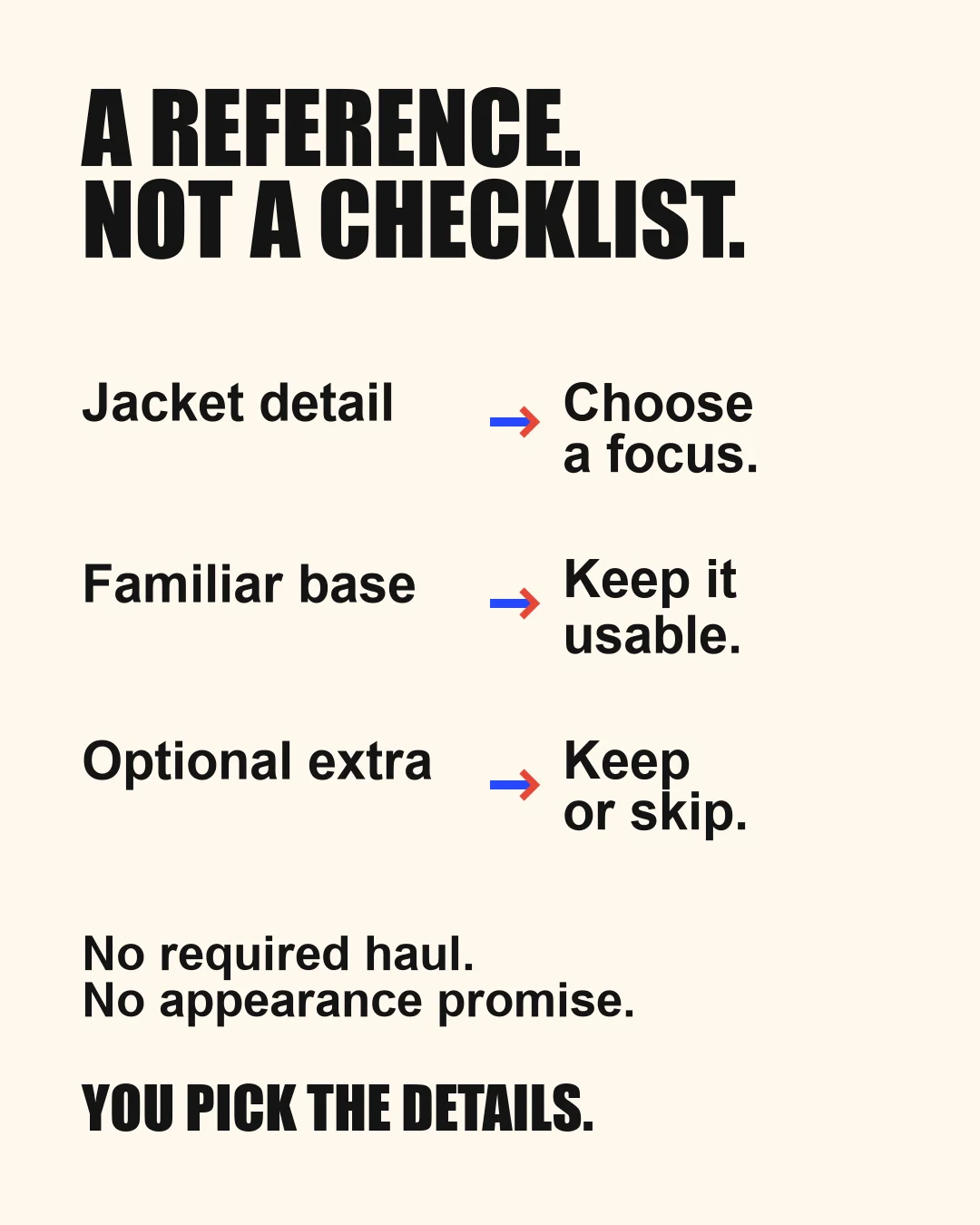
The lace collar in a saved outfit is appealing. The shopping list that follows it is less appealing: a different top, a special layer underneath, another jacket and something described as the only shoe that works. By the time the outfit is complete, the detail you liked has become an entire wardrobe assignment.
You can start with a smaller question. Is there one suitable lace detail in clothes you already own that you would enjoy wearing with a familiar combination? A collar, a sleeve edge or a panel might be enough for your own interpretation. There is also a perfectly useful answer in finding that none of your existing pieces suits the occasion.
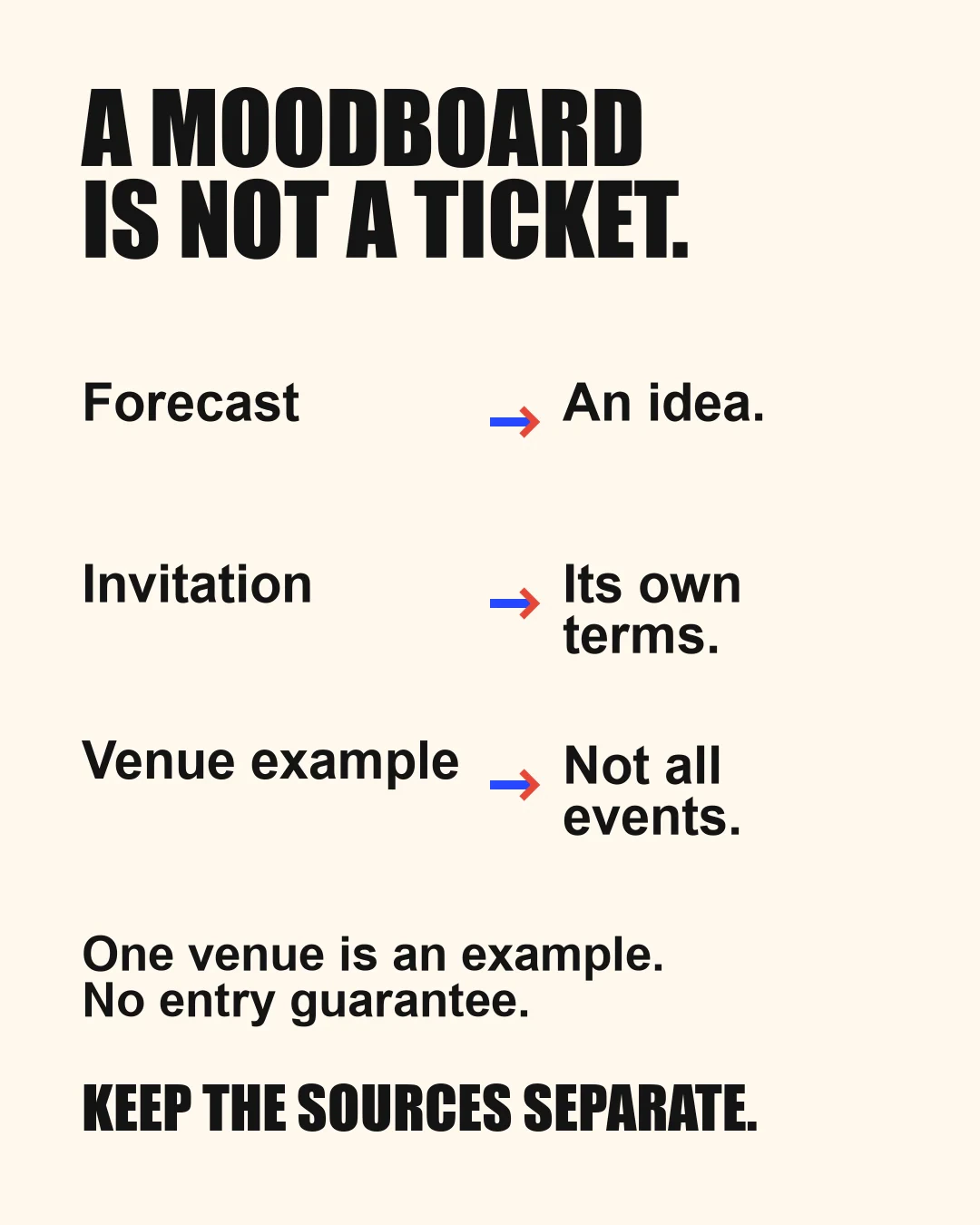
Pinterest included Laced Up in its forecast for 2026, using lacy collars, bandanas and crochet accessories as examples. That is dated styling vocabulary from a commercial platform. It does not establish what is growing in October 2026, which details everyone should wear or what effect an outfit will have. This guide turns the vocabulary into an optional wardrobe exercise, with clothing needs in charge. [S1]
Who this is for
This is for an ordinary reader who likes a lace detail and wants to consider an existing item before adding anything to a cart. You do not need a particular body shape, gender, age group, occupation or social occasion to be curious about a fabric. You also do not need to adopt the whole forecast or call your outfit an aesthetic.
The starting point is a serviceable item you actually own, with construction, care information and a familiar way of wearing it that you understand. A top with a lace edge is different from an old piece of household lace whose strength, history or intended use is unclear. This is not an invitation to turn a doily, curtain or fragile heirloom into clothing.
Your circumstances may leave no suitable option. You may need protective clothing, a uniform, warmer layers, particular access or coverage, or simply a combination that requires less attention. Keep those needs. A trend detail is optional, and skipping it does not make the ordinary outfit unfinished.
There is no body assessment here. Clothing preferences and proportions vary, and an outfit photograph is not a diagnosis. The goal is to make a descriptive choice about clothes, rather than find something wrong with the person wearing them.
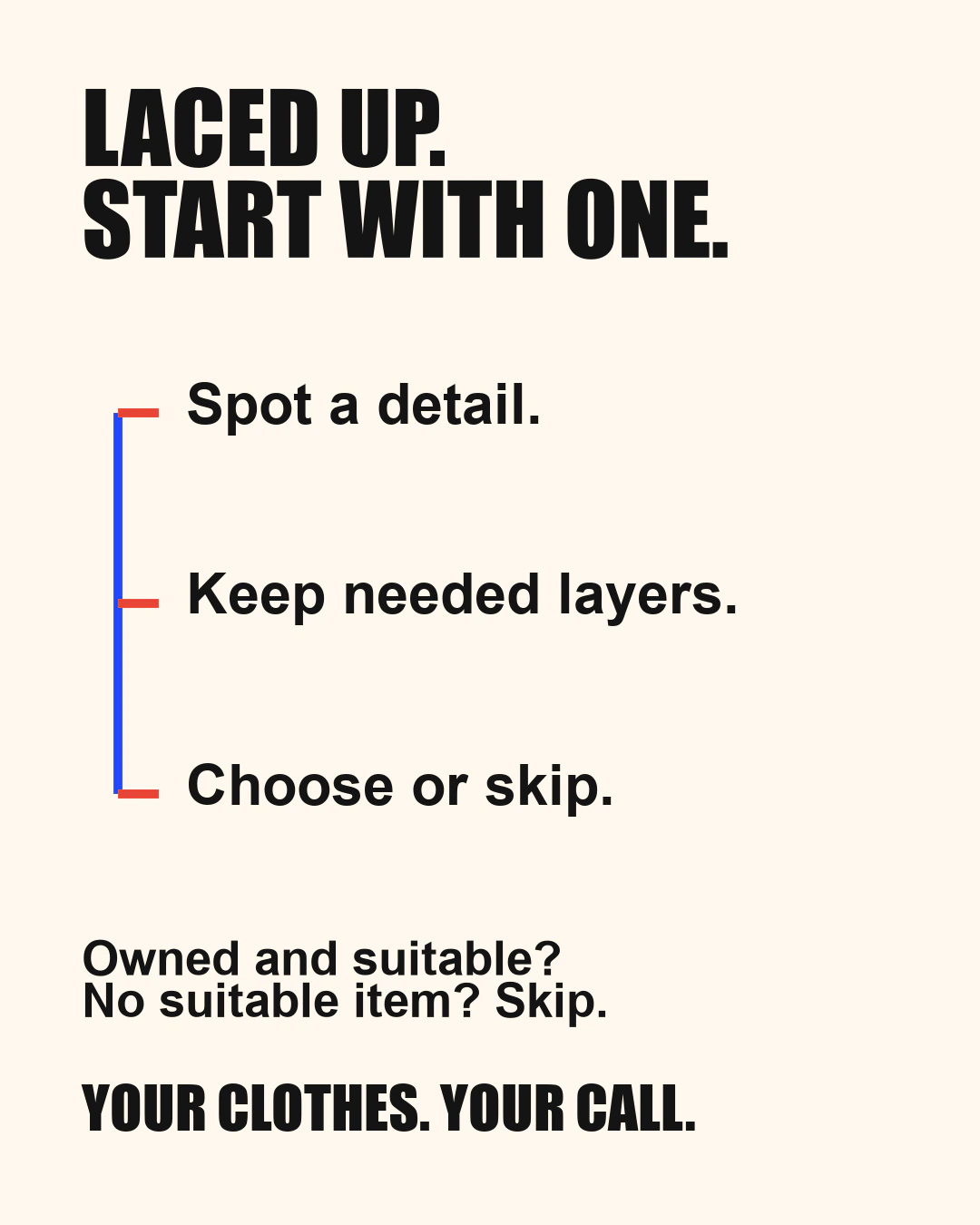
Graphic context — 01-article-hero: This original editorial sequence links a detail in an already owned suitable item, needed clothing layers and an optional choice. The dated forecast offers vocabulary, rather than evidence that everyone owns a suitable garment or must reproduce a complete reference outfit.
Text equivalent: LACED UP. START WITH ONE. Spot a detail. Keep needed layers. Choose or skip. Owned and suitable? No suitable item? Skip. YOUR CLOTHES. YOUR CALL. The rail orders choices, not measured improvements or a ranking of bodies. Lace fabric is distinct from a lace-up fastening. A collar or edge may be enough for your interpretation, but several details are also valid. Keep essential coverage, access, movement, weather protection, uniform and fastening functions. No new purchase, alteration, pinning, sewing, photograph or fragile heirloom conversion is needed. An unsuitable or uncertain item can simply be omitted. Four complete primary publisher documents, not independent outfit studies. Pinterest December9,2025 published/December15 modified commercial platform forecast; undated LaceGuild original craft history; WRAP August18,2020 page/campaign archived March31,2023 aim using existing clothes; undated FTC cleaning-information overview. Whole original native bodies read, not linked forecast report/data, underlying bibliography books, laws or cases. No current measured growth, search percentages, demographic prescription, tested routine benefit, clinical confidence, career, saving, environmental or legal outcome. No garment authentication, material identification, care transfer or universal wardrobe sufficiency.
Before you start
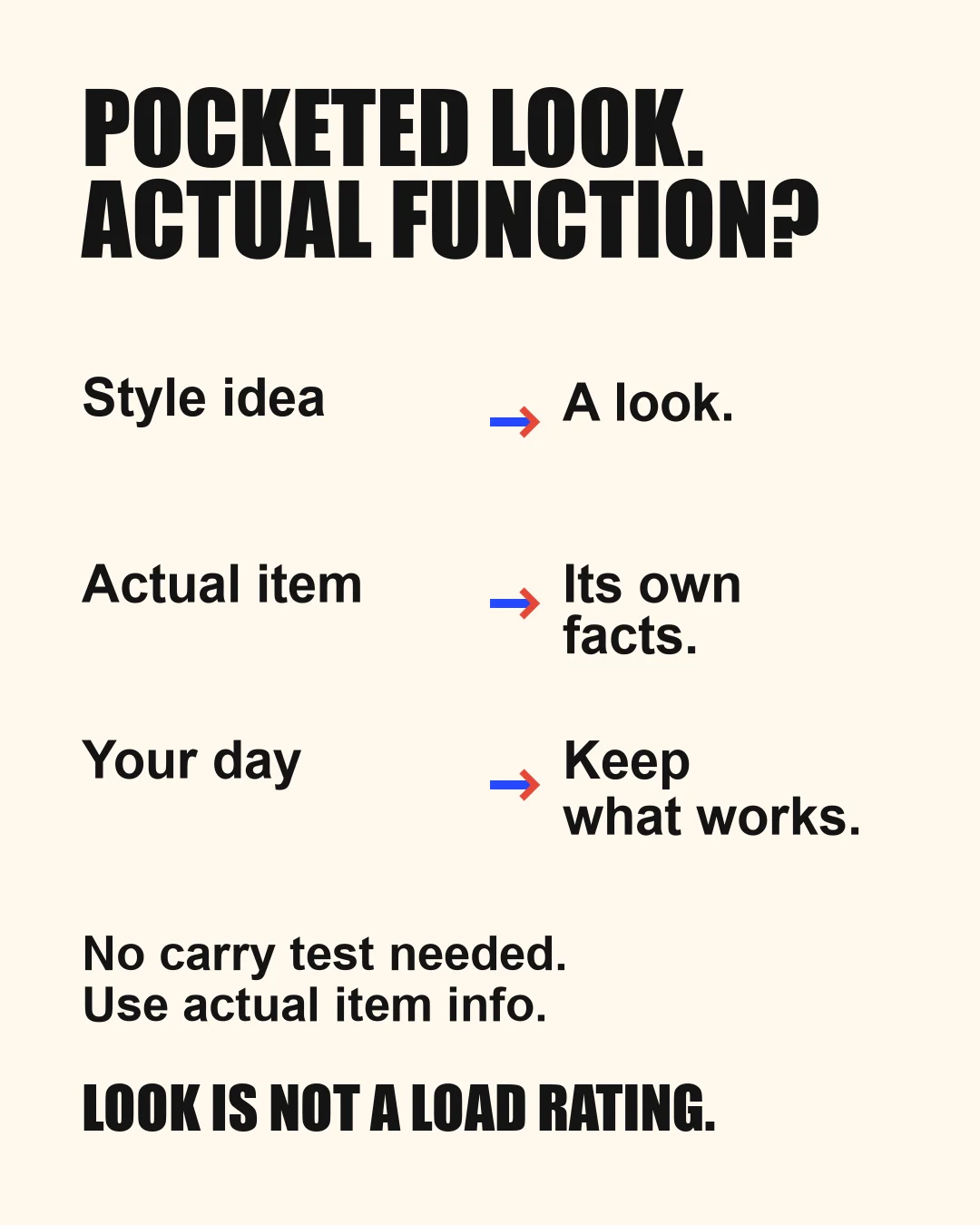
Separate three questions that a reference image can make look like one: what detail appeals to you, what the actual item is, and whether wearing it makes sense for your day. A photograph can suggest the first. It cannot settle the other two for your own garment.
Here, lace refers to the fabric or decorative detail, rather than tightening a lace-up fastening. The Lace Guild’s history describes lace as an openwork fabric and distinguishes needle and bobbin techniques. Its account also follows changing fashions and machine-made lace. That history gives the term depth; it does not authenticate a garment in your wardrobe or turn every openwork material into the same thing. [S2]
Pinterest groups several decorative ideas within its forecast, including crochet accessories. You can borrow a visual cue without asserting that every craft, material or technique in the group is interchangeable. You do not have to identify an heirloom from a picture in order to take part in an ordinary styling idea. If you cannot make sense of the item, leave it out. [S1, S2]
Similar-looking details can still belong to different materials or constructions. A picture, a trend label or the history above cannot tell you that one item’s care or suitability transfers to another. Use information about the actual garment. When that information leaves an important uncertainty unresolved, omit the item rather than experimenting to make it match.
Choose the occasion before choosing the detail. Think about the actual journey, weather, sitting, reaching, carrying and layers involved. Keep any required clothing or equipment in the plan. A reference photograph usually leaves most of that information outside the frame.
Finally, choose the familiar combination you would otherwise wear. It supplies a useful starting point: you can consider the lace item without having to solve every other clothing choice at once. This is a convenience for the exercise, not a rule that plain clothes are more tasteful or that several decorative elements are automatically too much.
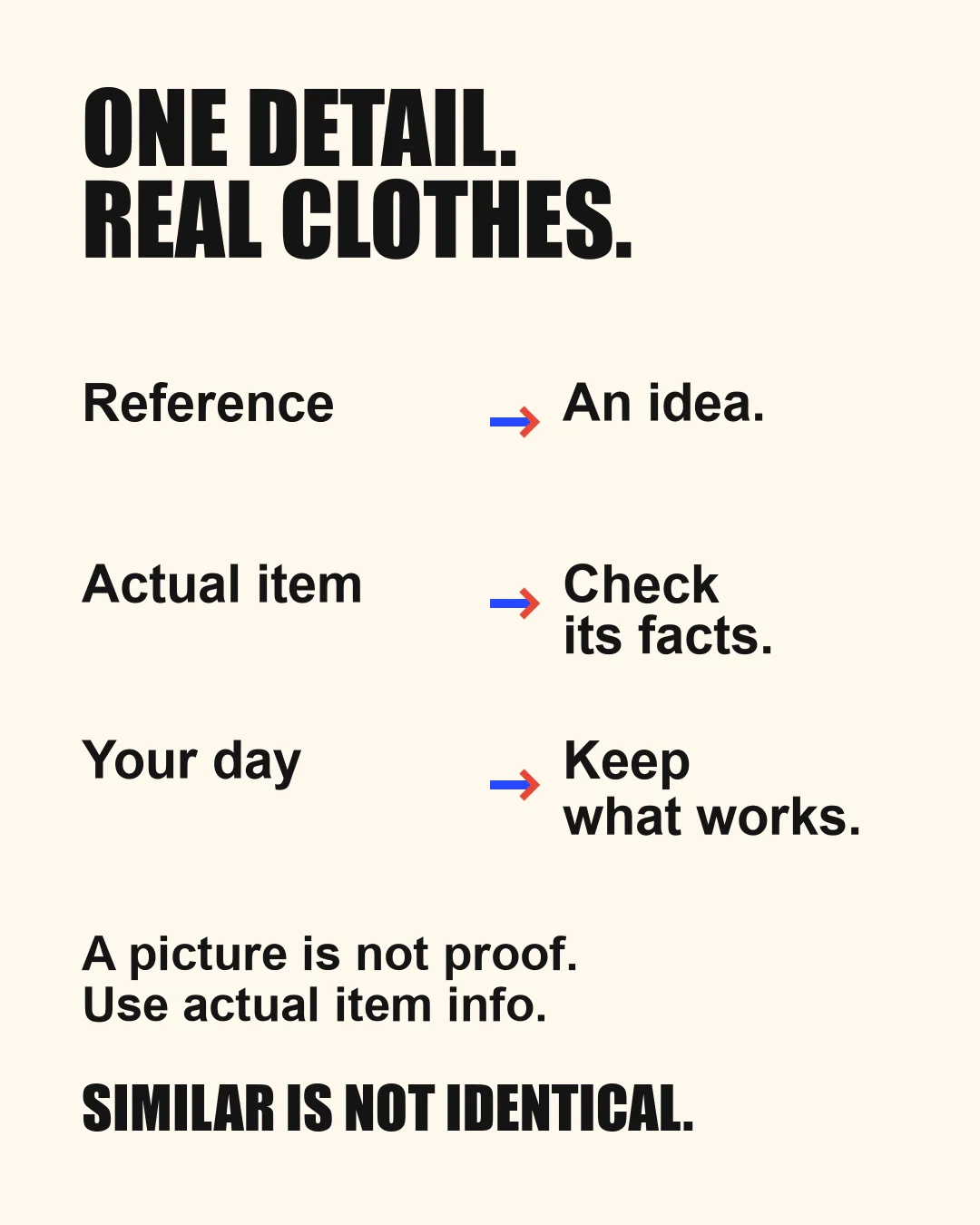
Graphic context — 02-feature-explainer: These original paired roles separate a reference image, information about the actual garment and the needs of the actual occasion. Similar appearance does not establish identical material, construction, strength, care or suitability, and the arrows do not transfer such properties from one item to another.
Text equivalent: ONE DETAIL. REAL CLOTHES. Reference An idea. Actual item Check its facts. Your day Keep what works. A picture is not proof. Use actual item info. SIMILAR IS NOT IDENTICAL. The Lace Guild supplies a historical account of openwork lace and needle and bobbin techniques; Pinterest groups several decorative ideas, including crochet, within a dated forecast. These distinct source roles do not make every openwork textile interchangeable. Read actual item or maker information. FTC cleaning-information context does not certify fit, activity suitability or comfort. If important uncertainty remains, omit the item rather than experimenting, identifying it from a picture or improvising a care or alteration method. Four complete primary publisher documents, not independent outfit studies. Pinterest December9,2025 published/December15 modified commercial platform forecast; undated LaceGuild original craft history; WRAP August18,2020 page/campaign archived March31,2023 aim using existing clothes; undated FTC cleaning-information overview. Whole original native bodies read, not linked forecast report/data, underlying bibliography books, laws or cases. No current measured growth, search percentages, demographic prescription, tested routine benefit, clinical confidence, career, saving, environmental or legal outcome. No garment authentication, material identification, care transfer or universal wardrobe sufficiency.
Actions in order
1. Name the detail, rather than copying the whole image
Use an ordinary description: a narrow lace collar, a patterned sleeve edge or a lace panel on a top. You may discover that you like the outline at the neck more than the colour, the contrast with another fabric more than the entire outfit, or a small area of pattern more than an all-over piece.
That description helps you look at what is already available. It does not require an exact duplicate, a particular brand or an expensive material. If nothing you own has a detail you like and can reasonably wear, stop there. Enjoying the reference is allowed to remain the whole experience.
2. Select an actual item, with its normal clothing functions intact
Consider the garment as a whole, including its existing fastenings, coverage, underlayers and care needs. Do not detach a collar, cut a panel, improvise a fastening or alter the piece to resemble the reference. Instructions for making or repairing clothing would need a different basis from a forecast photograph.
If the item is damaged, uncertain or uncomfortable, choose another combination. Ask the maker or an appropriate garment professional about the actual uncertainty if you want to pursue it separately. Nothing in this exercise certifies the condition of a textile or the suitability of a particular attachment.
The FTC’s apparel overview describes care instructions as information about cleaning products. Read the actual item’s information when relevant, rather than treating the word lace as a washing, pressing or storage instruction. A cleaning label does not decide whether this outfit suits your activities. No new cleaning or alteration method is supplied here. [S4]
3. Put it with the familiar clothes that serve the occasion
Keep the layers, footwear and other items you need. Consider whether the chosen detail is visible in the combination you would actually wear. If a necessary coat covers it, you have learned something about that particular occasion. You do not need to discard the coat or buy a replacement so a reference survives unchanged.
You might prefer one visible patterned area with quieter surrounding clothes. You might prefer several textures together. Use one detail as an easy starting point, then make a preference decision. It is not a formula for a universally flattering outline, a demand to minimise yourself or a limit on how much decoration anybody is allowed to enjoy.
If adding the garment creates a chain of new requirements, pause. Ask whether you still want this particular combination or whether you are now trying to reproduce the photograph at any cost. A second existing option, or the familiar outfit without the extra detail, may be the more useful choice.
4. Consider the ordinary activities, not only the still image
An outfit needs to work beyond the moment in front of a mirror. Consider the activities you already expect, with the actual layers and any required clothing in place. Notice whether the combination needs attention that you do not want to give it, interferes with movement or access, or feels uncomfortable.
This is ordinary clothing choice, not a stress test. Do not stretch, pull, pin or subject a delicate textile to an experiment to prove it can cope. If you have doubts about its condition or construction, that is a reason to omit it, rather than escalate the test.
Existing workplace, activity, uniform and protection requirements remain the starting conditions. A trend does not override them. Nor does an attractive image tell you that someone else was comfortable, warm or able to perform your activities in the clothes shown.
5. Keep, change or skip the combination
Use a short description of the decision: the sleeve edge works with the clothes I need today; the collar is hidden by the necessary layer; this top needs more attention than I want to give it. These are observations about a combination and occasion, rather than scores for your appearance.
You can keep an outfit without taking a photograph. If a private reminder is useful, it is optional. Lighting, pose, lens, distance and editing can change how clothes appear in a picture, so a flattering frame is not proof of fit, construction or comfort. There is no before-and-after test, public post or request for other people’s approval in this exercise.
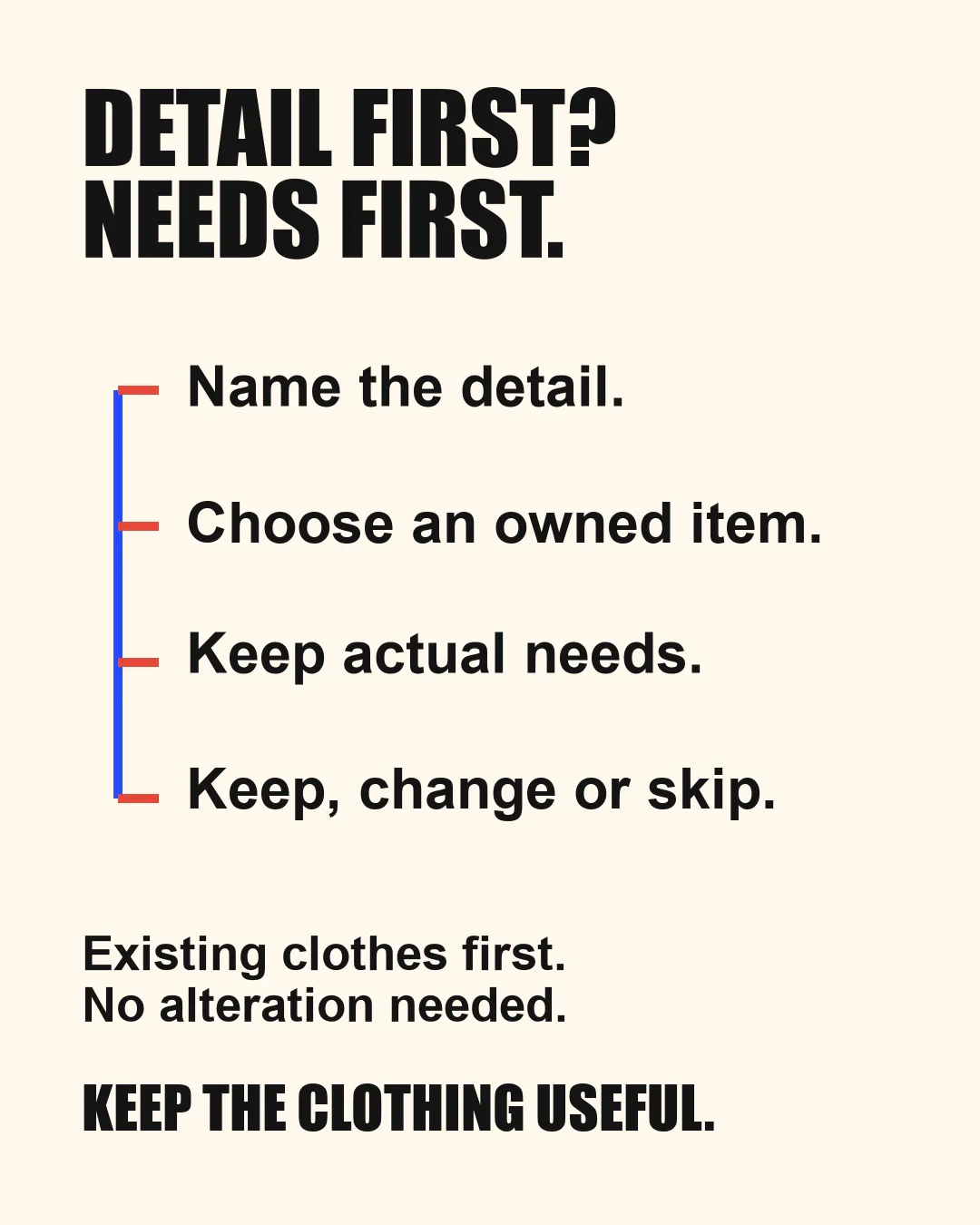
Graphic context — 03-routine-infographic: This original action sequence starts with a named detail and a suitable existing item, keeps actual clothing functions and ends with a descriptive decision. It is an optional ordinary wardrobe exercise, rather than a tested routine, material examination, clothing safety protocol or requirement to buy anything.
Text equivalent: DETAIL FIRST? NEEDS FIRST. Name the detail. Choose an owned item. Keep actual needs. Keep, change or skip. Existing clothes first. No alteration needed. KEEP THE CLOTHING USEFUL. Use a functional familiar combination and consider ordinary sitting, travelling, reaching, weather and required clothing. Do not stress-test, stretch, pull, cut, sew, pin or alter a delicate textile to prove it works. Required coverage, access, movement, fastenings, uniform and protection stay in place. Stop if the item is unsuitable, damaged, uncertain or uncomfortable. No body assessment, social score, clinical effect, career result, price, time target or measured saving is encoded. Four complete primary publisher documents, not independent outfit studies. Pinterest December9,2025 published/December15 modified commercial platform forecast; undated LaceGuild original craft history; WRAP August18,2020 page/campaign archived March31,2023 aim using existing clothes; undated FTC cleaning-information overview. Whole original native bodies read, not linked forecast report/data, underlying bibliography books, laws or cases. No current measured growth, search percentages, demographic prescription, tested routine benefit, clinical confidence, career, saving, environmental or legal outcome. No garment authentication, material identification, care transfer or universal wardrobe sufficiency.
A collar that works, and a detail that stays in the wardrobe
Imagine Rowan, a fictional reader choosing clothes for a quiet lunch followed by an ordinary journey home. Rowan already owns a blouse with a lace collar and has worn it comfortably with its usual opaque underlayer. The appeal of the saved reference is the patterned edge at the neckline, not its entire collection of accessories.
Rowan starts with familiar trousers, the blouse and the layers needed for the day. The collar remains visible in that combination. Rowan likes the contrast and keeps it. No purchase, alteration or claim about improved attractiveness follows. The example illustrates a decision; it is not a report of a person’s experience or a tested styling result.
Change one circumstance. On another occasion Rowan needs a particular outer layer that covers the collar, and the blouse no longer offers the detail Rowan wanted to see. Rowan keeps the necessary layer and chooses the familiar outfit instead. The clothing requirement wins without creating a problem that shopping must solve.
Now consider a different reader who likes several lace and patterned details together. If the existing items are suitable, the combination works for the occasion and the reader enjoys it, this guide supplies no reason to remove them merely to satisfy a one-detail rule. Starting with one detail makes the choice easier to describe; it is not a verdict against a fuller outfit.
Graphic context — 04-practical-support: These invented alternatives distinguish an optional visible detail, a necessary layer and the absence of a suitable item. They are not observations of actual people or ranked outfit outcomes. In the original fictional Rowan example, keeping a necessary covering layer is a valid decision even when it hides the collar.
Text equivalent: COLLAR VISIBLE? LAYER NEEDED? Visible + usable Keep if liked. Needed layer Keep that layer. No suitable item Skip the idea. Invented alternatives. No wardrobe guarantee. THE OCCASION DECIDES. The separate arrows are conditional choices, not equal benefits or proof that every wardrobe can supply an item. A visible detail can be kept if it is liked and the whole combination is suitable. A necessary coat, opaque underlayer, uniform, fastening or protective item remains necessary. If no suitable item is available, skip the exercise. Several liked details can also work; starting with one is a convenience, not compulsory minimalism. No purchase, clothing construction experiment, appearance diagnosis or guarantee follows. Four complete primary publisher documents, not independent outfit studies. Pinterest December9,2025 published/December15 modified commercial platform forecast; undated LaceGuild original craft history; WRAP August18,2020 page/campaign archived March31,2023 aim using existing clothes; undated FTC cleaning-information overview. Whole original native bodies read, not linked forecast report/data, underlying bibliography books, laws or cases. No current measured growth, search percentages, demographic prescription, tested routine benefit, clinical confidence, career, saving, environmental or legal outcome. No garment authentication, material identification, care transfer or universal wardrobe sufficiency.
Costs, risks and stop criteria
Using something already owned can mean making no new purchase for this choice. It does not mean clothing has no cost, that previous care was free or that you have achieved a measured saving. Attention, getting dressed and any actual care or professional advice still use resources. There is no standard budget, number of minutes or required wearing schedule here.
WRAP’s archived Love Your Clothes campaign aimed to encourage people to value and make the most of clothes they already had. The page is dated August 2020 and says the campaign was archived in March 2023. That aim supports the wardrobe-first starting point as context. It does not prove this outfit reduces environmental impacts, saves a specified amount or can be reproduced by everyone. [S3]
Stop or change the outfit if it is uncomfortable, unsuitable for the activity, damaged, uncertain or dependent on abandoning needed coverage, access, fastening, weather protection or uniform requirements. Do not use a styling exercise to justify a construction experiment with an irreplaceable textile.
You can also stop when the exercise becomes repeated checking, pressure to buy or a search for a bodily flaw that the next garment is supposed to fix. Choose the familiar outfit and leave the reference alone. If appearance worries persist and interfere with daily life, suitable qualified support is a separate option. This guide offers no diagnosis, treatment or professional assessment of you or your clothes.
How to assess the result
A useful result is an answer you can explain. You identified a detail, considered a real item with your actual needs intact, and chose whether to wear it. The answer may be yes for this occasion, another day, another combination or no suitable item. None requires a social reaction, a body ranking or proof that you belong to a trend.
Revisit the choice when the occasion, garment condition, weather or your preferences change. There is no need to keep testing the same combination until it earns approval. A remembered outfit is one available option, not a permanent obligation or an achievement you must defend.
The four sources below have different jobs: a dated commercial forecast, a craft association’s history, an archived campaign description and a regulator’s explanatory overview. They are not four outfit studies. The ordered choices and fictional examples are original editorial applications, with no measured benefit or qualified garment review claimed.
Myth or Real?

Claim
Social paraphrase: Similar-looking lace alone establishes that different items require identical care.
Verdict
FALSE
Facts
Similarappearance doesnot identify the actual textile or establish its care. Read information about each actual item or ask its maker about unresolved uncertainty.
FALSE rejects looksalone as sufficientproof, not the possibility that two items share care instructions. No materialdiagnosis.
An archived original question asks how to care for thinlace clothes. It discovers the concern. This card explicitly reframes it as an editorial claim that similar appearance alone establishes identical care; the questioner is not quoted or represented as holding that belief. The Lace Guild’s undated original history distinguishes needle, bobbin and machine-made lace as craft context. It does not identify the reader’s garment or determine its material, construction, strength or cleaning needs. The FTC’s undated overview describes care instructions as information about cleaning products. Its role here is to direct attention to the actual item’s information, not to supply a washing method or a legal assessment. FALSE rejects appearance alone as sufficient evidence; it does not mean two items can never share instructions or that every lace item needs different care. Read actual item or maker information. If an important uncertainty remains, omit the item rather than experiment; item-specific maker or appropriate garment-professional help is separate. No detergent, chemical, temperature, washing, pressing, repair or alteration protocol is given. Forum comments, brands, prices, microbe speculation, material diagnoses, anecdotes and votes are excluded from evidence and recommendations. No garment inspection, professional approval, safety certificate or measured benefit is claimed.
Takeaway
Read actual item information. Omit unresolved items instead of experimenting with cleaning or alteration.
Sources
Claim discussion: Archived original question about care of thinlace clothing.
Evidence: The Craft of Lacemaking: Origins and History; Apparel and Labeling.
Checked 2026-10-26. Scope: Nonclinical clothingchoices, similarappearance-versus-actualitem information. No universalcleaning/chemical/temperature/repair/alteration protocol, materialidentification, garmentcertificate, legalrule/right or testedroutinebenefit.


Sources
- S1 — Pinterest Newsroom, “Pinterest Predicts: Nonconformity, self-preservation, and escapism drive 21 trends for 2026.” Published December 9, 2025. The original Laced Up paragraph supplies forecast vocabulary. Commercial platform context, not evidence of current growth, a universal requirement or an outfit’s effectiveness. Original forecast.
- S2 — The Lace Guild, “The Craft of Lacemaking: Origins and History.” Undated, accessed October 26, 2026. The original overview supplies openwork and needle/bobbin history context. Its bibliography has not been independently read; the history does not identify or certify an individual garment. Original history.
- S3 — WRAP, “Love Your Clothes.” Page dated August 18, 2020; campaign archived March 31, 2023. The campaign’s stated aim supplies existing-clothes context, without adopting its statistics or claiming an effect from this guide. Original archived-campaign description.
- S4 — Federal Trade Commission, “Apparel and Labeling.” Undated overview, accessed October 26, 2026. The care-information passage concerns cleaning. Linked cases, laws and business guides are not adopted as legal advice or an item-specific assessment. Original overview.
FAQ
Common questions
Do I need to buy clothes for Laced Up?
This optional exercise starts with a suitable item already owned. No purchase is required. If there is no suitable item or the idea does not fit the occasion, skip it.
Does similar-looking lace always need the same care?
Appearance alone does not establish care instructions or identify the actual textile. Read information for each item or ask its maker about uncertainty. This guide supplies no universal washing method.
Must I wear only one lace detail?
Starting with one makes the choice easier to describe. Several suitable details are also valid; practical clothing needs and your preferences decide. No compulsory minimalism or complete reference checklist is required.
Topic hubs
Tags