
The wardrobe list looks complete. It has the right number of hangers, a tidy palette and a jacket that works beautifully beside everything else. Then an ordinary wet morning arrives, the familiar work clothes need their usual care, and the list has no answer for what you actually need to wear. A neat total has become a substitute for a clothing plan.
A capsule wardrobe can be a useful idea without becoming a numerical entrance exam. Cambridge Dictionary describes a small collection whose clothes combine in different ways and cover normal wearing needs. Its definition supplies no fixed item count. The question for your own clothes is therefore more specific than whether your total matches someone else’s: what are you trying to make available for your actual life?
This guide offers optional planning prompts using information and clothes you already have. It requires no purchase, public photograph, full wardrobe inventory or decision to discard anything. You may end with a small selection, a larger practical rotation, an unresolved question or no change. The name is optional too.
Who this is for
This is for someone interested in capsule wardrobes who finds an item limit easier to see than the needs it is supposed to serve. You may like the idea of fewer clothing decisions, want a clearer view of familiar combinations, or simply be curious about the phrase. None of those interests requires replacing your current clothes with a coordinated collection.
Actual needs vary with activities, climate, access, preferences, care arrangements and clothing requirements. Having more clothes does not establish wastefulness, and having fewer does not establish discipline, taste or human worth. A person who needs distinct clothes for different settings does not have to justify them to an online count.
The prompts below are original editorial planning tools, not a validated method for improving confidence, saving money or reducing environmental impact. This is a nonclinical clothing guide. A photograph cannot diagnose a person or establish whether an entire wardrobe meets their needs. No body ranking, appearance assessment or professional garment inspection is involved.
Graphic context — 01-article-hero: This original sequence starts with an actual clothing purpose, preserves necessary items and keeps unanswered availability questions visible. It does not prescribe a wardrobe total or treat having fewer clothes as an improvement in a person.
Text equivalent: SMALL WARDROBE. REAL DAY. Name the job. Keep needed items. Leave gaps visible. Your actual needs first. No fixed target here. A COUNT IS NOT A PLAN. Cambridge supplies a definition of a small combinable collection for normal clothing needs, without a fixed count. This diagram is an editorial planning application, not a validated quantity or universal sufficiency finding. A descriptive count may still be useful information within a chosen scope, but cannot establish that all needed clothes are suitable and available. Required coverage, movement, access, weather, uniforms, protection and fastenings and existing procedures remain intact. No purchase, removal, donation, new photograph or inventory is required; keeping the current wardrobe or skipping is valid. Four complete primary publisher documents, not independent outfit studies. ASOS own 21 October 2026 commercial capsule-collection release supplies dated vocabulary only, not a personal item-count target or product/longevity/sustainability recommendation. Undated Cambridge Dictionary definition accessed 26 October 2026 describes a small combinable collection for normal clothing needs without a fixed count, not a scientific sufficiency or fit/care certificate. WRAP 18 August 2020 page/campaign archived 31 March 2023 supplies an existing-clothes aim; undated FTC overview supplies cleaning-information context only. Whole four native bodies read, not linked collections/products/references/reports/data/laws/cases. No current measured growth, universal wardrobe count/matching/sufficiency, tested benefit, clinical, financial, environmental or legal outcome. No compulsory purchase, discard, donation, inventory, contact, photo, care change or alteration.
Before you start
Keep the meanings of the sources separate. In its release dated October 21, 2026, ASOS describes a Topshop collaboration as a capsule collection. That is a current commercial example of the vocabulary, not a template for the number of clothes you should own. We are not adopting its product list, prices, claims about longevity, executive comments or purchase invitation.
Cambridge’s undated dictionary entry, accessed October 26, 2026, describes a personal capsule wardrobe in terms of a small collection, different combinations and normal clothing needs. That is a definition, not an experiment or a certificate that a particular small wardrobe will work. It does not inspect your clothes, specify an ideal total or decide what counts as normal for you.
WRAP’s Love Your Clothes page describes an aim of valuing existing clothing. The page is dated August 18, 2020, and the campaign was archived on March 31, 2023. That archived aim supports considering what is already available; it does not prove that you own a suitable option or promise savings from this exercise. The FTC’s apparel overview supplies a separate explanation of cleaning information, rather than a wardrobe size or a new care schedule.
Choose an ordinary part of life that you actually want to think about. It might be getting dressed for your usual work setting or having suitable clothing available during familiar weekly activities. You do not need to include every possible event. Equally, an existing uniform, protective item, essential layer or access requirement stays relevant even when it does not match a chosen palette. Established requirements and procedures come first.
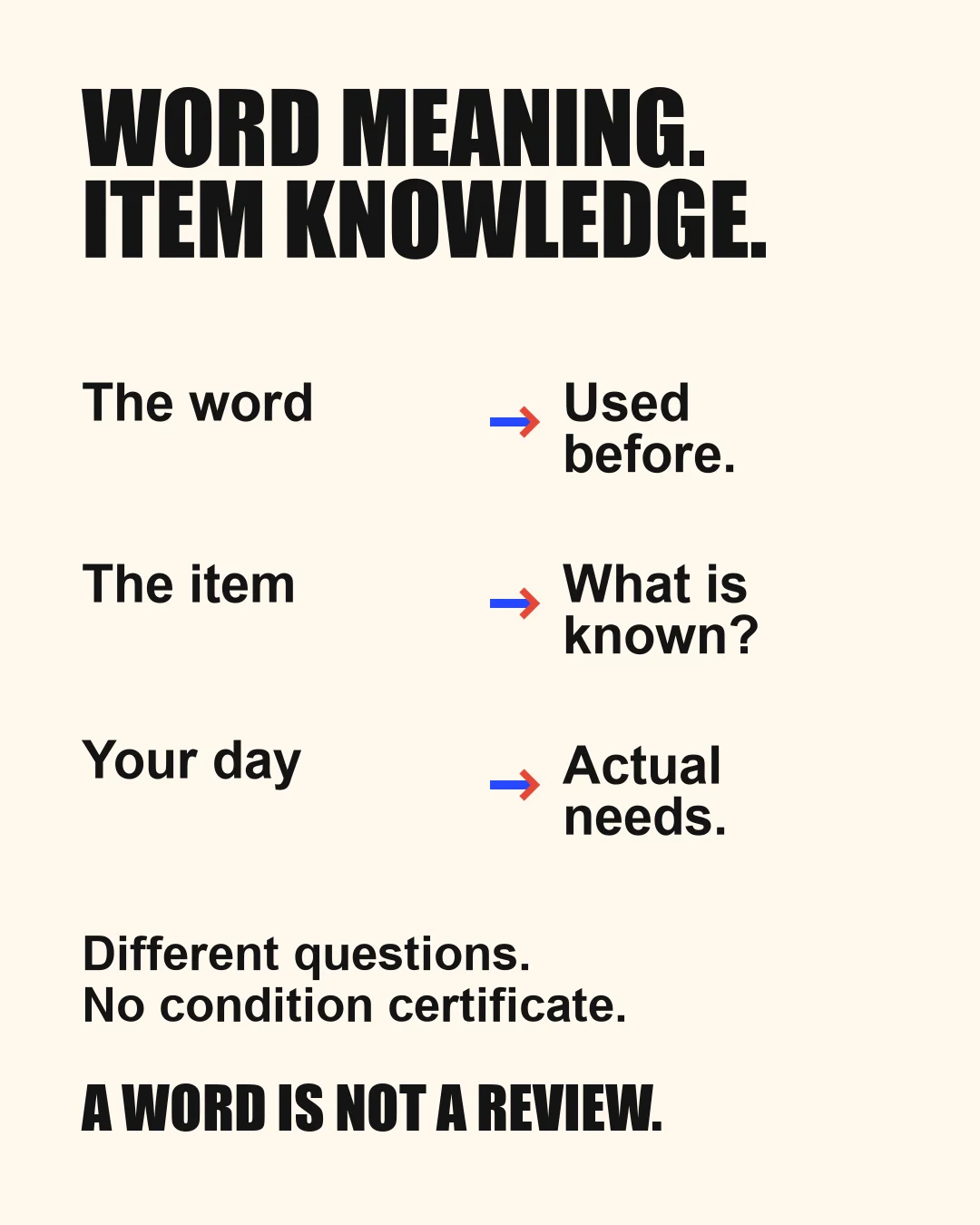
Graphic context — 02-feature-explainer: The three pairs distinguish a retailer collection, a dictionary description of a personal capsule wardrobe and an optional plan for actual activities. They are different roles rather than evidence that a commercial collection supplies every person wardrobe needs.
Text equivalent: WORDS. PICTURES. DIFFERENT JOBS. Retail edit One collection. Definition Usual needs. Your plan Actual scope. Source roles only. No ideal count is shown. DEFINITION IS NOT A TARGET. ASOS own October 21, 2026 release supplies dated capsule-collection vocabulary only; no listed number, product, price, durability or sustainability claim is adopted as a personal target or endorsement. Cambridge own undated definition describes a small collection combinable in different ways for normal clothing needs; it specifies no fixed count and does not inspect actual items. A personal plan is original editorial application with a declared scope and unknowns, not a dictionary certification or empirical benefit. No universal matching, minimum-purchase or clear-out rule follows. Four complete primary publisher documents, not independent outfit studies. ASOS own 21 October 2026 commercial capsule-collection release supplies dated vocabulary only, not a personal item-count target or product/longevity/sustainability recommendation. Undated Cambridge Dictionary definition accessed 26 October 2026 describes a small combinable collection for normal clothing needs without a fixed count, not a scientific sufficiency or fit/care certificate. WRAP 18 August 2020 page/campaign archived 31 March 2023 supplies an existing-clothes aim; undated FTC overview supplies cleaning-information context only. Whole four native bodies read, not linked collections/products/references/reports/data/laws/cases. No current measured growth, universal wardrobe count/matching/sufficiency, tested benefit, clinical, financial, environmental or legal outcome. No compulsory purchase, discard, donation, inventory, contact, photo, care change or alteration.
Actions in order
1. Describe the job before choosing the clothes
Start with the clothing problem in plain language. “I want familiar suitable options for my usual work days” is a clearer brief than “I need a smaller wardrobe.” The first statement lets you ask what is available; the second may make removal feel like progress before anything useful has changed.
Keep this description bounded. You can plan for an existing activity without inventing a future lifestyle or an event you do not attend. A commercial capsule may offer a particular visual story, but your own brief does not have to follow it. A plan for different circumstances may reasonably include different clothing.
This is not a request for a diary, photograph or personal disclosure. You can hold the question in mind. If planning is not useful today, leave it there. The exercise has no required duration, item target or promise that naming the problem will solve it.
2. Keep essential clothing functions visible
Consider the requirements already attached to that real activity: appropriate coverage, access, movement, weather, uniforms, fastening or protection. Keep any established arrangements for those requirements. A smaller selection is not a reason to remove an essential item, and a pleasing combination does not demonstrate that another garment provides the same function.
For example, an ordinary outer layer you depend on may remain necessary even if it sits outside the colours you hoped to repeat. A familiar work requirement may leave less room for optional styling choices. The aim here is to acknowledge that condition, not to redesign protective equipment or test the limits of clothing.
We are introducing no new movement, weather, loading, fit or safety test. If an item is damaged, uncomfortable or importantly uncertain, do not promote it into the plan because you need to fill a slot. Omit it or seek appropriate item-specific advice separately. A blank in a plan is more honest than an unsupported claim of suitability.
3. Start with familiar, suitable options already available
Think about clothes you already know in their ordinary intended use. A top and trousers you normally choose together may be a candidate combination for the stated activity. Another known layer may serve a different condition. You do not need to lay out everything you own or make every item match every other item.
Separate knowing an item from liking a photograph of it. Lighting, pose, lens, distance and editing can affect appearance. An attractive flat lay does not establish physical comfort, condition or function, and an awkward photograph does not prove the actual garment is unsuitable. No new photograph is needed to make a planning choice.
Existing clothes are a starting point, not a guarantee of enough suitable clothes. You may discover that you have no familiar option for an actual need. Record that uncertainty if it matters, without turning this guide into a shopping assignment. Neither the dictionary definition nor the archived WRAP aim supplies a missing garment.
4. Distinguish a possible combination from an available one
Two items looking compatible does not mean both are ready when you need them. Consider the care and availability arrangements you already understand for the actual clothes. A familiar combination may be temporarily unavailable, and a similar-looking substitute may have different information or requirements. Keep those limits in the plan rather than multiplying theoretical outfits.
The FTC overview explains the role of cleaning information. Here that is a reminder to keep actual item information separate from a wardrobe diagram. It supplies no new washing, drying, pressing, storage, repair or alteration method, and no universal rule about how often to wear or clean clothes. We are not changing your usual appropriate care arrangements to make a smaller count work.
If a plan depends on an item being available when it realistically may not be, leave the dependency visible. You can retain an already suitable alternative if one exists, change the scope of the plan or keep the question unresolved. You do not need to demonstrate the gap through an experiment, delay necessary care or remove useful spare clothing.
5. Decide what the selection does and does not cover
A useful answer names its scope. You may have familiar options for the work setting you chose while leaving a different activity outside the exercise. That is more precise than calling a collection complete because it has a particular total. It also lets you keep clothing for other real needs without pretending it belongs in the same small selection.
Do not convert the exercise into a rule that every item must combine with everything. You may like a distinct pattern, keep a special item for an actual occasion or prefer several different looks. A carefully coordinated selection is also allowed when it serves you. This guide sets no mandatory palette, uniform or level of minimalism.
You can finish with a keep, change, defer or skip decision. Revisit it when a real activity, requirement, item or preference changes. There is no obligation to repeat an inventory, reduce the total at each review or prove that the word capsule applies. A planning aid can be put down when it stops helping.
If keeping a descriptive count helps you remember what is available, you can use one. The count is information about your chosen scope, not proof that the clothes are sufficient or a requirement to reach someone else’s total. There is no need to hide a useful item or add another merely to make the number look right.
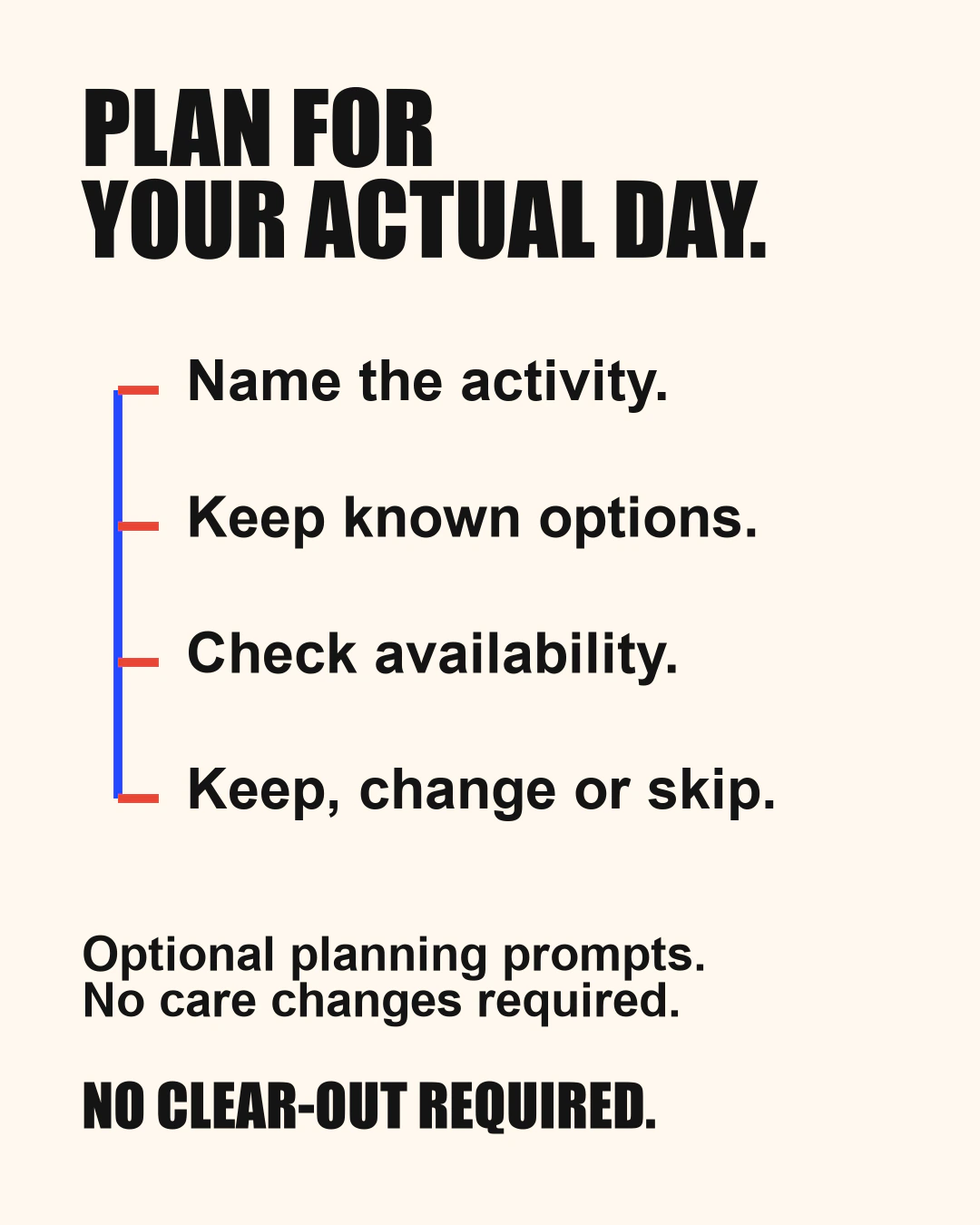
Graphic context — 03-routine-infographic: This original optional sequence considers an existing activity, familiar suitable options and what is actually available under established arrangements. It does not count theoretical combinations as available outfits or introduce a new care schedule.
Text equivalent: PLAN FOR YOUR ACTUAL DAY. Name the activity. Keep known options. Check availability. Keep, change or skip. Optional planning prompts. No care changes required. NO CLEAR-OUT REQUIRED. Checking availability means considering information and ordinary arrangements already known, not a physical fit, safety, movement, loading or care experiment. Existing appropriate care and essential clothing functions remain unchanged. A familiar alternative may be retained if already suitable; no alternative can leave an unanswered question rather than a shopping instruction. Counting can be descriptive, no compulsory reduction or removal follows. There is no timer, outcome estimate, price, confidence score, environmental result or qualified garment assessment. Four complete primary publisher documents, not independent outfit studies. ASOS own 21 October 2026 commercial capsule-collection release supplies dated vocabulary only, not a personal item-count target or product/longevity/sustainability recommendation. Undated Cambridge Dictionary definition accessed 26 October 2026 describes a small combinable collection for normal clothing needs without a fixed count, not a scientific sufficiency or fit/care certificate. WRAP 18 August 2020 page/campaign archived 31 March 2023 supplies an existing-clothes aim; undated FTC overview supplies cleaning-information context only. Whole four native bodies read, not linked collections/products/references/reports/data/laws/cases. No current measured growth, universal wardrobe count/matching/sufficiency, tested benefit, clinical, financial, environmental or legal outcome. No compulsory purchase, discard, donation, inventory, contact, photo, care change or alteration.
A fictional example: the count that missed the coat
Imagine Dana, an invented reader, choosing a small group of familiar clothes for usual work days. Dana begins with a visual reference whose pieces share a palette. The reference suggests a coherent look, but it does not know Dana’s actual outerwear needs or the availability of the listed clothes.
Dana names the real brief: suitable familiar work clothing, with established coverage, access and weather needs intact. The usual coat remains in the plan even though its colour differs from the reference. The shirt-and-trouser combination already known to work for the setting stays a possibility; Dana does not count imaginary combinations as actual available choices.
Now suppose the familiar shirt is unavailable during its normal care. Dana keeps that dependency explicit. If another already suitable option exists, it can remain useful. If there is no known alternative, the plan has an unanswered availability question. Dana does not change care instructions, drop a necessary layer or order a replacement because a diagram needs every row filled.
For a different activity, Dana may retain clothes outside the work selection. This does not undo the useful part of the exercise. It shows that the selection had a purpose and a boundary. No donation, disposal or complete wardrobe reset follows from noticing that boundary.
Change the example: Dana already has a compact coordinated selection that genuinely works for the intended activities and ordinary care arrangements. Nothing here requires expanding it or breaking up combinations. The distinction is between an answer grounded in actual needs and an answer supplied by a borrowed total. Dana is a fictional illustration, not an observed participant or a testimonial for the prompts.
Graphic context — 04-practical-support: These invented alternatives follow fictional Dana: a required coat remains relevant, an unavailable item leaves a dependency, and clothes for other real needs may remain outside a chosen selection. The rows are not observed outcomes or ranked benefits.
Text equivalent: THE COAT STAYS. THE PLAN CHANGES. Needed coat Keep that coat. Item in care Leave a gap. Other needs Keep scope clear. Invented alternatives. No wardrobe guarantee. AVAILABILITY BEATS A TOTAL. The coat can stay even if it does not match a preferred palette. A care dependency does not authorize delaying appropriate care, inventing a substitute function or buying an item to fill a diagram. Other activities can require separate clothing, and an already compact suitable coordinated selection can also remain unchanged. Availability beats a total refers to the declared planning purpose, not a measured superiority result. No wardrobe sufficiency, fit, comfort, financial, environmental, clinical or legal finding is established; no discard, donation or new care method is required. Four complete primary publisher documents, not independent outfit studies. ASOS own 21 October 2026 commercial capsule-collection release supplies dated vocabulary only, not a personal item-count target or product/longevity/sustainability recommendation. Undated Cambridge Dictionary definition accessed 26 October 2026 describes a small combinable collection for normal clothing needs without a fixed count, not a scientific sufficiency or fit/care certificate. WRAP 18 August 2020 page/campaign archived 31 March 2023 supplies an existing-clothes aim; undated FTC overview supplies cleaning-information context only. Whole four native bodies read, not linked collections/products/references/reports/data/laws/cases. No current measured growth, universal wardrobe count/matching/sufficiency, tested benefit, clinical, financial, environmental or legal outcome. No compulsory purchase, discard, donation, inventory, contact, photo, care change or alteration.
Costs, risks and stop criteria
You can consider an existing clothing question without buying anything. That does not mean clothes have no total cost. Past purchases, ordinary care, attention, space, access and separately chosen advice can matter. We have no price range, savings estimate or environmental effect to promise. A planning session also need not become a lengthy project; there is no compulsory timer or inventory.
Stop if the process becomes pressure to discard serviceable clothing, acquire a new coordinated set, repeatedly photograph your body or compare yourself against an ideal wardrobe. You can leave your current clothes unchanged. Persistent appearance worries that interfere with daily life merit qualified support rather than another reduction challenge. This guide is not diagnosis or treatment.
Do not sacrifice required clothing functions, safe arrangements or important procedures to reach a total. Damaged or unsuitable clothes need not be used, and uncertainty does not need to be hidden. This article provides no construction, cutting, sewing, pinning, repair, care or alteration protocol. Appropriate professional advice for an actual item is a separate decision; none has been obtained or represented as approval here.
The ASOS release is commercial retailer context, not independent evidence of quality, durability or a personal wardrobe benefit. Cambridge supplies vocabulary, WRAP an archived aim and FTC explanatory cleaning context. They are four different publisher roles, not four outfit studies. Linked collections, products, underlying reports, laws, cases and reference material were not independently inspected or applied. We recommend no retailer, product, paid service, membership or purchase, and make no legal-right or refund claim.
How to assess the result
Look for a description you can understand without a count: the activity you considered, the familiar suitable options you have, the important requirements you kept and any remaining dependency or uncertainty. You may have clarified an existing selection or decided that this planning idea is not useful. Neither outcome is a score for your appearance or worth.
You have not demonstrated that the wardrobe is universally sufficient, that every possible outfit works, or that the prompts improve confidence, finances, sustainability or health. Those are different claims needing different evidence. The practical result is smaller and more concrete: you can say what your clothing plan is meant to cover without asking a number to do that job.
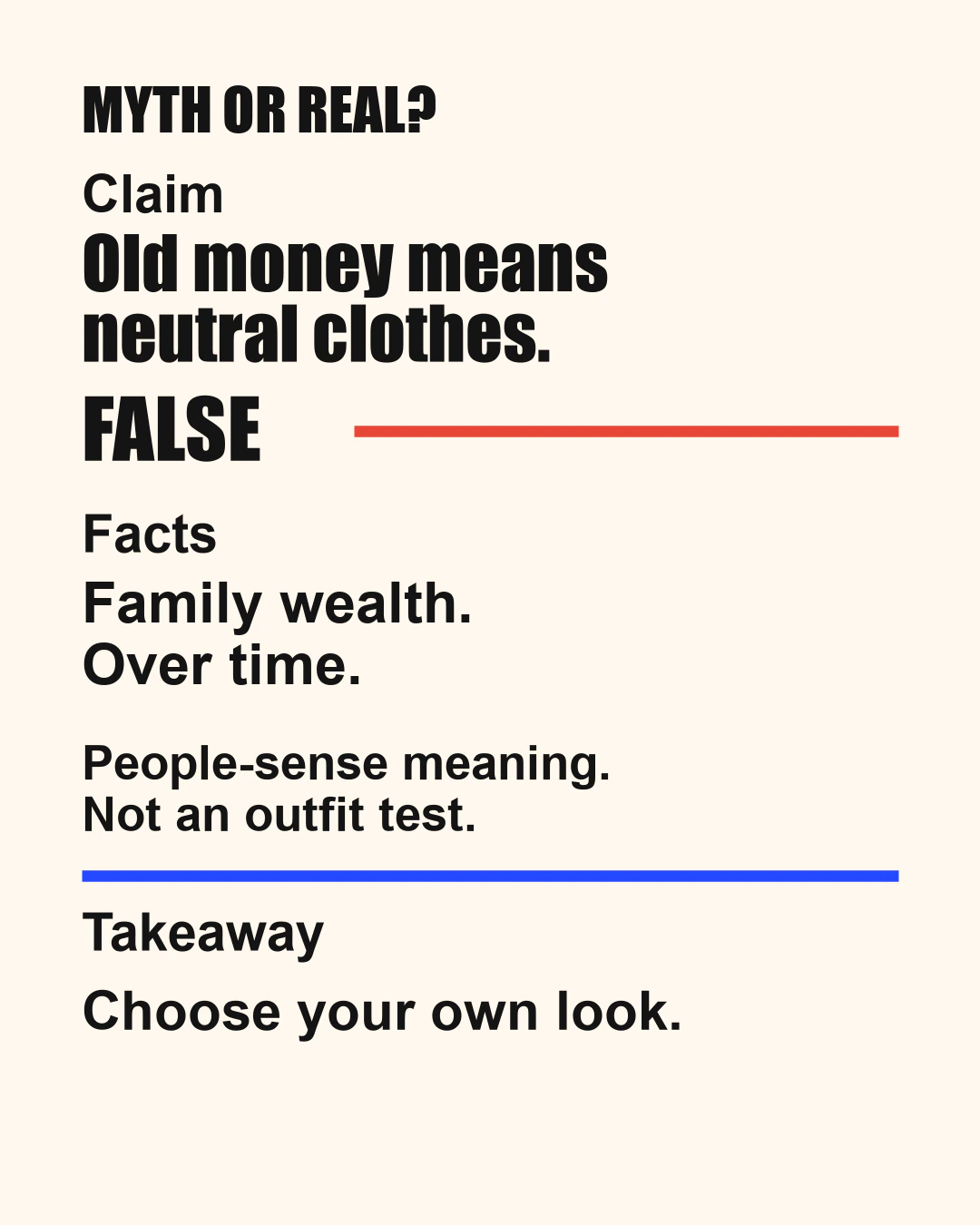
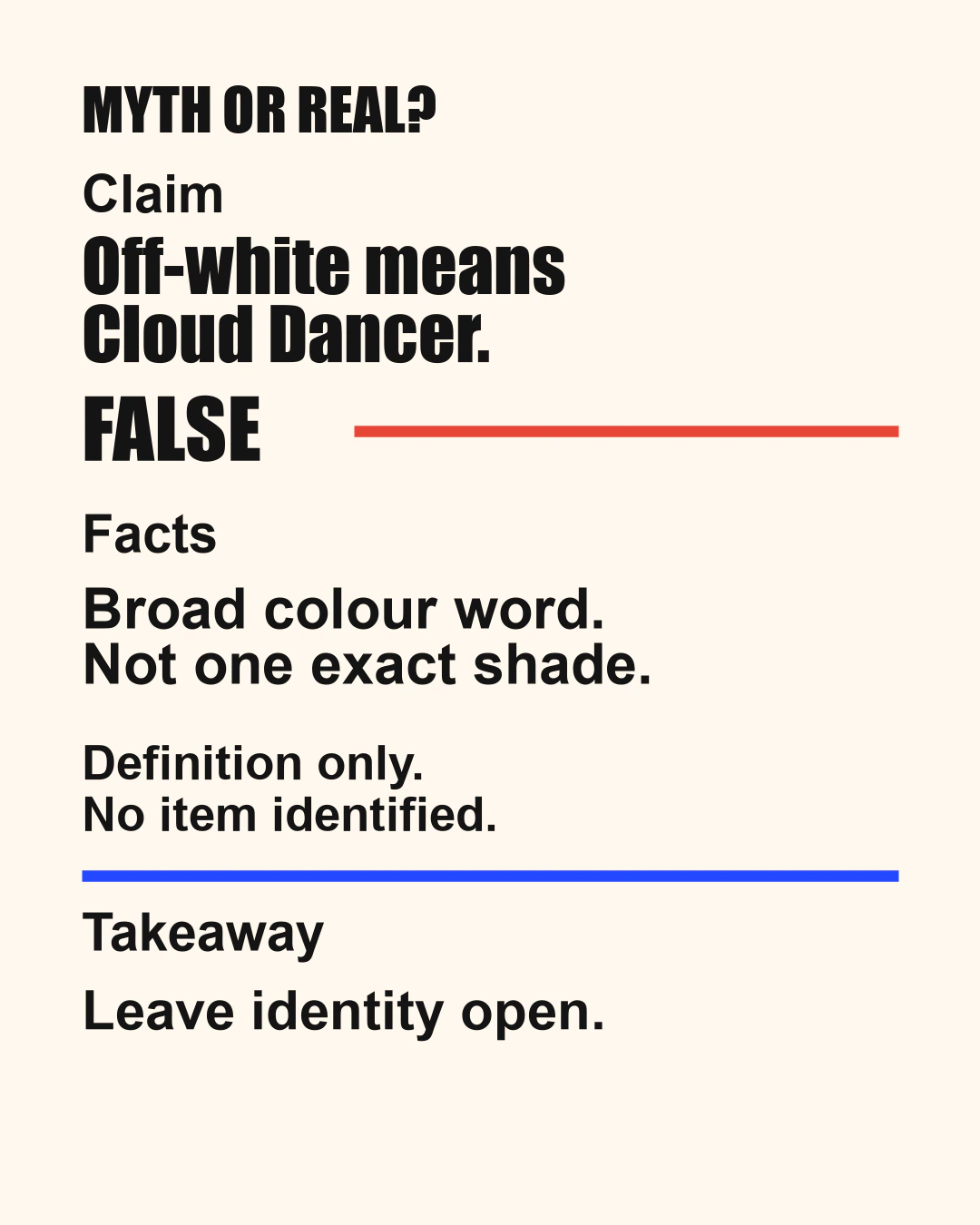
Myth or Real?
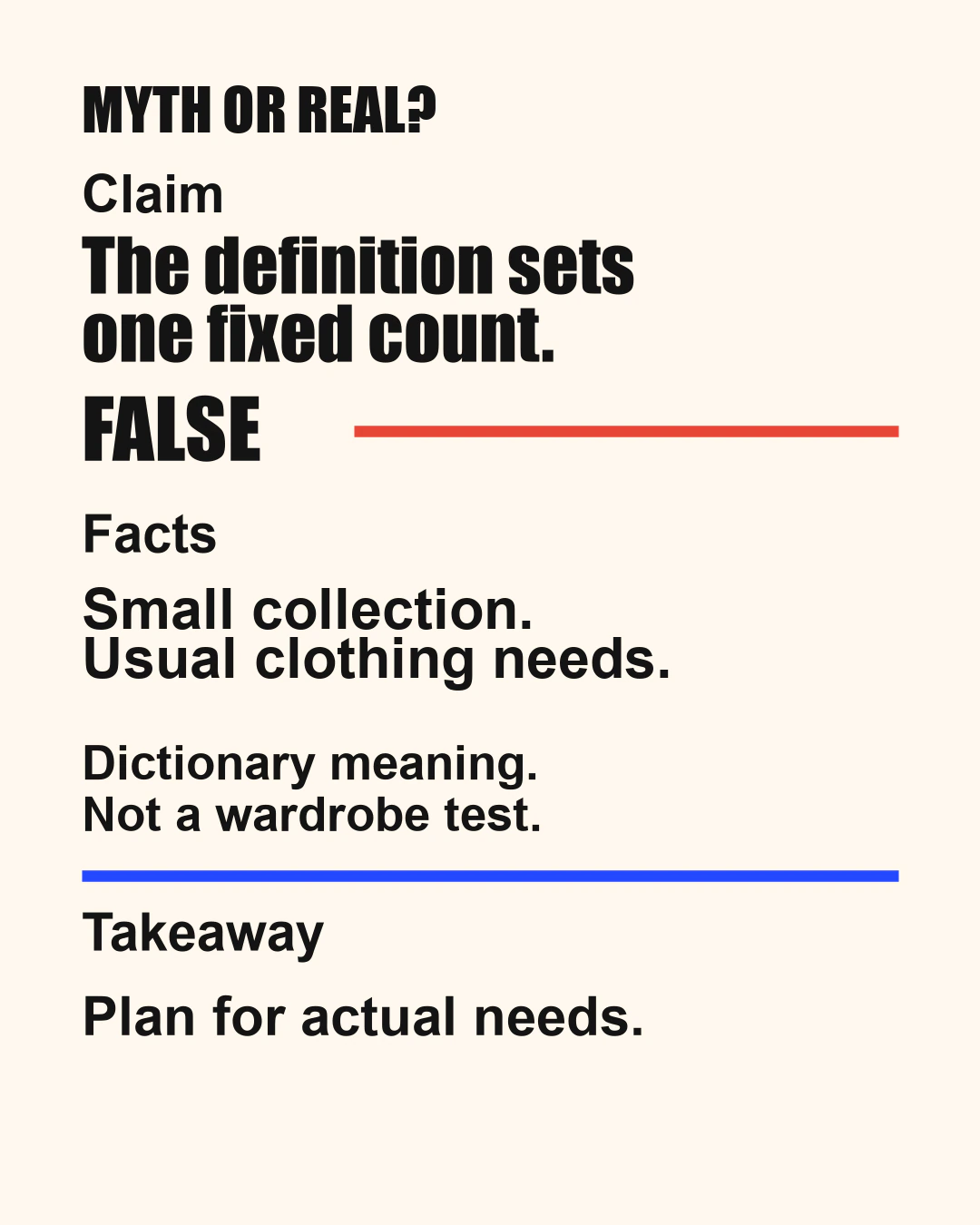
Claim
Social paraphrase: Cambridge defines a capsule wardrobe using a fixed item count.
Verdict
FALSE
Facts
Cambridge describes a small collection combined in different ways for usual clothing needs, without assigning a fixed item count.
Cambridge own dictionary meaning, not an ideal count or a test of your wardrobe. Commercial collection is separate.
An archived capsulewardrobe question asks about a target item count and whether the idea is a mentality or a strict limit. It discovers uncertainty. This card explicitly reframes a dictionary-fixedcount proposition for editorial examination, not a quotation or a false belief attributed to the questioner. Comments, personal totals, apps, brands, wardrobe lists, purchases, disposal, care advice and votes are excluded. Cambridge Dictionary own undated entry, accessed 26 October 2026, describes a small collection combinable in different ways for normal clothing needs. That definition specifies no fixed numerical item count. It is vocabulary, not an empirical test of a particular wardrobe or an ideal quantity. The ASOS release dated 21 October 2026 uses capsule collection for a commercial collaboration. Its collection is a separate reference, not a personal wardrobe target. Products, prices, sizes, executive quotes, longevity, quality and sustainability claims are not adopted. FALSE rejects a fixed count as part of this dictionary definition. It does not establish that every small wardrobe is sufficient, ban a useful descriptive count or require a larger selection. Actual activities, essential clothing functions, established appropriate care, known availability and uncertainty remain relevant. A compact suitable selection, other-purpose clothes, an unchanged wardrobe or skipping can be valid. No purchase, clear-out, donation, photograph, contact, alteration or new care schedule is required. These sources have distinct lexical and commercial roles, not outfit-effectiveness studies, garment inspection or qualified clinical review. Linked collections, products and underlying references were not independently inspected.
Takeaway
Keep actual needs first. A descriptive count can be useful, but it does not prove suitability or availability.
Sources
Claim discussion: Archived original capsule wardrobe target-number question.
Evidence: Meaning of capsule wardrobe in English; Topshop launches exclusive capsule collection with acclaimed womenswear label Talia Byre.
Checked 2026-10-26. Scope: Nonclinical clothing planning. No universal count, matching or wardrobe-sufficiency test, fit, care, clinical or legal certificate. No purchase, discard, donation, photo, contact or care change required.
Sources
- ASOS plc: Topshop capsule collection release. Dated October 21, 2026. Commercial capsule-collection vocabulary only, not a personal item-count target, measured growth or evidence of quality, longevity, sustainability or benefit. No products, prices, sizes, quotes or purchase recommendation adopted.
- Cambridge Dictionary: Capsule wardrobe. Undated entry accessed October 26, 2026. Own definition of a small combinable collection for usual clothing needs; no fixed item count. Examples, related words, translations, navigation and sidebar material are not evidence for this guide.
- WRAP: Love Your Clothes. Page dated August 18, 2020; campaign archived March 31, 2023. Existing-clothes aim only, not an active programme, wardrobe guarantee, saving or environmental outcome. Statistics and linked underlying reports are excluded.
- FTC: Apparel and Labeling. Undated overview accessed October 26, 2026. Cleaning-information context only, not a universal care schedule, legal interpretation or garment fit, comfort or safety certificate. Linked laws, cases and guides were not read or applied.
FAQ
Common questions
Does capsule wardrobe mean a fixed number of items?
Cambridge Dictionary describes a small combinable collection for normal clothing needs without specifying a fixed count. That definition does not certify your actual wardrobe or establish a universal ideal number.
Do I need to buy a matching collection?
No purchase is required by this guide. A retailer capsule collection is commercial context, distinct from a personal wardrobe plan. Familiar suitable owned options can be considered, while actual needs and unknowns remain visible.
Can a count still be useful?
A voluntary descriptive count can help you remember what is available within a chosen scope. It is information rather than proof of suitability, availability or completeness. Keep essential clothing and established appropriate care intact.
Topic hubs
Tags