
The outfit has a name before it has a purpose. A quiet palette, a familiar shirt, a neat outer layer: the caption calls it old money. Suddenly the interesting question seems to be whether the person looks wealthy enough, rather than whether you like a particular combination of clothes. A styling reference has become a story about a stranger’s life.
You can take an idea from that picture without taking the story. Name the detail you actually enjoy, consider a suitable option you already know, and keep the requirements of your real day. There is no need to authenticate anyone’s background, buy a suggested brand or make your clothes stand in for a financial identity.
This is an optional, nonclinical clothing guide. It offers original editorial prompts, not a tested method for improving confidence, social acceptance, finances or health. Leaving your outfit unchanged is a complete option. So is deciding that the aesthetic label is less useful than describing the clothes directly.
Who this is for
This guide is for someone who likes an old-money styling reference but dislikes the pressure to turn it into a status examination. You might enjoy restrained colours, a particular proportion or a familiar combination without wanting to imitate a family history. You may also prefer visible colour, several patterns or clothing that does not fit this label at all.
Clothes do not establish a person’s worth, honesty, manners, intelligence or entitlement to belong. We are not grading bodies, accents, identities, occupations or spending. Nor are we offering a checklist for deciding who is genuinely wealthy. Other people’s financial circumstances are not information this exercise needs.
Actual ownership, access, preferences, climate and clothing requirements vary. An attractive reference does not prove that you own a suitable equivalent, and liking the reference does not create an obligation to obtain one. The useful question is smaller: is there an ordinary detail you want to consider for an actual activity?
Graphic context — 01-article-hero: This original optional sequence describes a visible clothing detail, keeps actual requirements and leaves the final choice open. It does not turn a preferred aesthetic into a finding about a person wealth, family history or worth.
Text equivalent: LIKE THE LOOK. LEAVE THE STORY. Name the detail. Keep real needs. Choose or skip. An outfit is a choice. Wealth stays unknown. CHOOSE THE CLOTHES. The people-sense dictionary meaning concerns wealthy families over time; an aesthetic reference describes clothing. Missing proof from an outfit also does not prove poverty or negate genuine wealth. A full coordinated look, one detail, bright colour, unchanged clothes or skipping can be valid. No private history, receipt, account balance, photograph or purchase is needed. Required coverage, movement, access, weather, uniform, protection and fastening functions and established care/procedures remain first. Four complete primary publisher documents, not independent outfit studies. VogueGermany September13,2026 authored German affiliate-shopping editorial supplies dated aesthetic vocabulary only, not current measured growth, media-causality, history, prestige, product, price or gender prescription. Cambridge own undated people-sense definition accessed October26,2026 concerns families wealthy for a long time, not a visual wealth classifier or personal financial assessment. WRAP August18,2020 page/campaign archived March31,2023 supplies an existing-clothes aim; undated FTC overview supplies cleaning-information context only. Whole four native bodies read, not linked products, series, archives, references, reports, data, laws or cases; no actual garment inspection. No universal wardrobe, status, clinical, career, financial, environmental or legal result. No compulsory purchase, private disclosure, contact, photograph, care change or alteration.
Before you start
Keep the source meanings separate. VOGUE Germany published Mona Bergers’s old-money style article on September13,2026. That German-language shopping editorial describes an aesthetic through understated colours and classic silhouettes, among other styling suggestions. It contains affiliate links. We use it as a dated example of editorial vocabulary, not evidence of measured current growth or a recommendation to buy its products.
Cambridge Dictionary’s undated entry, accessed October26,2026, uses the people sense of old money for wealthy people whose families have been wealthy for a long time. That meaning concerns family circumstances over time. An outfit description and that family-history meaning are different kinds of statement. The dictionary provides no visual test for deciding whether a person fits the latter.
WRAP’s Love Your Clothes page supplies a separate aim of valuing existing clothing. Its page is dated August18,2020, and the campaign was archived on March31,2023. The archived aim makes existing clothes a reasonable starting point here; it does not guarantee that you own something suitable or promise an environmental or financial result. The FTC’s apparel overview supplies cleaning-information context, not a style or status certificate.
Start with ordinary clothing arrangements you already understand. Required coverage, movement, access, weather protection, uniforms and fastenings stay relevant. Keep established requirements and appropriate care intact. We introduce no garment construction, physical fit experiment, new cleaning method or professional inspection.
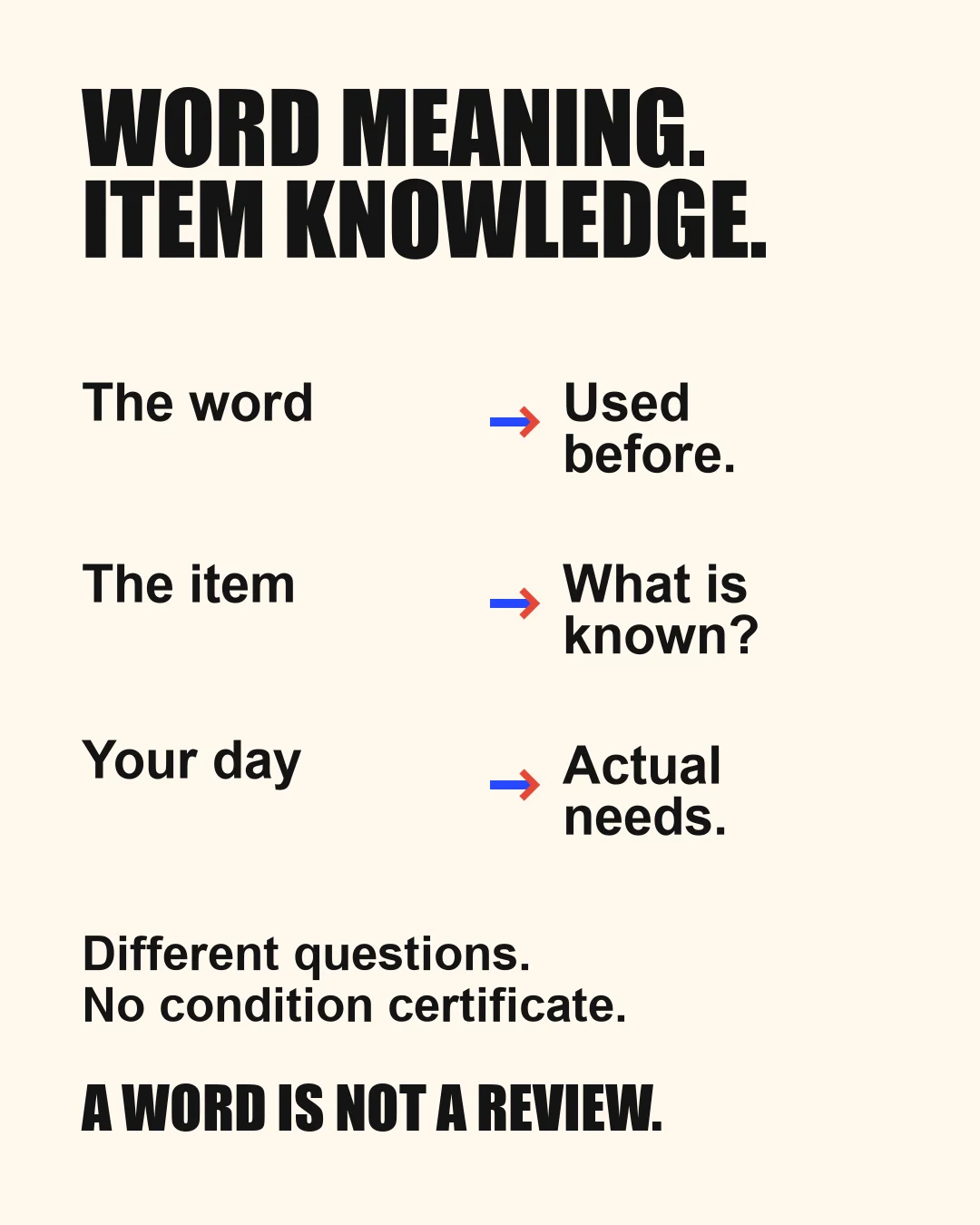
Graphic context — 02-feature-explainer: The pairs separate fashion vocabulary, the dictionary people sense and an original personal clothing choice. They show source roles rather than a scale for ranking people or deciding whose background is authentic.
Text equivalent: THE WORD AND THE WARDROBE. Style Visible details. Meaning Family history. Your day Actual needs. Different source roles. No wealth test here. WORDS DO DIFFERENT JOBS. VogueGermany own German-language September13,2026 authored affiliate-shopping editorial supplies dated understated-colour and classic-silhouette vocabulary only. Cambridge own undated people-sense meaning, accessed October26,2026, concerns families wealthy for a long time. Neither supplies an outfit-based assessment of actual finances, a biological or social identity classification, or an empirical routine benefit. The article adopts no measured growth, historical family claim, product, price, prestige or gender prescription. Aesthetic choice and actual wealth can coexist; unknown circumstances stay unknown. Four complete primary publisher documents, not independent outfit studies. VogueGermany September13,2026 authored German affiliate-shopping editorial supplies dated aesthetic vocabulary only, not current measured growth, media-causality, history, prestige, product, price or gender prescription. Cambridge own undated people-sense definition accessed October26,2026 concerns families wealthy for a long time, not a visual wealth classifier or personal financial assessment. WRAP August18,2020 page/campaign archived March31,2023 supplies an existing-clothes aim; undated FTC overview supplies cleaning-information context only. Whole four native bodies read, not linked products, series, archives, references, reports, data, laws or cases; no actual garment inspection. No universal wardrobe, status, clinical, career, financial, environmental or legal result. No compulsory purchase, private disclosure, contact, photograph, care change or alteration.
Actions in order
1. Translate the label into an actual detail
Ask what is visible in the reference that you personally enjoy. A quieter colour relationship is a more specific answer than looking expensive. A familiar shirt under an outer layer is a more usable description than looking as though you belong to a particular family. You can stop at that description without copying an entire image.
Keep observation separate from explanation. You might see a dark top, a light shirt or a restrained arrangement of colours. You cannot obtain a household’s finances, the history of a garment or the wearer’s motives from those observations alone. This is a limit on what you know, not a claim that every appearance-based impression is identical or meaningless.
Avoid turning one editorial’s vocabulary into a universal rule. You may like several details, one detail or none. A visible logo, a bright colour or a different silhouette does not make someone less worthy or prove anything about their background. This guide sets no compulsory palette and no requirement to hide useful or personally meaningful clothing.
2. Name the day the clothes need to serve
Give the choice an ordinary purpose: familiar clothes for your usual work setting, an existing invitation, or another actual activity. You do not need to invent a country-house weekend, a formal event or a different lifestyle to justify liking a picture. The reference can remain inspiration while the real occasion supplies the practical conditions.
Keep actual requirements ahead of the aesthetic. A needed coat remains needed when its colour differs from the picture. An established uniform or protective item does not become optional because a reference omits it. A necessary bag or familiar fastening can remain part of the outfit even when it interrupts a visual story.
An invitation may genuinely ask for particular clothing. Follow the actual information and established arrangements rather than treating a trend label as the dress code. We offer no universal venue policy or guarantee of entry. If an important condition is unclear, leave that uncertainty explicit; this article does not require a booking, message, attendance decision or other contact.
3. Consider a known suitable option you already have
Think about an item you already know in its ordinary intended use. Perhaps an existing shirt and trousers make the colour relationship you enjoy. Perhaps a familiar outer layer provides the shape you noticed. Ownership is a starting point, not proof of condition or suitability, and this exercise does not require a complete inventory.
Do not identify fibre, construction, quality or care from the aesthetic name. A photograph and a caption do not tell you everything about a particular garment. Similar-looking items can have different information and limitations. The FTC overview explains cleaning information; it does not authorize transferring one item’s instructions to another because both look classic.
Leave damaged, uncomfortable or importantly uncertain items out of the proposed change. No loading, movement, fastening, fit or weather test is introduced here. Appropriate advice for a specific item is a separate choice, not approval we have obtained. If there is no familiar suitable option, you can keep your current outfit or skip the idea without replacing the missing piece.
4. Choose the combination without adding a biography
Consider whether the known clothes serve the actual activity and the detail you named. The outcome might be keeping an ordinary combination, choosing another already suitable option or making no change. You do not need to decide whether the result looks wealthy, whether others will read it correctly or whether it satisfies a social-media category.
Describe the result in terms you can support. A repeated colour, a familiar layer and an item you already know are bounded descriptions. Claims about inherited wealth, personality, prestige or guaranteed acceptance require different information. Leaving those claims out does not require disliking the clothes; it keeps the clothing choice from doing work it cannot establish.
Nor do you need to prove the point by questioning another person. There is no request for a private history, a receipt, an account balance or an explanation of where a garment came from. This guide is about your optional clothing choice, not a procedure for exposing strangers, checking authenticity or deciding who deserves a label.
Lack of proof from an outfit does not prove that its wearer is poor, or that a person with that style cannot come from a wealthy family. The point is to leave unknown circumstances unknown. You can enjoy a fully coordinated look without either claiming a financial history or trying to disprove one.
5. Finish with a choice, not a status score
You can describe the detail you considered, the actual activity and the known suitable option you chose. Important unknowns can remain unknown. That is enough to finish the exercise. There is no need to photograph the outfit repeatedly, rank it against other people or return every day to see whether it still qualifies.
If a future activity, requirement, preference or item condition changes, the choice may change too. You can also stop using the aesthetic label while retaining a combination you enjoy. The useful result is a clearer clothing decision, not a finding that you have become more elegant, wealthy or socially legitimate.
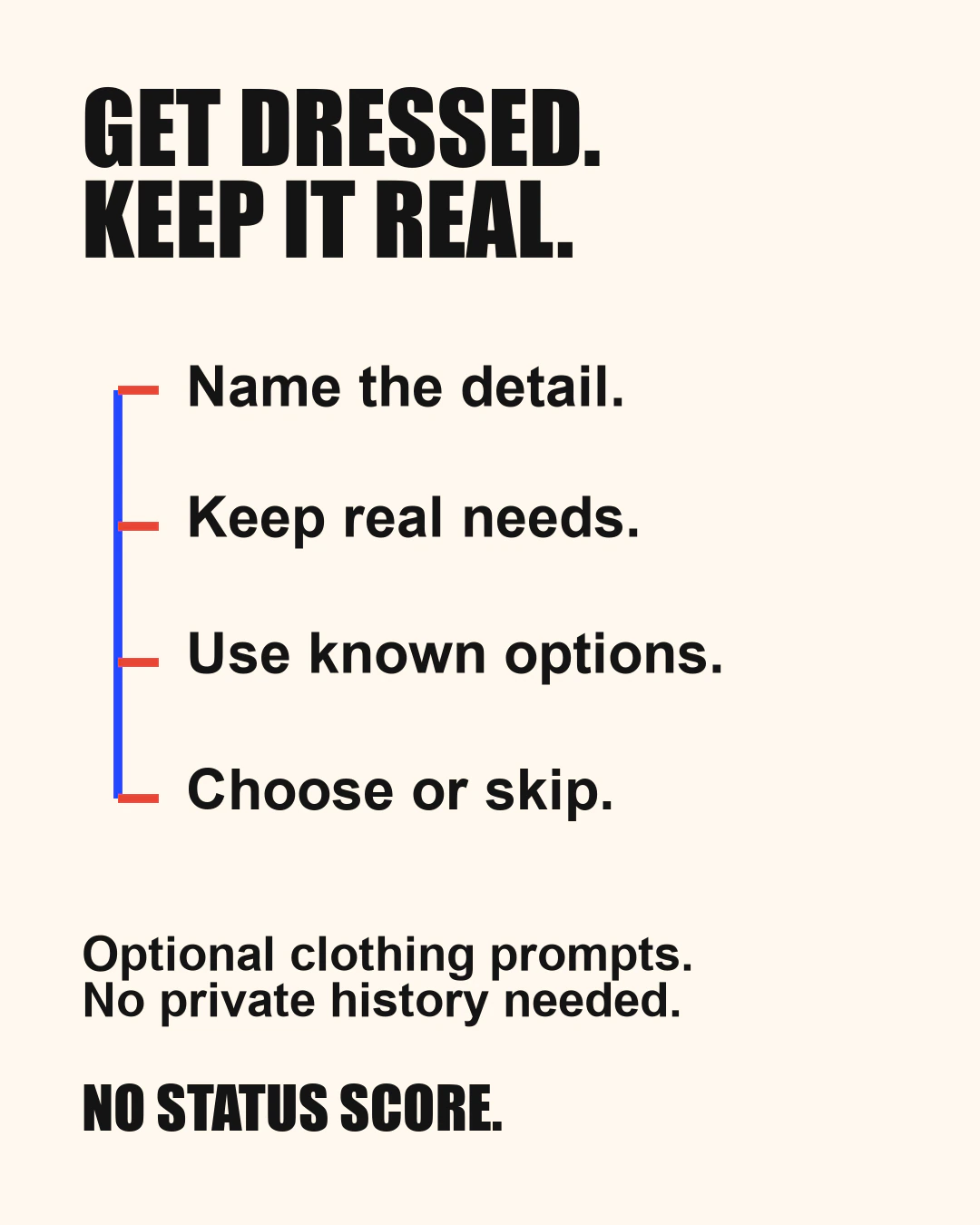
Graphic context — 03-routine-infographic: These original prompts consider an actual activity and familiar suitable owned clothes. They produce a bounded clothing choice or no change, without requesting another person private circumstances or an appearance score.
Text equivalent: GET DRESSED. KEEP IT REAL. Name the detail. Keep real needs. Use known options. Choose or skip. Optional clothing prompts. No private history needed. NO STATUS SCORE. Known options means ordinary information already available, not a new fit, comfort, movement, loading, material, care or security test. No private inquiry, photograph, contact, purchase or clothing alteration is introduced. Established appropriate care and essential clothing functions remain intact. An importantly uncertain or unsuitable item can be omitted, and no suitable option leaves skipping or a known unchanged outfit valid. There is no timer, price, social-acceptance estimate, confidence score, clinical review or tested superiority claim. Four complete primary publisher documents, not independent outfit studies. VogueGermany September13,2026 authored German affiliate-shopping editorial supplies dated aesthetic vocabulary only, not current measured growth, media-causality, history, prestige, product, price or gender prescription. Cambridge own undated people-sense definition accessed October26,2026 concerns families wealthy for a long time, not a visual wealth classifier or personal financial assessment. WRAP August18,2020 page/campaign archived March31,2023 supplies an existing-clothes aim; undated FTC overview supplies cleaning-information context only. Whole four native bodies read, not linked products, series, archives, references, reports, data, laws or cases; no actual garment inspection. No universal wardrobe, status, clinical, career, financial, environmental or legal result. No compulsory purchase, private disclosure, contact, photograph, care change or alteration.
A fictional example: the coat that did not match the story
Imagine Noor, an invented reader, saving a reference with a restrained palette and a light shirt. Noor likes the relationship between the shirt and the darker surrounding clothes. The caption’s old-money label is less useful: it suggests a lifestyle Noor is not trying to demonstrate and says nothing about the actual work day ahead.
Noor names the practical brief first: familiar appropriate work clothes, with usual access, movement and weather requirements intact. A known shirt and trousers already serve that setting. Noor keeps the necessary coat even though it is brighter than the reference. The coat does not need to disappear for the colour idea to remain interesting.
Now change a condition. The shirt is unavailable under Noor’s established care arrangements, and a similar-looking item has uncertain information. Noor does not borrow the first shirt’s care instructions, claim an equivalent function or buy something to complete the picture. A different familiar outfit, an unresolved choice or skipping the idea remains available.
Change the example again: Noor already enjoys a fully coordinated version of the aesthetic using suitable clothes. Nothing here requires disrupting it. Noor can like the whole combination without making a claim about wealth. The distinction is between choosing a look and treating that look as evidence of a person’s circumstances. Noor is fictional, not an observed participant or a testimonial for these prompts.
Graphic context — 04-practical-support: These invented alternatives follow fictional Noor: a needed bright coat remains, uncertain substitute information stays unresolved, and a fully coordinated suitable owned look remains an option. The rows are choices, not observed outcomes or wealth judgments.
Text equivalent: KEEP THE COAT. DROP THE GUESS. Needed coat Keep it. Unknown item Leave it. Full look Your choice. Invented alternatives. No wealth finding. CLOTHES. NO WEALTH TEST. A coat does not lose its essential function because it differs from a reference palette. Similar appearance does not transfer item information or care. A fully coordinated choice can be enjoyed without claiming or disproving a financial biography. No purchase, disclosure, repeated photograph, body/class/worth ranking or new test is required. Fictional Noor is not an observed participant, testimonial or evidence of routine efficacy; no clinical, career, saving, environmental or legal outcome follows. Four complete primary publisher documents, not independent outfit studies. VogueGermany September13,2026 authored German affiliate-shopping editorial supplies dated aesthetic vocabulary only, not current measured growth, media-causality, history, prestige, product, price or gender prescription. Cambridge own undated people-sense definition accessed October26,2026 concerns families wealthy for a long time, not a visual wealth classifier or personal financial assessment. WRAP August18,2020 page/campaign archived March31,2023 supplies an existing-clothes aim; undated FTC overview supplies cleaning-information context only. Whole four native bodies read, not linked products, series, archives, references, reports, data, laws or cases; no actual garment inspection. No universal wardrobe, status, clinical, career, financial, environmental or legal result. No compulsory purchase, private disclosure, contact, photograph, care change or alteration.
Costs, risks and stop criteria
You can consider a clothing idea without buying anything. That does not make existing clothing costless: past purchases, care, attention, access, space and any separately chosen advice can matter. We have no price range, saving estimate or environmental result to promise. No timer, wardrobe total or paid service is required to think through the question.
Stop if the process becomes pressure to impersonate a social class, disclose private circumstances, remove essential clothing or buy a collection you did not otherwise need. You do not have to earn permission to enjoy a colour or reject one. Keep your current arrangement when the exercise is not useful, and do not use it to rank someone else’s life.
Persistent appearance worries that interfere with daily life merit qualified support rather than another styling challenge. This is not diagnosis or treatment. A photograph cannot diagnose a person. Lighting, pose, lens, distance and editing can affect appearance; neither a polished image nor an awkward rendering certifies a garment’s fit, condition, comfort or function. No new photograph is requested.
The sources have different roles, not four outfit studies. VOGUE supplies commercial editorial context, Cambridge a word meaning, WRAP an archived aim and FTC an explanation of cleaning information. We adopt no brand recommendation, price, affiliate purchase, historical class claim, measured trend increase or clinical, career, financial, environmental or legal outcome. Linked products, references, archives, policies, reports, laws and cases were not independently inspected or applied.
How to assess the result
Ask whether you can explain the clothing choice without a story about wealth. You may have identified a detail, kept an essential layer, recognized an unanswered item question or decided not to change anything. Those are concrete descriptions. They do not establish superior taste, personal worth, family history or how every other person will react.
You have not tested a universal detector of status, a method for improving acceptance or the effectiveness of these prompts. You have separated an aesthetic reference from a claim it cannot establish by itself. If the clothes suit your actual purpose and you enjoy them, the financial biography can remain unwritten.
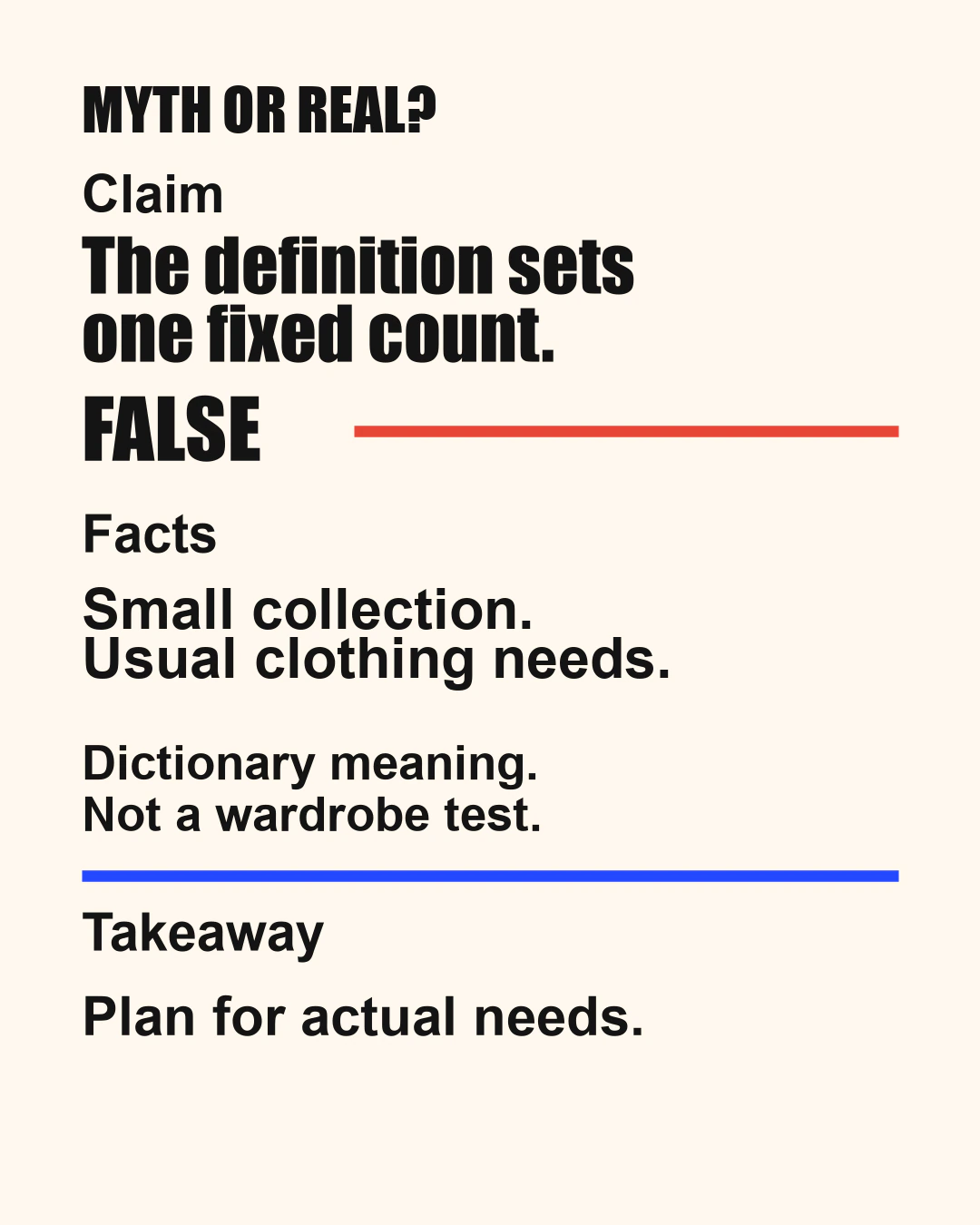
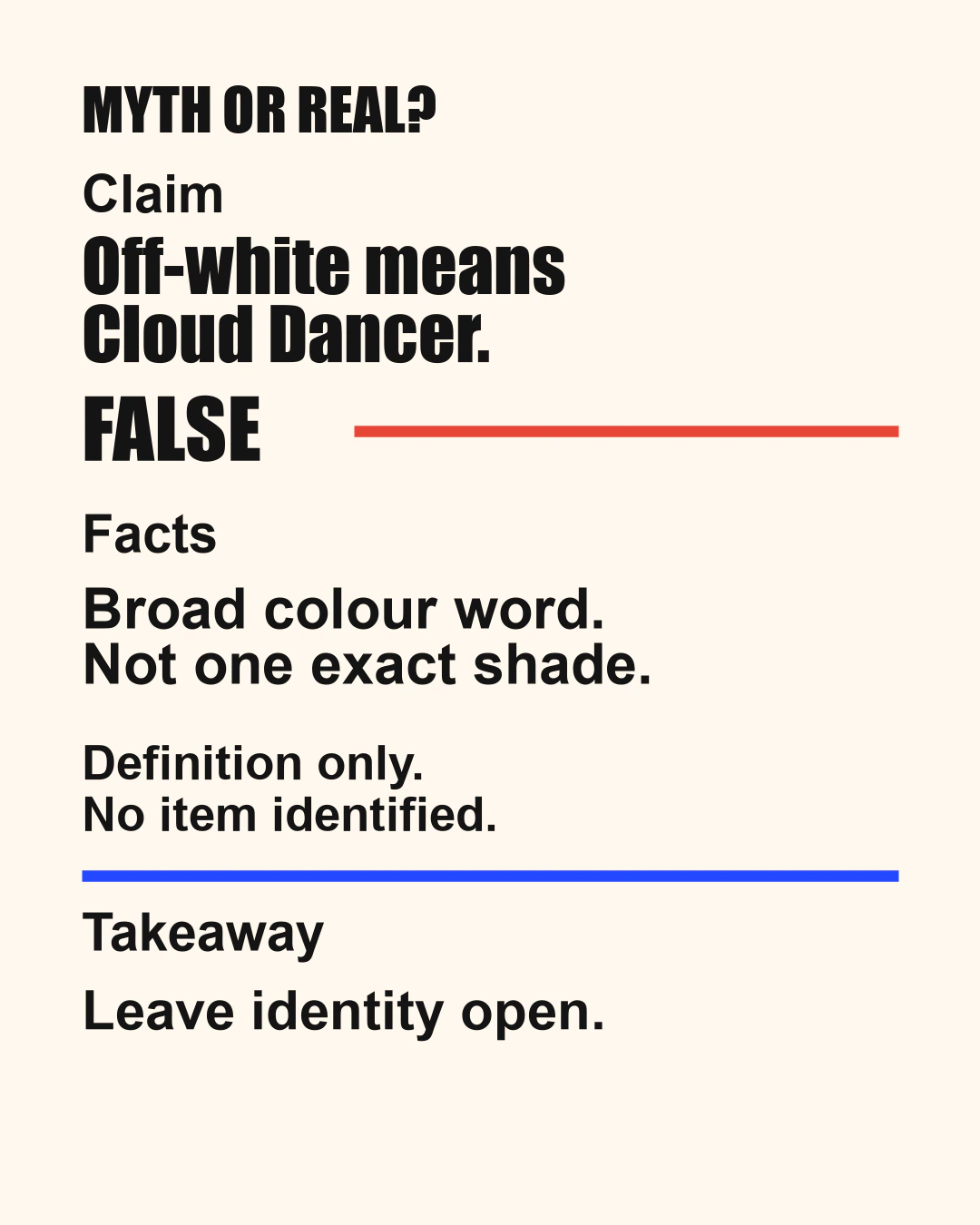
Myth or Real?
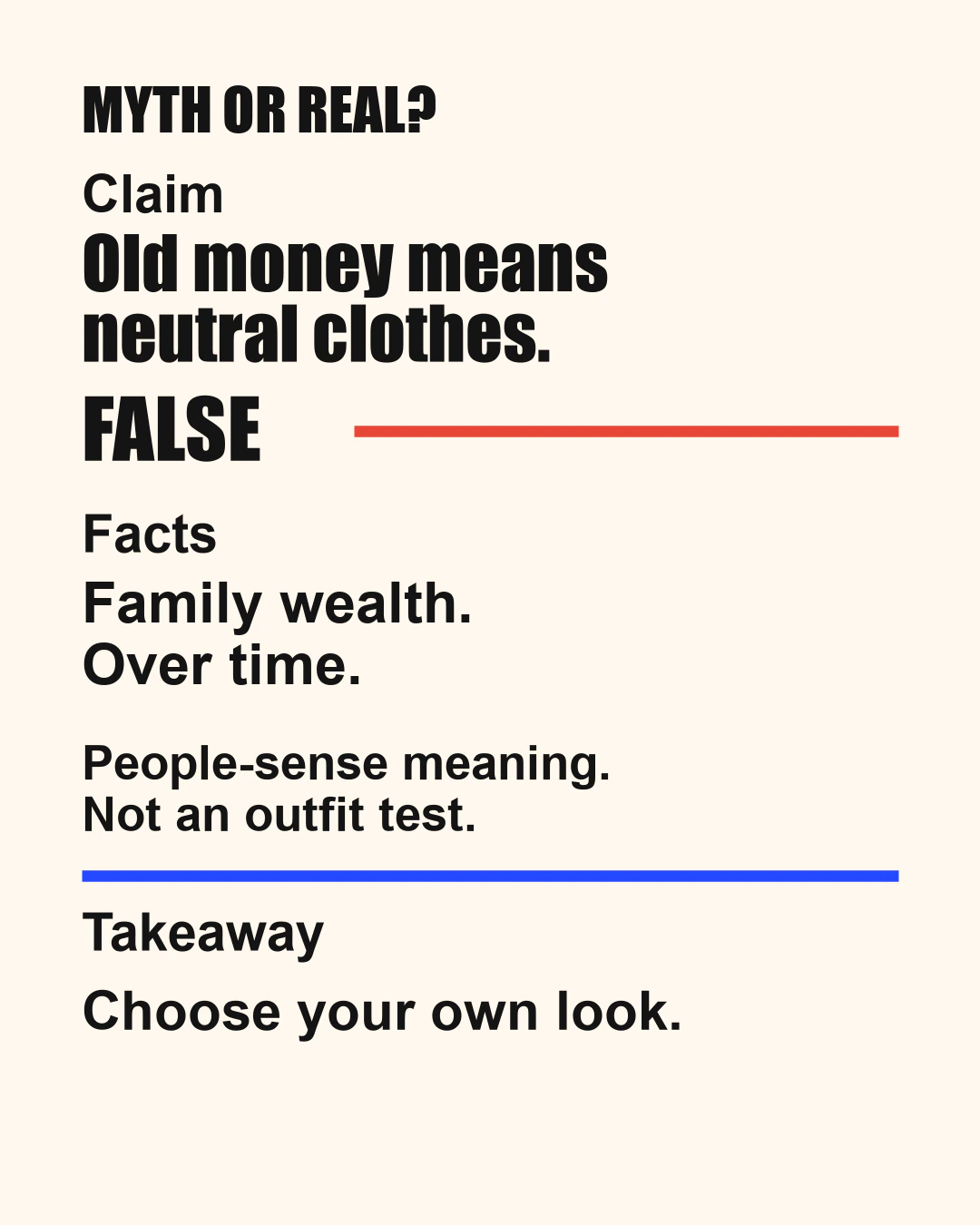
Claim
Social paraphrase: In the people sense, old money simply means neutral clothing.
Verdict
FALSE
Facts
Cambridge describes rich people whose families have been rich for a long time. That meaning concerns family circumstances over time.
Cambridge people-sense meaning, not a visual wealth test. A dated fashion editorial has a separate styling role.
An archived question compares formal-oldmoney and casual-grunge aesthetics and asks for opinions. It discovers styling vocabulary. This card explicitly reframes a people-sense definition claim for editorial examination, not a quotation or false belief attributed to the questioner. Comments, anecdotes, body or class rankings, brands, prices, clinical opinions, care advice and votes are excluded. Cambridge Dictionary own undated entry, accessed26October2026, uses the people sense for wealthy people whose families have been wealthy for a long time. The meaning concerns family circumstances over time, rather than a clothing palette. VogueGermany September13,2026 authored German affiliate-shopping editorial uses oldmoney as styling vocabulary. That separate role does not turn neutral clothes into the dictionary definition. Products, prices, historical, growth, media-causality, prestige, quality and gender claims are not adopted. FALSE rejects equating the people-sense meaning with neutral clothing. It does not assess any person finances, prove poverty, negate genuine family wealth or forbid enjoying a coordinated look. Unknown circumstances stay unknown. Actual activities, essential clothing functions, known suitability and established appropriate care remain relevant. No purchase, private disclosure, contact, photograph, physical test, alteration or care change is required. These are distinct lexical and commercial editorial roles, not outfit-effectiveness studies, financial assessment or qualified clinical review. Linked products, series, archives and underlying references were not independently inspected.
Takeaway
Choose a look you enjoy; leave unknown wealth unknown. Neither wealth nor poverty follows from an outfit alone.
Sources
Claim discussion: Archived original formal-oldmoney and casual-grunge style question.
Evidence: Meaning of old money in English; Old Money Style: Auf diese Arten tragen wir 2026 den klassischen Modetrend.
Checked 2026-10-26. Scope: Nonclinical clothing choices, not a body, class, wealth, fit, care, clinical or legal assessment. No purchase, private history, contact, photo, test or care change required.
Sources
- VOGUE Germany: Old Money Style. Mona Bergers, September13,2026. German authored affiliate-shopping editorial, used only for dated aesthetic vocabulary. No growth, historical, quality, prestige, product or outcome claim adopted.
- Cambridge Dictionary: Old money. Undated entry accessed October26,2026. People sense concerns families wealthy for a long time, not a visual wealth test. Other senses, examples, corpora, related words and sidebar material are excluded.
- WRAP: Love Your Clothes. August18,2020 page; campaign archived March31,2023. Existing-clothes aim only, not an active programme, wardrobe guarantee, saving or environmental outcome. Statistics and linked reports are excluded.
- FTC: Apparel and Labeling. Undated overview accessed October26,2026. Cleaning-information context only, not a new care method, legal interpretation or garment certificate. Linked laws, cases and guides were not read or applied.
FAQ
Common questions
Does an old-money outfit prove inherited wealth?
An outfit alone does not establish a family financial history. Cambridge people-sense meaning concerns families wealthy for a long time, while an aesthetic describes styling. Lack of proof also does not establish poverty or rule out genuine wealth.
Do I need neutral colours or particular brands?
This guide sets no compulsory palette or purchase. You may enjoy one detail, several details, a full suitable owned combination or no change. Actual clothing requirements and known item information remain first.
What can I assess instead of a status score?
Describe the detail you considered, the actual activity, a familiar suitable option and any important unknowns. This is an optional clothing choice, not a wealth, acceptance, comfort or clinical finding.
Topic hubs
Tags