
The outfit worked yesterday. Then a colour guide arrived, and suddenly the white shirt looked like a shade you were supposed to replace.
That is a large job to give a colour name. You can enjoy an editorial reference without turning it into an instruction to rebuild your clothes around it. Start with the day you actually have, the clothing you know suits it and the things you still do not know about an item. A familiar coat does not become unsuitable because a different white appears in a fashion headline.
This guide separates three questions: what a reference is called, what you can reasonably say about your own clothes and what you need to wear. They can have different answers. You do not need a new purchase, a colour comparison exercise or a photograph to keep those answers separate.
Who this is for
This is for ordinary interest in a pale-colour styling reference, including deciding to leave it alone. It is not a personal colour analysis, a complexion ranking, a garment authentication service or a health intervention. People have different clothes, preferences, access, climates, activities and requirements. An enjoyable outfit can contain one pale detail, several, none or an already familiar combination.
In its own commercial styling guide, CHARLES & KEITH uses Cloud Dancer in a 2026 colour reference. We use that as the retailer’s editorial context, not as evidence of measured popularity, a psychological effect or something everyone must acquire. The guide also contains shopping suggestions and broader claims that are not recommendations here. [S5]
Cambridge’s own dictionary definition describes off-white in broad colour terms: white with a little grey or yellow. That is a word meaning, not a way to certify that a particular shirt is a specific branded shade. A general description and a precise named reference do different jobs. We are not identifying your clothes from an image or telling you that every pale garment is Cloud Dancer. [S2]
You can also dislike the reference. Choosing a bright sweater, a dark uniform or no change does not require a defence based on someone else’s palette. A fashion name has not measured your taste, worth, confidence or suitability for an activity.
Graphic context — 01-article-hero: This original optional sequence keeps a retailer colour reference separate from a demand to replace clothes. The actual activity, essential clothing functions and an informed choice or no change remain central.
Text equivalent: COLOUR IDEA. NOT A RESET. Name the idea. Keep real needs. Choose or skip. Optional inspiration. No shade test here. YOUR DAY COMES FIRST. A commercial colour reference does not establish your wardrobe contents, exact physical shade or the suitability of an item. Generic offwhite meaning is also not a brandedshade certificate. Missing certification does not prove mismatch or rule out already owning the shade. One, several or no pale details and a familiar full pale outfit can be valid. Keep required coverage, movement, access, weather, uniform, protection, fastening, established care and procedures. No swatch comparison, photograph, contact, purchase, body analysis or reset is required. Four complete primary publisher documents, not independent outfit studies. Production source IDs are S2Cambridge own broad offwhite definition, S3WRAP August18,2020 page/campaign archivedMarch31,2023 aim, S4FTC cleaninginformationoverview with native2018publication/2025modification metadata, and S5CharlesKeith own commercial colourreference accessedOctober26,2026. S5nativeMay29,2025date field is not verified timing of its current2026 wording. S1Pantone58char200shell is excluded; no complete Pantoneannouncement or selectionmethod reading claimed. No measuredcurrentgrowth, psychological/clinical effect, exactshade-screenmatch, universalpairing/wardrobe, product or purchase recommendation. Wholefour nativebodies read, not linkedproducts/standards/policies/reports/data/laws/cases or actualgarments inspected. No swatchtest/photo/measurement/contact/account/newcare/whitening/dye/alteration or requiredpurchase. Actualneeds/essentialfunctions/establishedcare and procedures first.
Before you start
Think of an actual occasion that already matters to you: an ordinary workday, an established appointment, time outside or a familiar evening at home. Keep any required clothing, protective equipment, coverage, access, fastening and weather needs intact. Follow existing uniform, workplace, event and safety procedures. The guide does not replace them.
You do not have to inventory your wardrobe or prove you own something pale. Use only an option you already understand to be suitable. If an item is unfamiliar, uncomfortable, damaged or uncertain for the occasion, it can stay out of this exercise. An unresolved question is a reason to leave the choice open, not to invent an answer from its colour.
WRAP’s Love Your Clothes page describes an aim of making more of existing clothes. That page is dated August 2020 and records the campaign’s March 2023 archive. It supplies a useful historical aim, not a current programme, a promise that every wardrobe is sufficient or a measured saving from these prompts. [S3]
Established care information remains separate from styling language. The FTC’s apparel overview explains cleaning information associated with clothing. A pale colour name does not provide an item-specific cleaning method, a whitening instruction or a reason to change your care routine. This guide supplies no dyeing, bleaching, pressing, alteration or repair procedure. Seek appropriate item advice separately when that is needed; choosing to omit the item is also available. [S4]
No swatch purchase, physical shade comparison, photo upload, measurement, account change or contact with a retailer is part of the process. We are making a bounded clothing choice, not verifying a colour standard.
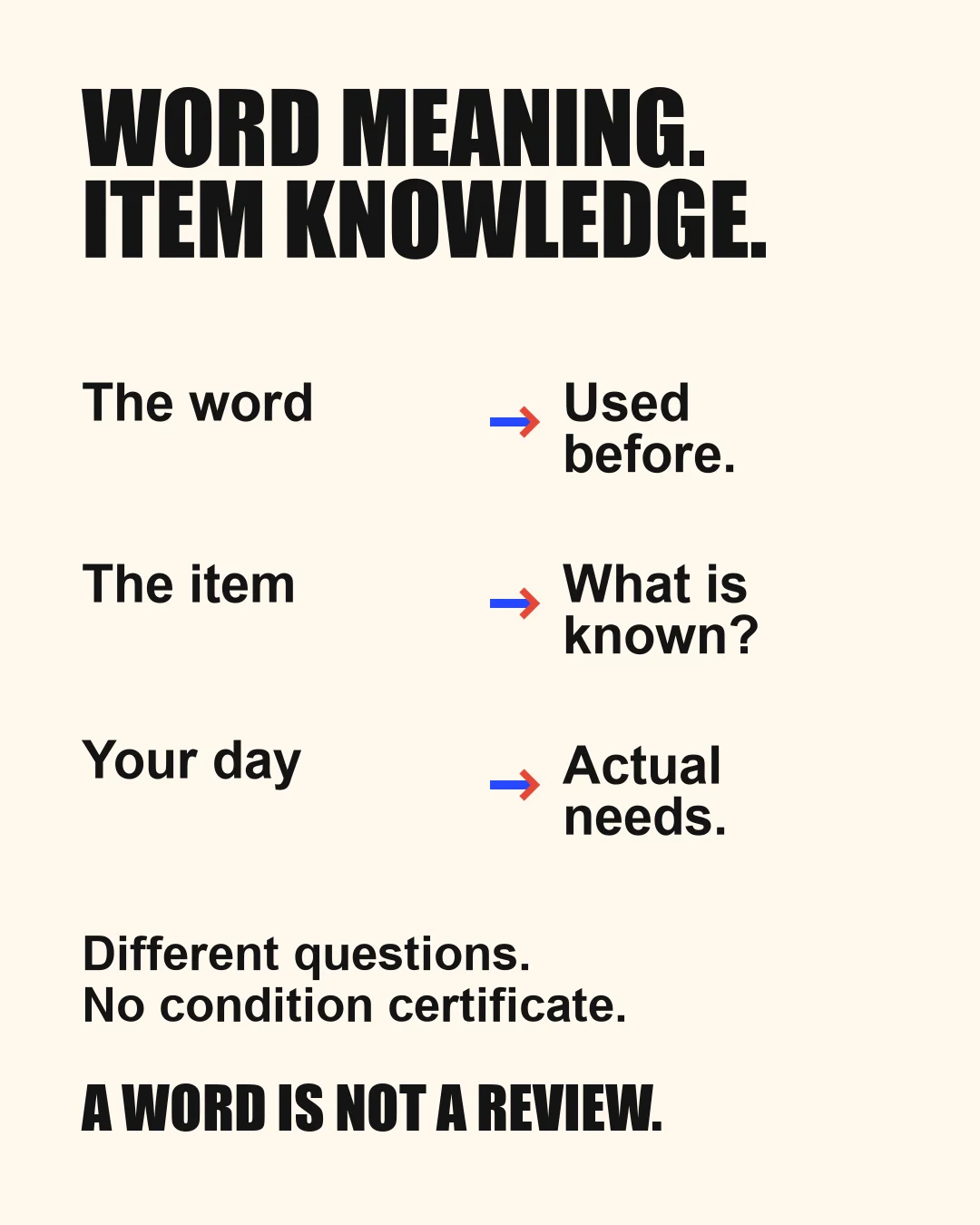
Graphic context — 02-feature-explainer: The pairs distinguish a retailer editorial reference, a general dictionary colour word and an original clothing choice. They are different questions, not calibrated colour samples, an item identification tool or an appearance ranking.
Text equivalent: A NAME IS NOT AN ITEM CHECK. Reference Guide context. Word Broad meaning. Your day Actual needs. Different source roles. No shade certificate. KEEP THE QUESTIONS APART. CharlesKeith own commercial guide uses CloudDancer and a2026 program reference. Its native May29,2025 publication field does not verify when the current2026 wording appeared; the guide is accessed October26,2026. Cambridge own undated offwhite definition supplies broad colour meaning only. No complete Pantone announcement was read: its retained native200 response is a58character shell and excluded. No exact branded identity, screen-to-fabric match, colour psychology, complexion classification, universal pairing or garmentfit/care/comfort certificate follows. Four complete primary publisher documents, not independent outfit studies. Production source IDs are S2Cambridge own broad offwhite definition, S3WRAP August18,2020 page/campaign archivedMarch31,2023 aim, S4FTC cleaninginformationoverview with native2018publication/2025modification metadata, and S5CharlesKeith own commercial colourreference accessedOctober26,2026. S5nativeMay29,2025date field is not verified timing of its current2026 wording. S1Pantone58char200shell is excluded; no complete Pantoneannouncement or selectionmethod reading claimed. No measuredcurrentgrowth, psychological/clinical effect, exactshade-screenmatch, universalpairing/wardrobe, product or purchase recommendation. Wholefour nativebodies read, not linkedproducts/standards/policies/reports/data/laws/cases or actualgarments inspected. No swatchtest/photo/measurement/contact/account/newcare/whitening/dye/alteration or requiredpurchase. Actualneeds/essentialfunctions/establishedcare and procedures first.
Actions in order
1. Name the reference without making it a requirement
Try an ordinary description: “I like the pale-colour idea in that guide.” It says what caught your attention without claiming that your clothes match a particular standard. If all you mean is a light-coloured layer, that can remain the description. You do not have to promote it into an exact branded identity.
Keep the retailer’s reference attached to its role. A commercial guide can offer an aesthetic vocabulary while also encouraging shopping. Its presence does not establish that your current clothes are deficient, that a whole outfit needs replacing or that a colour produces a particular emotional state. Those are additional claims, requiring their own support. We do not adopt them here.
You may prefer a specific name as inspiration. That preference does not itself tell you what you own, what your activity requires or how any garment feels. Let the name describe the reference while the clothing decision stays grounded in those separate questions.
2. Put the real day ahead of the palette
Ask what the clothes must do for an activity you already expect. Perhaps you need your familiar weather layer, an established uniform or a particular fastening arrangement. Keep those needs visible before considering an optional detail. You do not have to remove a useful layer to make an outfit look more consistent with a picture.
Consider this original fictional example. Imani likes a pale outfit in an article but has an ordinary journey outside before a familiar indoor commitment. Imani’s known suitable coat is blue. The coat stays. A colour reference has not supplied a different answer to the weather question, and this is not an invitation to test an uncertain replacement.
The same logic applies when the reference does not enter the outfit at all. If Imani’s established clothes already serve the day, keeping them is a complete choice. There is no missing final step in which a pale accessory must be added to validate the interest.
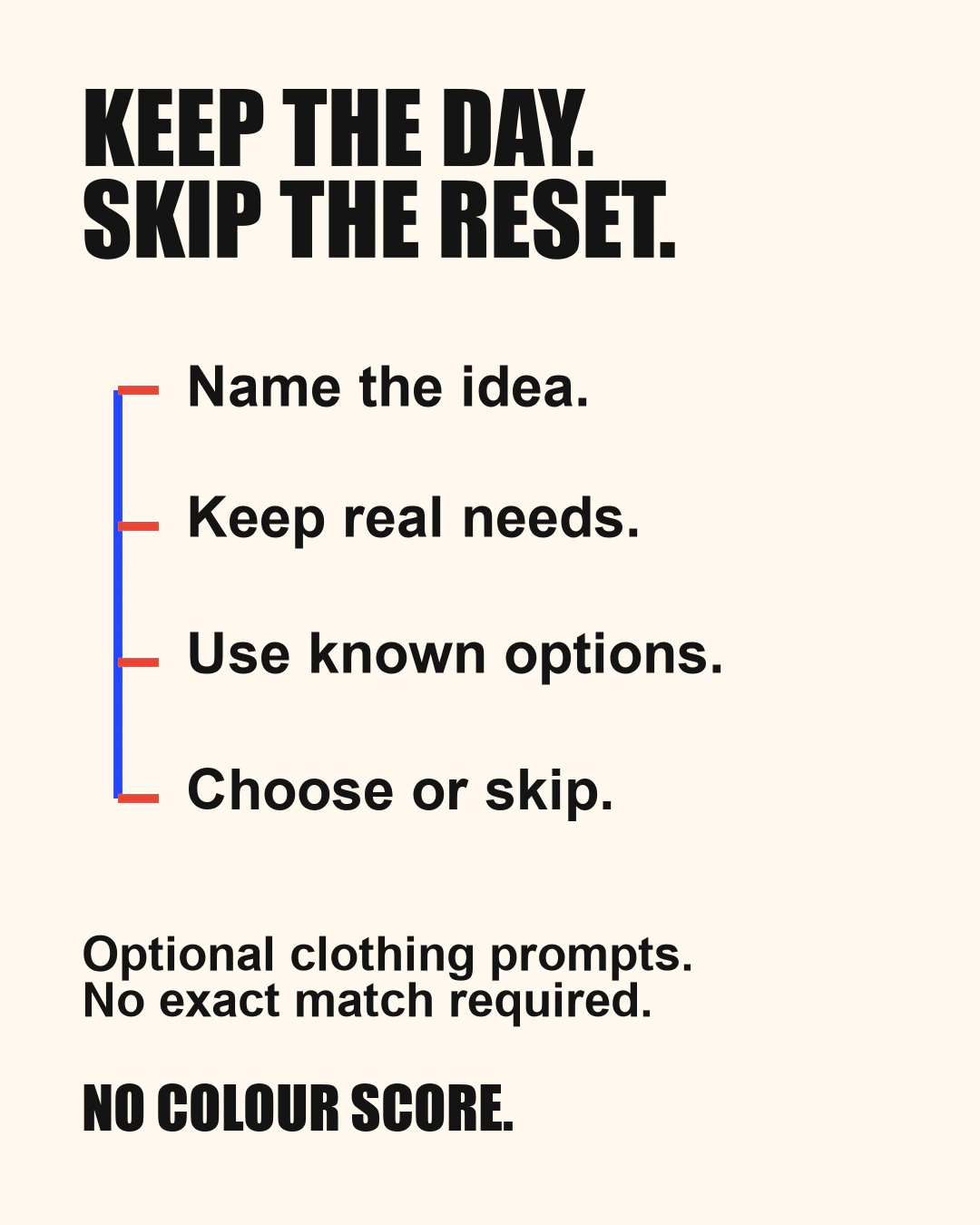
Graphic context — 03-routine-infographic: These original prompts work with an actual activity and familiar suitable owned choices, if available. They can end with unchanged clothes or skipping, rather than a new exact-match exercise or a compulsory pale item.
Text equivalent: KEEP THE DAY. SKIP THE RESET. Name the idea. Keep real needs. Use known options. Choose or skip. Optional clothing prompts. No exact match required. NO COLOUR SCORE. Known options means information already understood from ordinary use, not a new fit, care, movement, colour, comfort or protection test. An unknown or unsuitable item can remain omitted and a lack of suitable pale clothes does not create a purchase requirement. No inventory, account, disclosure, photograph, swatch, test, alteration, whitening or dyeing is introduced. Keep actual instructions and established procedures separate from optional inspiration. There is no timer, wardrobe count, confidence score, price, clinical review or measured routine benefit. Four complete primary publisher documents, not independent outfit studies. Production source IDs are S2Cambridge own broad offwhite definition, S3WRAP August18,2020 page/campaign archivedMarch31,2023 aim, S4FTC cleaninginformationoverview with native2018publication/2025modification metadata, and S5CharlesKeith own commercial colourreference accessedOctober26,2026. S5nativeMay29,2025date field is not verified timing of its current2026 wording. S1Pantone58char200shell is excluded; no complete Pantoneannouncement or selectionmethod reading claimed. No measuredcurrentgrowth, psychological/clinical effect, exactshade-screenmatch, universalpairing/wardrobe, product or purchase recommendation. Wholefour nativebodies read, not linkedproducts/standards/policies/reports/data/laws/cases or actualgarments inspected. No swatchtest/photo/measurement/contact/account/newcare/whitening/dye/alteration or requiredpurchase. Actualneeds/essentialfunctions/establishedcare and procedures first.
3. Use what you actually know about an owned option
There may be a familiar pale shirt that you already know works for the occasion. There may not. “I own it” and “it is suitable for today” are separate facts; neither follows from an assumption that most people have white clothing. Do not turn someone else’s general statement about wardrobes into an instruction about yours.
Suppose Imani remembers a cream cardigan but has not established that it is suitable for this activity. Its colour does not fill that gap. The choice can stay with an understood outfit, or the colour idea can wait. You do not need to buy a substitute to complete this example or to resolve a question that the exercise did not otherwise create.
If a known suitable item is available and you want it, it can be an optional detail. Keep the description modest: familiar pale cardigan, ordinary shirt, existing scarf. Those words can be useful without certifying a branded shade, material, construction, condition or particular result. Different people may reasonably choose differently with the same reference in mind.
4. Leave exact colour identity and personal suitability separate
“Off-white” can be a broad description. “This is the exact named shade” is a more specific assertion. The dictionary definition does not establish that second claim about an actual object, and a retailer’s description of a colour does not inspect your garment. We make no calibrated screen-to-fabric comparison or undertone analysis here. [S2, S5]
You can leave exact identity unknown and still describe a familiar clothing choice. Equally, a precise label would not, by itself, establish that an item suits the weather, required activity, care needs or your own preferences. A colour question cannot answer all of those other questions by borrowing a more impressive name.
There is also no universal pairing instruction in this guide. If you enjoy two familiar colours together and the clothes meet the actual requirements, you do not need an external claim that the pairing always works. If you do not enjoy the combination, you are allowed to leave it. Neither choice establishes something about another person’s complexion, judgement or worth.
Not having certified a match does not prove a mismatch. An item you already own could happen to have the named shade; this guide has not established either answer. Leave that identity question open instead of turning uncertainty into a reason to replace the item. Its known ordinary suitability can still guide your choice.
5. Choose, keep, change or skip
Finish with a clothing decision rather than a matching score. You might keep the existing outfit, use one known suitable pale item, enjoy several familiar pale pieces or skip the reference entirely. No minimum proportion of white, number of items or wardrobe reset is required by these prompts.
Here is a useful counterexample to compulsory restraint. Imani already has a fully pale outfit that is familiar, suitable for the actual occasion and enjoyable to wear. Wearing it can be a valid choice. The point is not to ban coordinated looks or make “one detail” a new rule. It is to keep an optional reference from becoming a demand to acquire or replace clothes.
Likewise, a genuinely required colour instruction for an existing activity is a separate matter. Follow the actual applicable requirement through established procedures rather than treating a trend guide as its authority. This article has not assessed your particular event, uniform or equipment. Important uncertainty remains explicit instead of being settled by a general fashion reference.
Graphic context — 04-practical-support: The invented alternatives follow fictional Imani: a needed blue coat stays, an uncertain cardigan stays unresolved, and a fully pale suitable familiar outfit remains possible. These are editorial choices, not observed outcomes or a compulsory minimalism rule.
Text equivalent: KEEP THE COAT. LEAVE THE TEST. Needed coat Keep it. Unknown item Leave it. Pale outfit Your choice. Invented alternatives. No shade certificate. COLOUR IS OPTIONAL. The coat retains its actual job despite a different palette. A pale item does not acquire missing suitability or care information from its appearance or name. A full familiar pale outfit is also allowed when suitable and wanted; these prompts do not ban coordination. No exactshade certification, universalwardrobe sufficiency, complexion ranking or new purchase is inferred. Fictional Imani is not a participant or testimonial. Essential functions, established care and realrequirements remain first, with no physicaltest, alteration or claimed clinical, career, saving, environmental or legal outcome. Four complete primary publisher documents, not independent outfit studies. Production source IDs are S2Cambridge own broad offwhite definition, S3WRAP August18,2020 page/campaign archivedMarch31,2023 aim, S4FTC cleaninginformationoverview with native2018publication/2025modification metadata, and S5CharlesKeith own commercial colourreference accessedOctober26,2026. S5nativeMay29,2025date field is not verified timing of its current2026 wording. S1Pantone58char200shell is excluded; no complete Pantoneannouncement or selectionmethod reading claimed. No measuredcurrentgrowth, psychological/clinical effect, exactshade-screenmatch, universalpairing/wardrobe, product or purchase recommendation. Wholefour nativebodies read, not linkedproducts/standards/policies/reports/data/laws/cases or actualgarments inspected. No swatchtest/photo/measurement/contact/account/newcare/whitening/dye/alteration or requiredpurchase. Actualneeds/essentialfunctions/establishedcare and procedures first.
Costs, risks and stop criteria
There is no purchase requirement for considering these questions. That does not make clothing costless. Existing items may involve past spending, care, storage, time, attention or access to suitable advice. We have no price estimate, guaranteed saving or environmental outcome to attach to the process. We are not prescribing a shopping schedule, wardrobe count or amount of time you must spend on it.
Stop if the exercise turns into pressure to replace useful clothes, repeat photographs, rank your body or remove something essential to the activity. You do not have to identify a perfect white before getting on with the day. Keeping an understood arrangement is reasonable when another decision offers you nothing useful.
Do not try to resolve an uncertain item question by changing its colour or construction. No whitening, dyeing, cutting, pinning or alteration is proposed. Keep established care and required procedures intact. Where an important item-specific question needs appropriate advice, obtain it separately or leave the item out; a styling diagram is not that advice.
Persistent appearance concerns that interfere with daily life deserve qualified support rather than another colour challenge. This is not diagnosis or treatment. A photograph cannot diagnose a person. Lighting, pose, lens, distance and editing can affect appearance; an image does not certify a garment’s fit, comfort, condition, protection or precise physical shade. No new photograph is requested.
The evidence has four different roles, not four outfit studies. The retailer provides its own commercial reference, the dictionary a general definition, WRAP an archived aim and FTC cleaning-information context. None is an effectiveness trial of this original sequence. We claim no clinical, career, financial, environmental or legal result, no measured trend increase and no universal judgement about colour combinations.
How to assess the result
Can you describe the reference, the actual activity and the clothing decision without claiming an exact shade you have not established? Perhaps you have kept a useful coat, selected a familiar item, recognized an unresolved question or decided not to change anything. Those are concrete descriptions rather than a verdict on how successfully you performed a trend.
Revisit the choice when the real activity, clothing condition or applicable requirement changes. A new fashion headline need not trigger a new wardrobe exercise. You have not tested this routine’s benefits or certified a named colour; you have kept a reference in proportion to the decision it can help you consider.
Your clothes can continue doing their ordinary jobs while the colour name remains an idea.
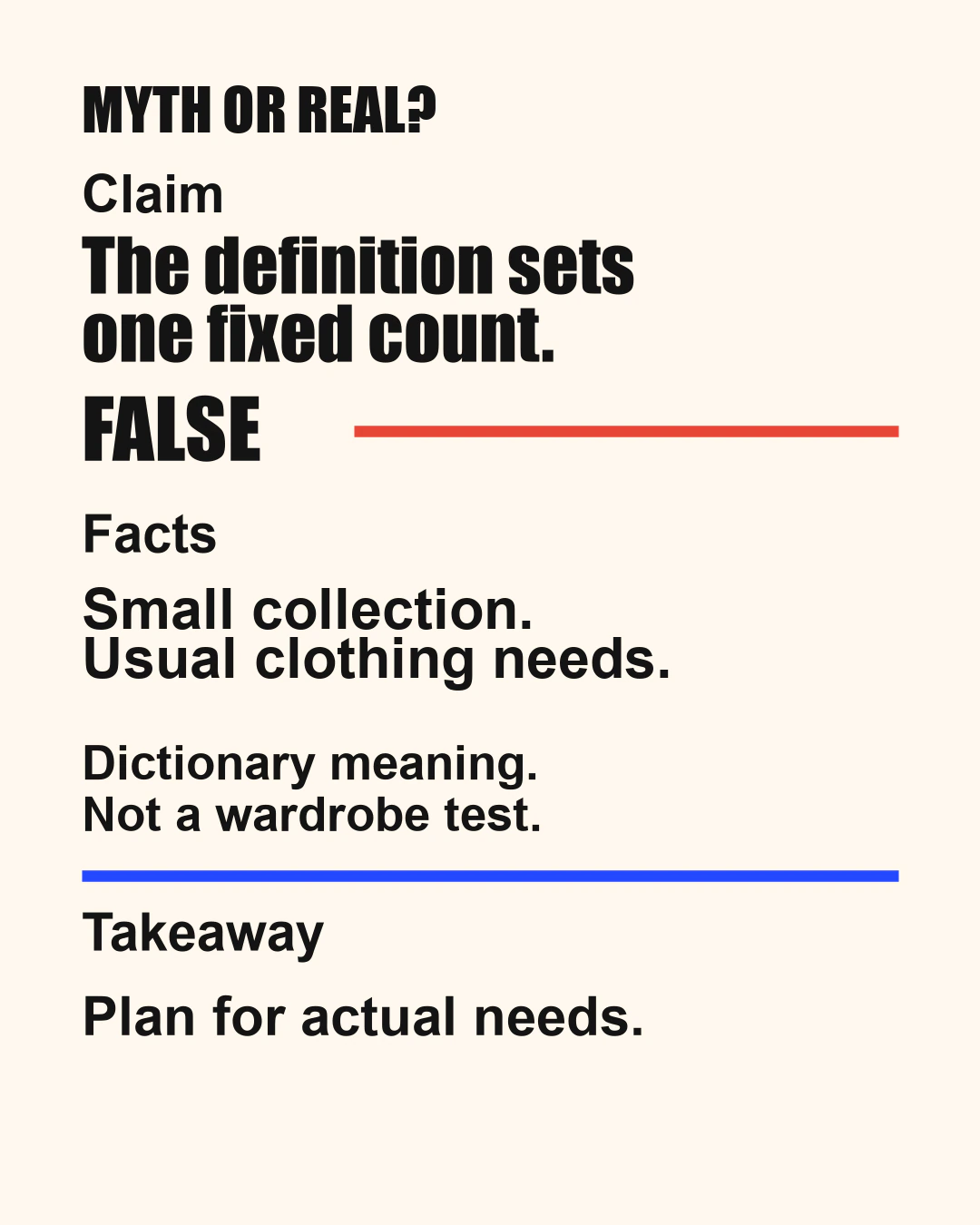
Myth or Real?
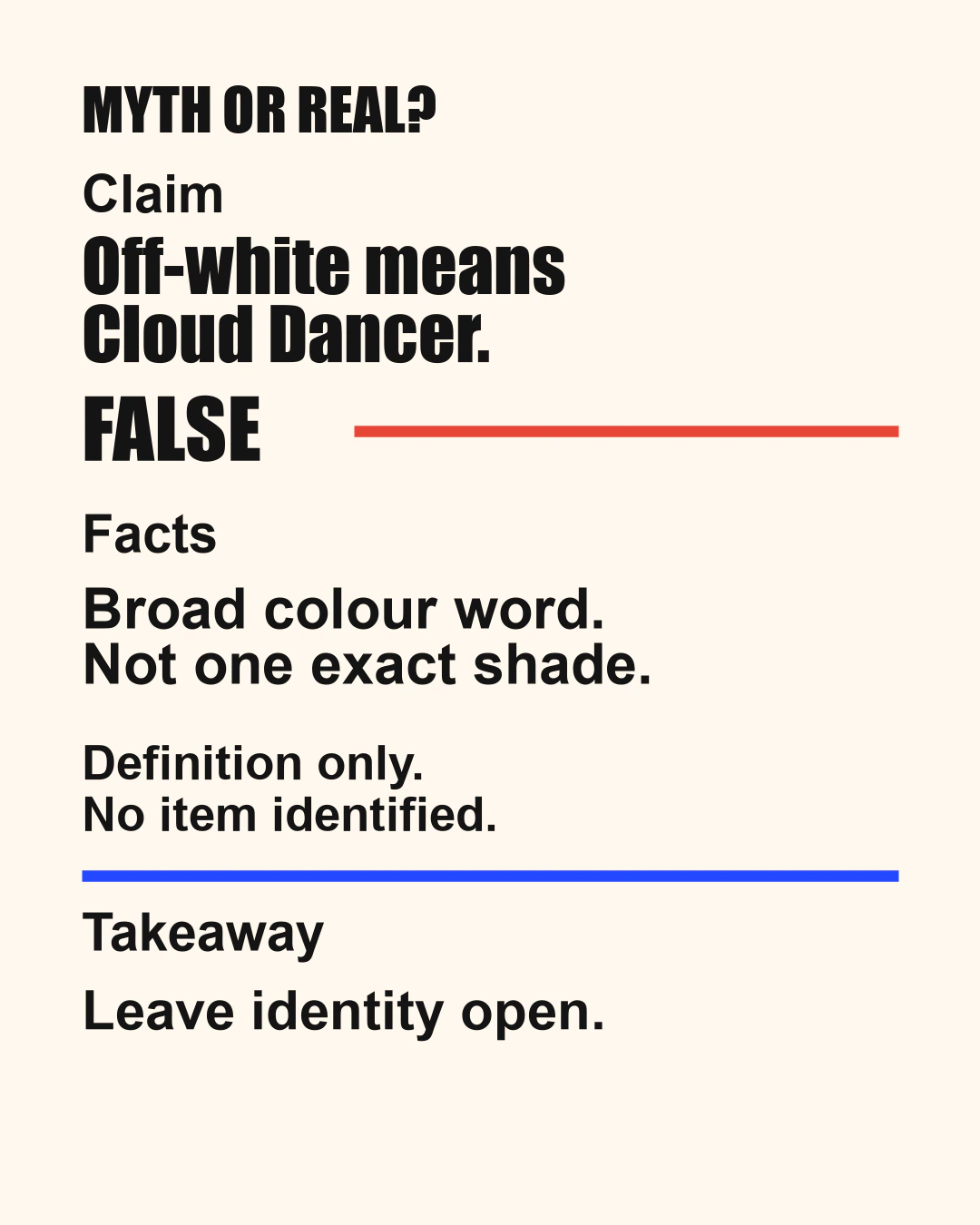
Claim
Social paraphrase: Off-white means only the particular named colour reference Cloud Dancer.
Verdict
FALSE
Facts
Cambridge gives a broad colour-word meaning: white with a little grey or yellow. That is not a definition limited to one named reference.
Generic definition only. Retailer reference is a separate role, not proof of an actual item colour.
An archived wardrobe question about CloudDancer supplies discovery only. This card explicitly reframes a generic-word versus named-reference proposition for editorial examination, not a quote or false belief attributed to its author. Comments, complexion and psychological claims, politics, products, pairing suggestions, anecdotes and votes are excluded. Cambridge own undated offwhite definition, accessed26October2026, describes white with a little grey or yellow. A broad colour word does not mean only one exact namedreference. CharlesKeith own commercial guide uses CloudDancer in a2026 reference, a separate editorial role. Its nativeMay29,2025 publication field is not verified timing of current2026 wording. The incomplete58character Pantone response is excluded; no fullPantoneannouncement or selectionmethod is claimed. FALSE rejects the exclusive lexicalequivalence. It does not identify a garment, prove mismatch, rule out already owning the shade or establish fit, comfort, care, complexion suitability or a screenmatch. No universalpairing, psychology, measuredgrowth or testedroutinebenefit follows. Exactidentity may remain unknown while known ordinaryclothing needs guide a choice. No swatchcomparison, photograph, measurement, upload, contact, account change, purchase, whitening, dyeing or alteration is required. These are lexical and commercialreference roles, not independent outfitstudies or professional garment review. Linkedproducts/standards/policies/reports/data were not read or tested.
Takeaway
Leave exact identity unknown when unestablished. An unverified match does not prove a mismatch.
Sources
Claim discussion: Archived original CloudDancer wardrobe question.
Evidence: Meaning of off-white in English; Pantone’s Color of the Year, Explained.
Checked 2026-10-26. Scope: Nonclinical lexical distinction, not calibratedshade/garmentidentification/complexion/fit/care/clinical/legal certificate. No new swatch/photo/contact/account/purchase/test.
Sources
- S5 — CHARLES & KEITH, Pantone’s Color of the Year, Explained. Accessed 26 October 2026. Commercial styling guide used only for its own Cloud Dancer/2026 reference. The program year is not a verified publication date for this version; the page’s native publication field predates the program label. Shopping, psychological, universal-pairing and exact-match suggestions are not adopted. The full Pantone announcement was not reviewed and is not an article source.
- S2 — Cambridge Dictionary, Off-white. Undated entry, accessed 26 October 2026. Own broad colour definition only; examples, corpora, translations and sidebar material are excluded. It does not identify an actual garment or a branded shade.
- S3 — WRAP, Love Your Clothes. Page dated 18 August 2020; campaign archive notice dated 31 March 2023. Archived existing-clothes aim only, not current programme participation, universal wardrobe sufficiency or a quantified result.
- S4 — FTC, Apparel and Labeling. Explanatory overview accessed 26 October 2026. Native publication metadata is 31 October 2018 and modification metadata is 4 March 2025; linked case dates are separate. Cleaning-information context only. Linked laws, cases and business guides were not read or applied as personal legal or care advice.
Whole retained readable bodies of these four sources were reviewed. Linked products, standards, policies, underlying reports, data, laws and cases were not independently read, tested or inspected. The Imani examples and the decision prompts are original editorial illustrations, not observed cases, professional garment review or a claim that everyone owns a suitable option.
FAQ
Common questions
Does off-white mean one exact named shade?
Cambridge gives a broad colour-word definition, not one limited to a specific named reference. This guide does not identify your garment, certify a match or establish a mismatch.
Do I need to replace useful white clothes?
These prompts require no reset, new purchase or swatch comparison. Keep actual requirements and known suitability first. One, several or no pale details and a familiar full pale outfit can all remain options.
What can I assess instead of a colour score?
Describe the reference, actual activity, known suitable option and important unknowns. A concrete choice or no change does not certify shade identity, comfort, fit or a clinical result.
Topic hubs
Tags