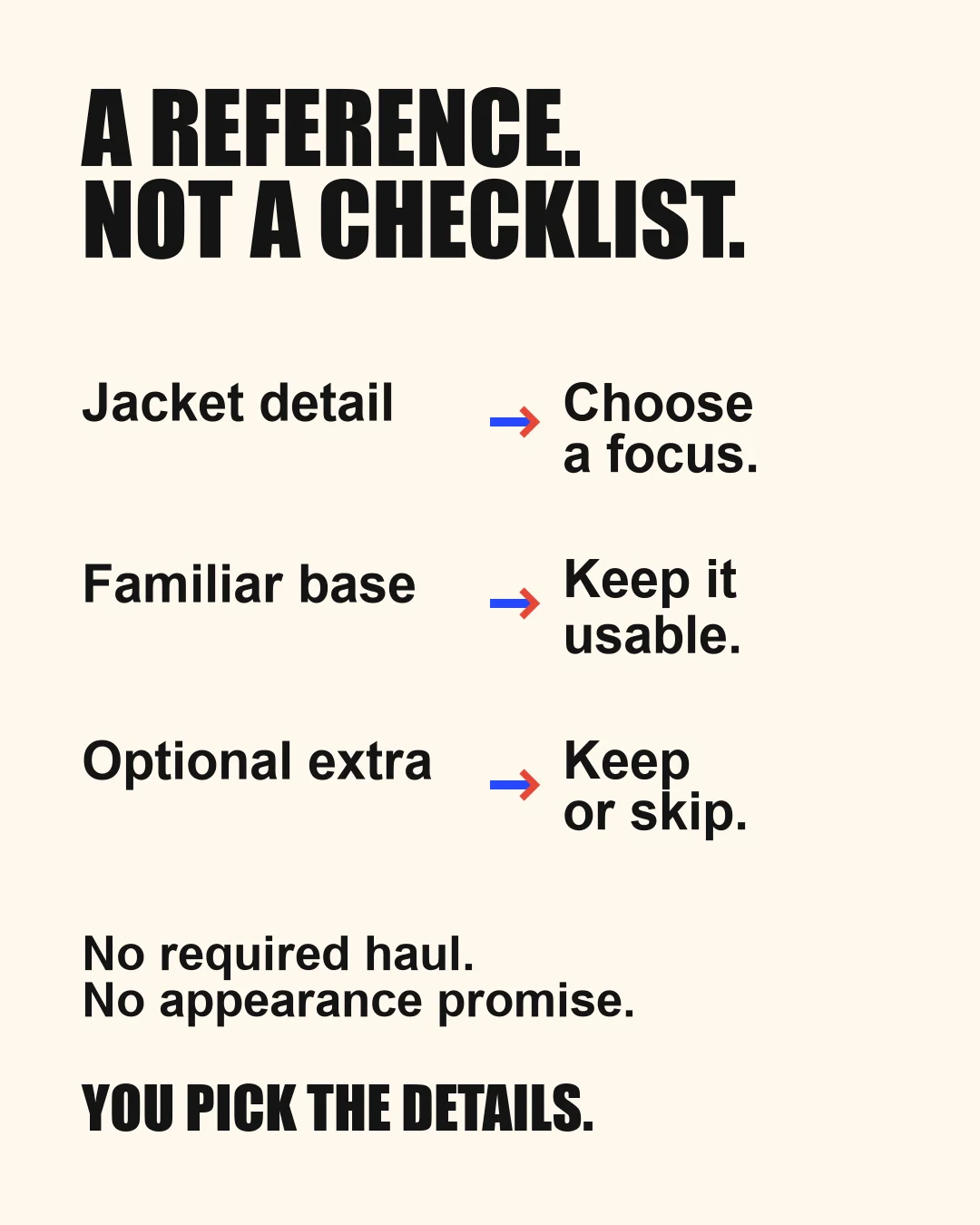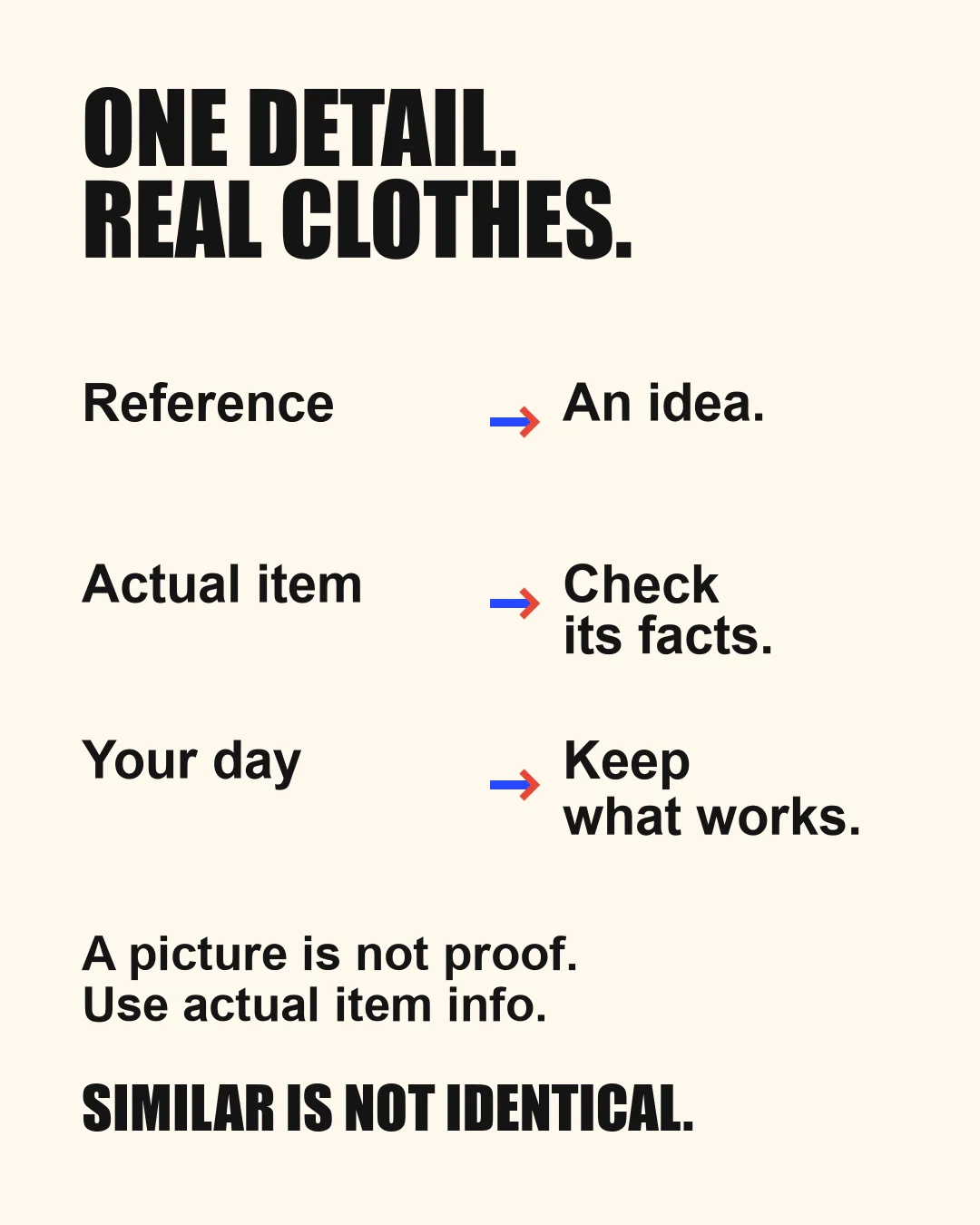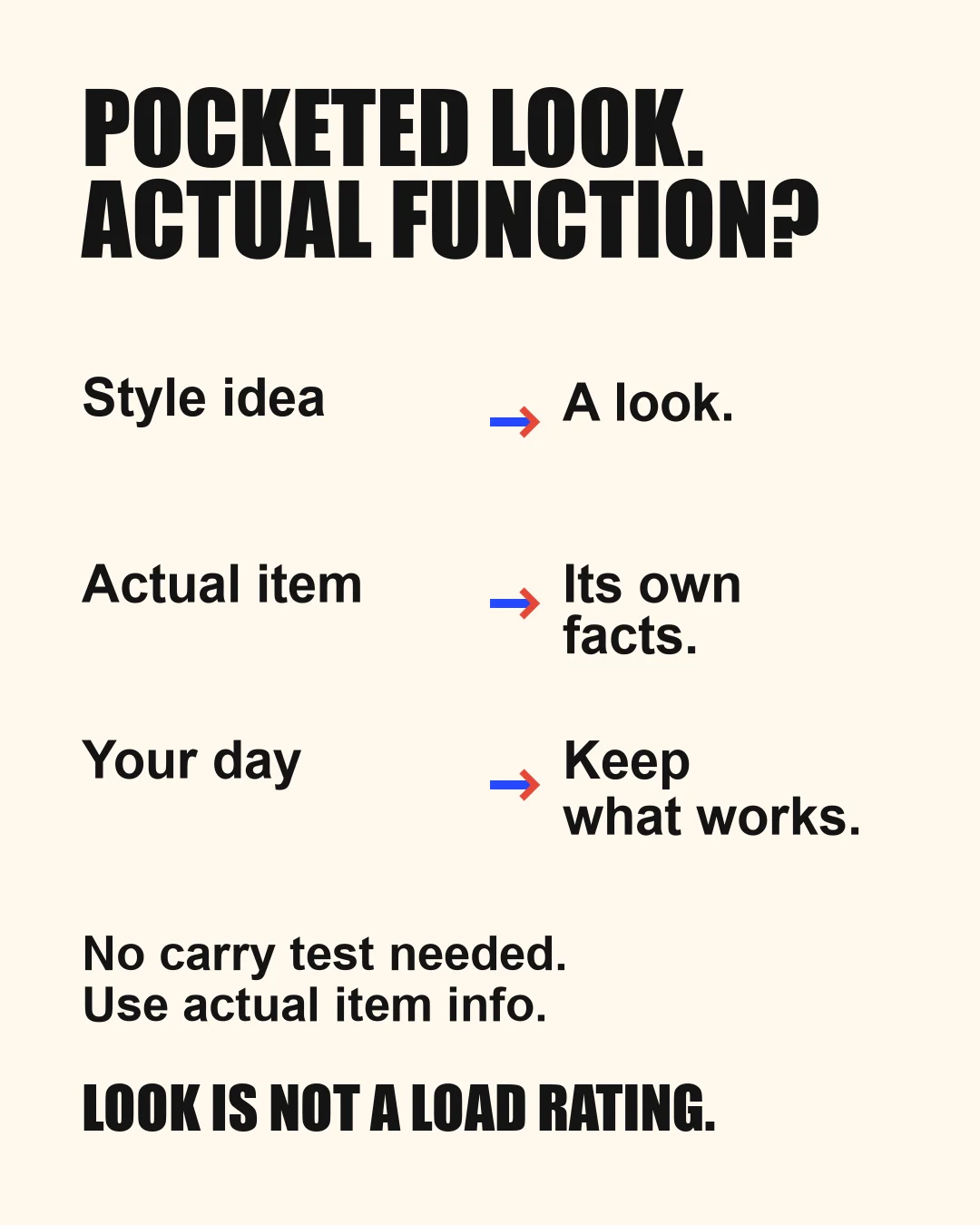
The moodboard has velvet curtains, dark flowers and a room lit for an entrance. Your invitation says dinner at a friend’s flat. Somewhere between the two, an outfit idea has started behaving like an instruction.
You can borrow the atmosphere without dressing for an event you are not attending. Begin with the real occasion, choose suitable clothes you already own, and decide whether one theatrical detail belongs in that combination. The answer can be yes, less than you first imagined, or nothing today.
Pinterest included Opera Aesthetic in its forecast for 2026, published in December 2025. Its theatrical party vocabulary supplies a reference, rather than instructions for admission to an opera house or a requirement to assemble a new wardrobe. This guide turns that distinction into ordinary clothing choices. It does not test whether a look improves confidence, attractiveness or other people’s reactions. [S1]
Who this is for
This is for someone who likes dramatic styling but wants to separate an image from the clothes their actual day requires. You do not need an opera ticket, an upcoming party or a particular body, gender, age or occupation. If you have no suitable occasion or item, there is no assignment to complete.
Ownership and preferences vary. A serviceable dark shirt may supply the detail one person wants; someone else may prefer a fuller combination. Another person may own nothing that fits the idea or simply dislike it on an ordinary day. None of those answers measures taste, status or belonging.
The starting point is functional clothing for your circumstances. Keep required coverage, access, movement, weather protection, uniform, protective clothing and fastenings. An optional decorative reference does not outrank them. Clothing choices that meet your needs are useful even when a moodboard would crop them out.
This is a nonclinical style guide. It does not diagnose an appearance concern, assess a garment professionally or offer a treatment. You can use the idea once, return to it when circumstances change, or leave it alone. There is no required frequency, deadline or appearance score.
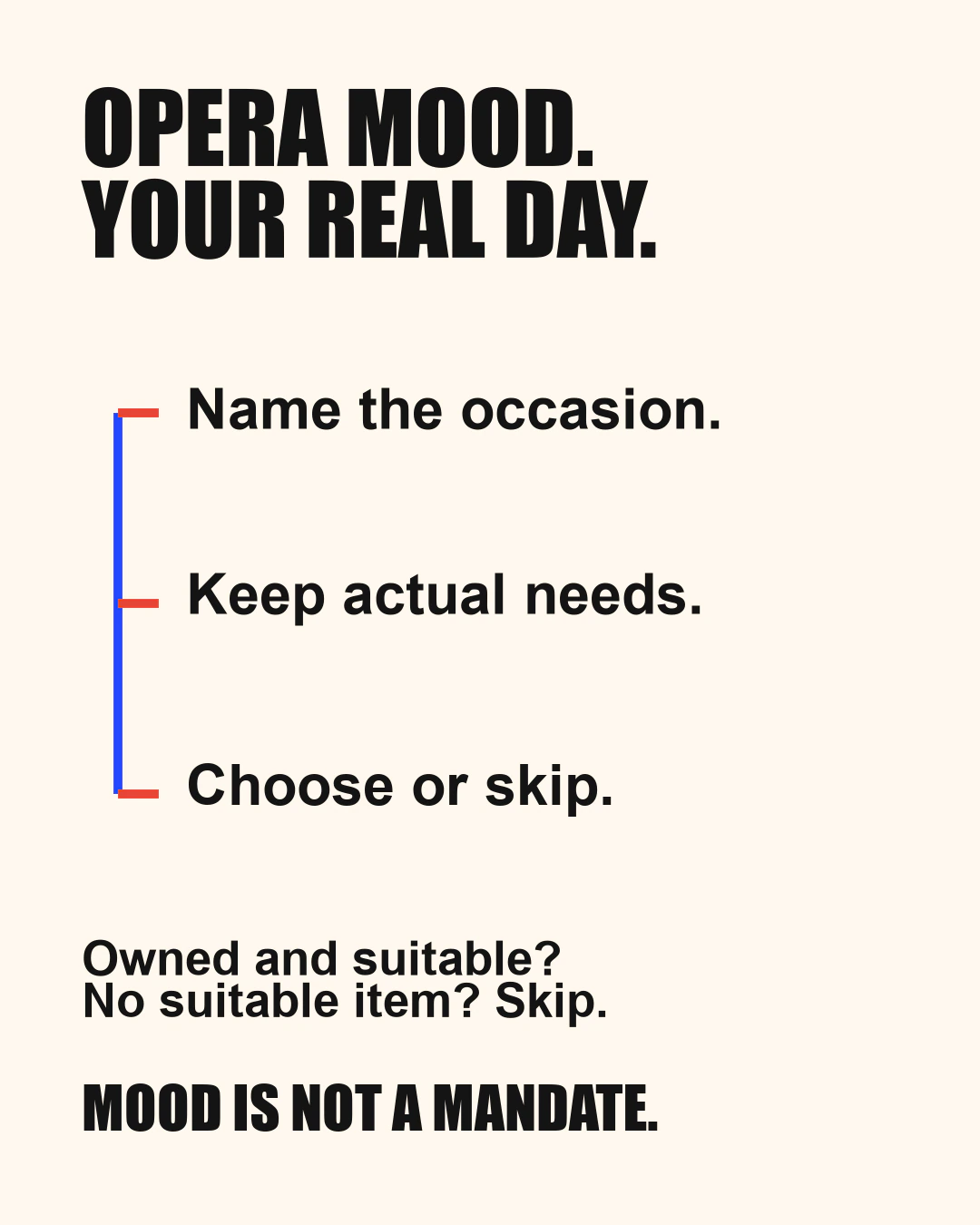
Graphic context — 01-article-hero: This original sequence separates theatrical inspiration from the actual occasion and necessary clothing functions. A suitable owned detail is optional. A dated forecast does not create an invitation requirement or prove that everyone owns an appropriate item.
Text equivalent: OPERA MOOD. YOUR REAL DAY. Name the occasion. Keep actual needs. Choose or skip. Owned and suitable? No suitable item? Skip. MOOD IS NOT A MANDATE. The rail orders ordinary choices, not measured improvement, admission requirements or a ranking of bodies. An actual invitation can itself request a theme; that request comes from the occasion. Keep unresolved requirements explicit rather than guessing from a moodboard or another venue. Essential coverage, access, movement, weather protection, uniform, protective clothing and fastenings remain necessary. No new purchase, attendance, photograph, alteration or contact is required. Four complete primary publisher documents, not independent outfit studies. Pinterest 9 December 2025 published/15 December modified commercial forecast; undated Royal Ballet and Opera first-visit guide, attributed Royal Opera House Dress Up example only with coverage/content conditions and specific-event notice, accessed 26 October 2026; WRAP 18 August 2020 page/campaign archived 31 March 2023 existing-clothes aim; undated FTC cleaning-information overview. Whole retained native bodies read, not linked full reports, policies, data, laws or cases. No current measured growth, percentages, demographic prescription, tested routine benefit, clinical confidence, career, saving, environmental or legal outcome. No universal venue policy, entry guarantee, garment certificate or universal wardrobe sufficiency.
Before you start
Separate three questions: what does the reference suggest, what does the occasion require, and what can your actual clothes do? A photograph may answer the first. It cannot settle the other two.
In its dated forecast, Pinterest associates Opera Aesthetic with theatrical party imagery, including dramatic drapery. That is commercial platform vocabulary. This article does not adopt its search figures, demographic framing or promotional material, and the forecast is not a measurement of current October 2026 demand. The linked full report and underlying data were not independently examined here. [S1]
An actual venue’s own explanation can be much narrower than the image of that venue. The Royal Ballet and Opera’s first-visit guide says regular Royal Opera House performances allow flexible clothing choices. It also states coverage and clothing-content conditions, and says events with a dress code will have that information at purchase and on the ticket. This is an attributed Royal Opera House example, accessed on 26 October 2026; it does not establish rules for another venue, private invitation or particular event. [S2]
The point is not to replace one blanket rule with another. Someone who enjoys dressing up may do so, while someone using an ordinary suitable combination need not copy a theatrical reference. A venue example is information about that venue, rather than a promise of entry or a statement about every occasion.
For a wardrobe-first starting point, WRAP’s archived Love Your Clothes campaign described an aim of valuing and making use of existing clothes. The page is dated August 2020 and explicitly says the campaign was archived in March 2023. Its aim supports this editorial direction; it is not evidence that every wardrobe is sufficient, that the campaign is currently active, or that this exercise produces a measured saving or environmental benefit. [S3]
Check information about the actual item as well. The FTC’s apparel overview describes care information in relation to cleaning. Such information does not tell you whether a combination fits your occasion, feels comfortable or permits the movement you need. This guide supplies no washing, pressing, repair or alteration method and makes no legal claim from that overview. [S4]
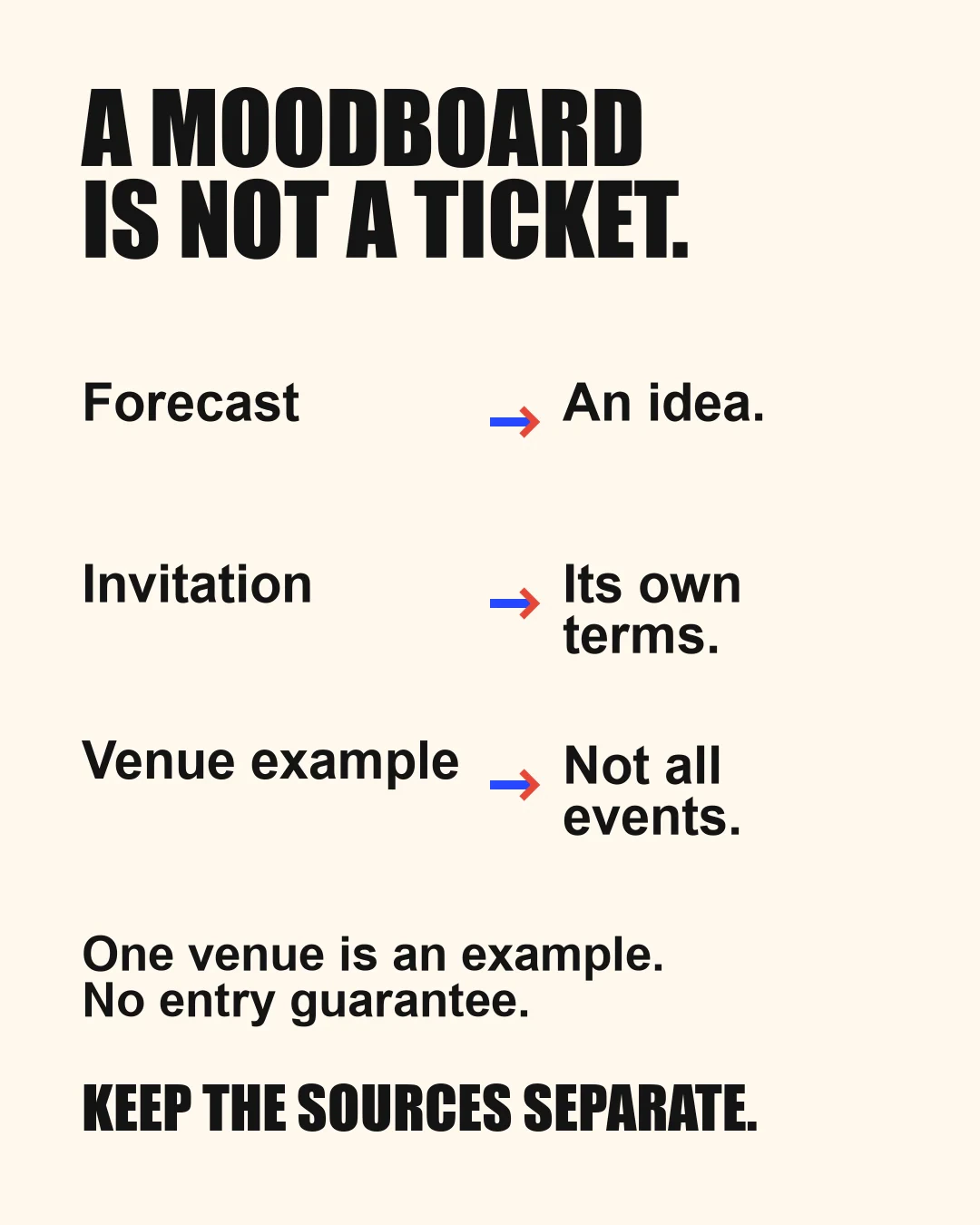
Graphic context — 02-feature-explainer: These paired source roles distinguish a dated platform forecast, actual invitation information and one venue example. They do not transfer the Royal Opera House explanation to another venue or event, and none supplies a guarantee of entry.
Text equivalent: A MOODBOARD IS NOT A TICKET. Forecast An idea. Invitation Its own terms. Venue example Not all events. One venue is an example. No entry guarantee. KEEP THE SOURCES SEPARATE. Pinterest supplies dated Opera Aesthetic vocabulary. Royal Ballet and Opera explains flexible clothing for regular Royal Opera House performances with stated coverage and clothing-content conditions, plus a notice that specific events with dress codes are identified at purchase and on the ticket. That attributed undated example was accessed on 26 October 2026. It is not all-venue policy, legal entitlement or confirmation about an actual invitation. No ticket, account or contact action is part of this guide. Four complete primary publisher documents, not independent outfit studies. Pinterest 9 December 2025 published/15 December modified commercial forecast; undated Royal Ballet and Opera first-visit guide, attributed Royal Opera House Dress Up example only with coverage/content conditions and specific-event notice, accessed 26 October 2026; WRAP 18 August 2020 page/campaign archived 31 March 2023 existing-clothes aim; undated FTC cleaning-information overview. Whole retained native bodies read, not linked full reports, policies, data, laws or cases. No current measured growth, percentages, demographic prescription, tested routine benefit, clinical confidence, career, saving, environmental or legal outcome. No universal venue policy, entry guarantee, garment certificate or universal wardrobe sufficiency.
Actions in order
Start with the actual invitation
Name the occasion in plain words before naming the aesthetic: an ordinary meal, a performance you already plan to attend, a celebration with stated clothing expectations, or an everyday outfit. Include the activities around it, such as travel, sitting, walking and the weather you expect to encounter.
Use the occasion information you actually have. Keep a stated requirement distinct from a decorative suggestion or your own imagined version of the event. The word opera on a moodboard does not turn a casual invitation into a formal one, and an understated reference does not erase an actual clothing requirement.
An actual invitation can itself request a theatrical theme. In that case, the request comes from the occasion, not from this forecast. If important requirements remain unclear, do not guess from a moodboard or another venue’s example. Leave the uncertainty explicit; this guide cannot confirm what an invitation means or promise that an outfit will be accepted.
This is a way to describe your own decision, not an exercise in predicting everyone else’s clothes. You do not need to investigate guests, compare bodies, post an outfit or seek an audience rating. Clothing can suit an occasion without proving that you have decoded a whole group.
Name the part you actually like
Choose a descriptive feature: a dark colour already in your wardrobe, an existing draped shape, or a sense of theatrical contrast between familiar pieces. You are identifying what interests you, not extracting a compulsory checklist from the forecast.
Keep the description separate from construction. An image suggesting a flowing shape is not a reason to loosen a necessary fastening, tie fabric in a new way or modify an item. Use an existing garment in its ordinary intended form. No cutting, sewing, pinning, new padding, fragile heirloom conversion or improvised structural change is part of this guide.
Starting with one feature can make the choice easier to explain. It is not a rule against several details. If you already enjoy a fuller suitable combination, you do not need to remove things to pass an invented minimalism test.
Choose an actual owned option
Look for a serviceable item you already understand and would ordinarily consider for the occasion. The reference may be useful even when the item is not an exact visual match. A familiar shirt can suggest a mood without being the costume, fabric or construction shown in a photograph.
Do not assume an item is suitable because it looks expensive, dark, dramatic or similar to a reference. Read the information that belongs to that particular item. Existing wear, condition, normal use and your own needs matter. If an important uncertainty remains, choose something else rather than experimenting on the garment or treating an image as an inspection.
Having no suitable option is a complete answer. You can keep the reference as an idea without turning the gap into a shopping list. This exercise does not recommend a retailer, product, membership, ticket or paid service.
Keep the ordinary clothing useful
Place the optional detail within a familiar combination suitable for the occasion. Consider ordinary sitting, travelling and movement, together with necessary coverage, access and protection. The aim is a usable choice, rather than demonstrating that a textile can survive a new use.
Keep a needed coat, opaque layer, uniform or protective item even if it obscures the dramatic feature. A necessary fastening still needs to do its job. If the optional detail interferes with ordinary use, changing or omitting it is preferable to sacrificing the function you needed in the first place.
You can make this decision without a photograph. If you choose a private reference photo, remember that lighting, pose, lens, distance and editing affect appearance. A picture is not a fitting, a comfort assessment or proof of what the clothes will look like in every setting. No public upload or before-and-after comparison is required.
Keep, change or skip
Finish with a descriptive decision: this existing detail works with the combination I need; a different familiar option is more suitable; or the idea does not fit today. A short explanation can be enough. Repeated checking is not the goal.
Nothing needs to become more dramatic as proof that you tried. You can stop when the outfit serves its actual purpose, even if the connection to the forecast is subtle or invisible to someone else. The reference belongs to your choice; it does not need to become a performance for other people.
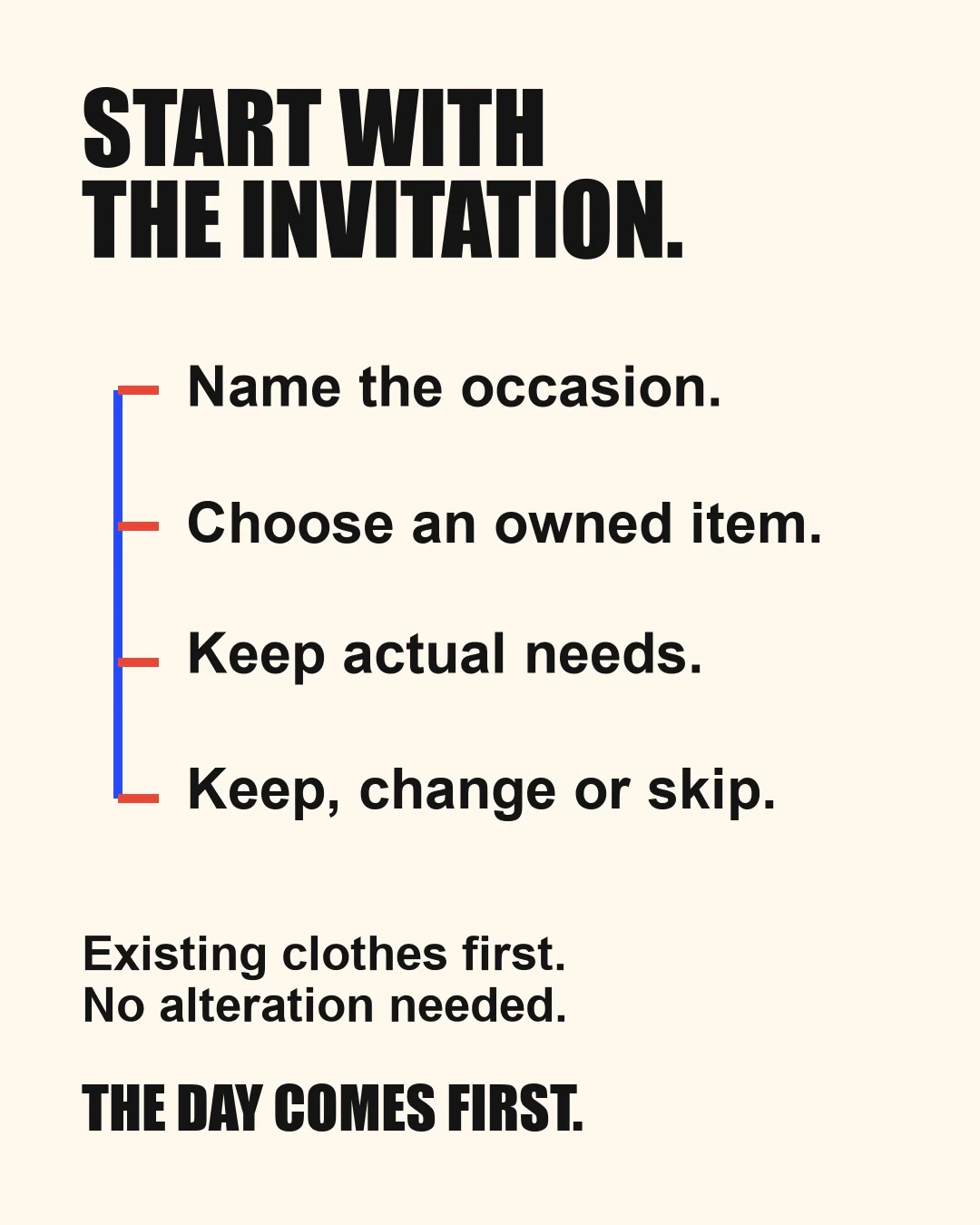
Graphic context — 03-routine-infographic: This original editorial sequence starts with actual occasion information, then a suitable existing item, essential clothing functions and a descriptive choice. It is an optional ordinary clothing exercise, rather than an effectiveness trial, garment examination or compulsory checklist.
Text equivalent: START WITH THE INVITATION. Name the occasion. Choose an owned item. Keep actual needs. Keep, change or skip. Existing clothes first. No alteration needed. THE DAY COMES FIRST. Consider the ordinary travel, sitting, movement, coverage, access and weather needs of the actual day. Use an item in its normal intended form. Do not stress-test, cut, sew, pin, alter, convert fragile heirlooms or loosen a necessary fastening to copy a reference. Stop or choose something else if an item is unsuitable, damaged, uncomfortable or importantly uncertain. No appearance score, timer, saving, confidence, clinical or social result is encoded. Four complete primary publisher documents, not independent outfit studies. Pinterest 9 December 2025 published/15 December modified commercial forecast; undated Royal Ballet and Opera first-visit guide, attributed Royal Opera House Dress Up example only with coverage/content conditions and specific-event notice, accessed 26 October 2026; WRAP 18 August 2020 page/campaign archived 31 March 2023 existing-clothes aim; undated FTC cleaning-information overview. Whole retained native bodies read, not linked full reports, policies, data, laws or cases. No current measured growth, percentages, demographic prescription, tested routine benefit, clinical confidence, career, saving, environmental or legal outcome. No universal venue policy, entry guarantee, garment certificate or universal wardrobe sufficiency.
A fictional dinner invitation
Imagine Avery, an invented example rather than a person observed for this article. Avery likes a theatrical reference but is going to an ordinary dinner at a friend’s home. Their familiar dark shirt and trousers suit that plan. They decide the shirt supplies enough of the mood and keep the warm coat needed for the journey.
At the destination, the outfit need not resemble a stage photograph. If the coat hides the shirt while travelling, that does not mean the idea failed. The journey is part of the actual occasion, and keeping the useful layer is a valid decision.
Now change the conditions. Avery already has a suitable fuller combination they enjoy for a celebration. Choosing several details can be equally valid; the one-feature starting point is not a universal limit. If a separate invitation states a clothing requirement, Avery needs to consider that requirement independently of either moodboard.
A third possibility matters too: Avery has no suitable item, or the available one is uncertain or uncomfortable. They choose familiar clothes and skip the aesthetic. This example does not predict entry, compliments, confidence, spending or any other outcome. It illustrates different choices under different conditions.
Graphic context — 04-practical-support: These original invented alternatives distinguish a liked suitable detail, a necessary coat and the absence of a suitable item. They are not observations, ranked outfit outcomes or equal benefits. In the fictional Avery example, a needed coat stays even when it hides the theatrical detail.
Text equivalent: DRAMA OPTIONAL. FUNCTION FIRST. Liked + suitable Keep if liked. Needed coat Keep that coat. No suitable item Skip the idea. Invented alternatives. No wardrobe guarantee. KEEP THE CLOTHING USEFUL. Several suitable details can also be valid; the one-feature starting point is a convenience rather than compulsory minimalism. A necessary coat, opaque layer, uniform, protection or fastening is retained. Having no suitable item is a complete answer and does not create a shopping obligation. A different actual invitation must be considered on its own terms. None of the alternatives predicts entry, compliments, confidence, spending or environmental effects. Four complete primary publisher documents, not independent outfit studies. Pinterest 9 December 2025 published/15 December modified commercial forecast; undated Royal Ballet and Opera first-visit guide, attributed Royal Opera House Dress Up example only with coverage/content conditions and specific-event notice, accessed 26 October 2026; WRAP 18 August 2020 page/campaign archived 31 March 2023 existing-clothes aim; undated FTC cleaning-information overview. Whole retained native bodies read, not linked full reports, policies, data, laws or cases. No current measured growth, percentages, demographic prescription, tested routine benefit, clinical confidence, career, saving, environmental or legal outcome. No universal venue policy, entry guarantee, garment certificate or universal wardrobe sufficiency.
Costs, risks and stop criteria
Starting with owned clothing removes a required new purchase from this exercise when a suitable option exists. It does not make the clothes free in every sense. Your time, prior purchases, normal care and any separately chosen professional advice can involve resources. No fixed price, timer or amount saved is promised.
Stop using an item if it is damaged, unsuitable, uncomfortable or uncertain in a way that matters to its ordinary use. Do not force a combination, stress-test delicate material or improvise a remedy to preserve a reference. Information from the actual maker or an appropriate garment professional may be useful separately; no such professional has approved the items or combinations discussed here.
Keep essential clothing functions first. This article does not replace a uniform, protective clothing requirement, established access need or existing instructions for an activity. Decorative ambition is optional. A feature that makes ordinary movement, coverage or necessary access difficult can be left out.
The decision can also become unhelpful if it turns into repeated appearance checking or pressure to buy a complete identity. Put the exercise aside if that happens. If appearance worries persist and interfere with everyday life, suitable qualified support is more appropriate than extending a wardrobe exercise. This is a boundary, not a diagnosis or treatment plan.
There is no compulsory attendance or social contact here. You do not have to arrange an event, disclose a personal concern, obtain reactions from strangers or contact a creator to validate the choice. Your existing boundaries remain relevant.
How to assess the result
Ask whether you can describe the actual occasion, the clothes you selected and the optional feature you kept or omitted. Also ask whether the necessary functions of the outfit remain intact. Those are descriptive questions about a decision, not tests of attractiveness, confidence or status.
Several outcomes count as useful answers: one suitable detail; several details you already like; a familiar combination with the reference barely visible; or no aesthetic choice today. There is no score for resemblance, price or how many people recognise the label.
Revisit the decision if the occasion, weather, item condition or your preferences change. You do not need a new outfit each time a trend name appears. Equally, owning something does not oblige you to use it. The practical result is a choice you can explain in relation to the day you actually have.
The sources below have different roles. A forecast supplies vocabulary, a venue describes its own visitor context, an archived campaign states an aim, and a regulator overview explains cleaning information. None is an experiment showing that this original sequence improves an outfit or produces a clinical, social, financial or environmental result. The fictional examples and ordered choices are editorial applications within those limits.
Myth or Real?

Claim
Social paraphrase: Opera always requires formal dress.
Verdict
FALSE
Facts
Use information for the actual occasion. The Royal Opera House regular-performance guide gives a flexible example with conditions.
FALSE rejects always-formal, not every dress code or actual event requirement. One venue is an example; specific events can differ.
An archived original r/opera question asks about the Royal Opera House dress code. It discovers a practical concern. This card explicitly reframes a universal always-formal claim for editorial examination; the questioner is not quoted or represented as holding that belief. The Royal Ballet and Opera first-visit guide supplies a counterexample: regular Royal Opera House performances allow flexible clothing choices. Its stated conditions require being fully clothed, covering feet and torso, and no offensive language or imagery on clothing. The guide says events with a dress code are identified at purchase and on the ticket. This undated venue example was accessed on 26 October 2026. It does not establish policy for all venues or events, remove actual requirements, promise entry or create a legal entitlement. Pinterest’s forecast was published in December 2025 and supplies theatrical inspiration, not instructions for an actual occasion. FALSE rejects the universal always-formal claim; it does not mean formal clothing is never requested, that dressing up is wrong, or that one venue applies everywhere. Use actual occasion information and leave important uncertainty explicit. No ticket purchase, attendance, account action or compulsory contact is required. Forum comments, anecdotes, votes and other-venue assertions are excluded from evidence and recommendations. No current growth, tested styling benefit, clinical outcome or professional garment assessment is claimed.
Takeaway
Use actual occasion information. Keep uncertainty explicit; do not guess from a reference or another venue.
Sources
Claim discussion: Archived original RoyalOperaHouse dresscode question.
Evidence: Your First Visit to the Ballet or Opera; Pinterest Predicts: forecast for2026, OperaAesthetic.
Checked 2026-10-26. Scope: Nonclinical clothing choices. Royal Opera House example only, with coverage/content conditions and specific-event notice. No universal venue policy, entry guarantee, legal entitlement, ticket/account/contact action or purchase/attendance obligation.


Sources
- S1 — Pinterest, forecast for 2026. Published 9 December 2025 and modified 15 December 2025 in the retained page metadata. The whole original native body was read, including the Opera Aesthetic entry. Commercial platform forecast context; linked full report and underlying data were not read or reproduced. No current growth, search percentage or effectiveness claim is adopted. Pinterest forecast.
- S2 — Royal Ballet and Opera, first-visit guide. Undated page, accessed 26 October 2026. The whole retained main body was read; only its Dress Up section supplies the attributed Royal Opera House clothing example, with its stated conditions and specific-event notice. Other visitor topics and linked policies are outside this article’s evidence. This is venue information with commercial institutional context, not universal policy, endorsement or guaranteed entry. First-visit guide.
- S3 — WRAP, Love Your Clothes. Page dated 18 August 2020; campaign explicitly archived on 31 March 2023. Whole retained native body read. Campaign and partner context, used for its existing-clothes aim only; linked reports and data were not examined. No active-programme, universal wardrobe, saving or environmental result is claimed. Archived campaign description.
- S4 — FTC, Apparel and Labeling. Undated overview, accessed 26 October 2026. Whole retained native body read, with linked case and news listings separated from the cleaning-information explanation used here. Underlying laws, cases and business guides were not read or applied as legal advice. No item-specific fitting, care protocol or professional approval is supplied. Apparel overview.
No sponsorship, affiliate links, product ranking, ticket recommendation or qualified clinical or garment review is claimed. The four publisher roles are not four independent outfit studies.
FAQ
Common questions
Does opera always require formal dress?
The Royal Opera House first-visit guide gives a flexible regular-performance example with stated coverage and clothing-content conditions, and says specific-event dress codes are identified separately. That is one venue example, not a rule for every opera event or a promise of entry.
Does the Opera Aesthetic forecast set my dress code?
The dated forecast supplies inspiration. Actual invitation information sets its own expectations and can itself request a theme. Keep unclear requirements explicit rather than guessing from a moodboard or another venue.
Do I need new clothes or an event to try the idea?
No purchase or attendance is required. This optional exercise starts with suitable clothes already owned; a liked feature, several suitable details, or skipping the idea are all possible choices.
Topic hubs
Tags