A lining can be the most interesting part of a jacket. That does not automatically make it the other outside. The useful distinction is between liking what you see and already knowing that an item is intended to be worn that way.
Reversible clothing can offer a visual choice within one garment. It does not create a second set of needs for your day, cancel the item’s instructions, or require you to use both sides. Start with an actual activity and an understood suitable option. If the important information is missing, leaving the optional idea alone is a complete decision.
Who this is for
This guide is for ordinary interest in a reversible item you already own, or in the word itself. You might have a familiar jacket with two intended outward faces, another reversible garment, or no such item. It is not a buying guide, a garment inspection, or an instruction to turn an unfamiliar piece inside out to see what happens.
One side, both sides at different times, a different outfit, and no change are all possible choices. None is a test of creativity, resourcefulness or commitment to a style. There is no required gender, age, body shape, budget or identity attached to the decision.
The goal is to separate a word, item-specific knowledge and the requirements of an actual day. You do not need a new photograph, measurement, comparison, purchase, conversation or account action. If you do not have a suitable understood option, the guide does not declare your wardrobe incomplete.
What the clothing word tells you
Cambridge’s own dictionary entry gives a clothing sense of reversible: clothing that can be worn with the inside becoming the outside. Its intermediate entry also describes wearing either side outward. Those are lexical descriptions of intended two-sided use, not evidence that a particular lining, seam or garment in front of you is suitable for that use. The entry is undated and was accessed on 26 October 2026. [S2]
The same page contains broader meanings about changing something back, examples about unrelated topics, and medical or other uses of the word. Those are not the clothing evidence here. A general dictionary definition cannot identify your item, certify its construction, provide a care method or settle its performance in either orientation.
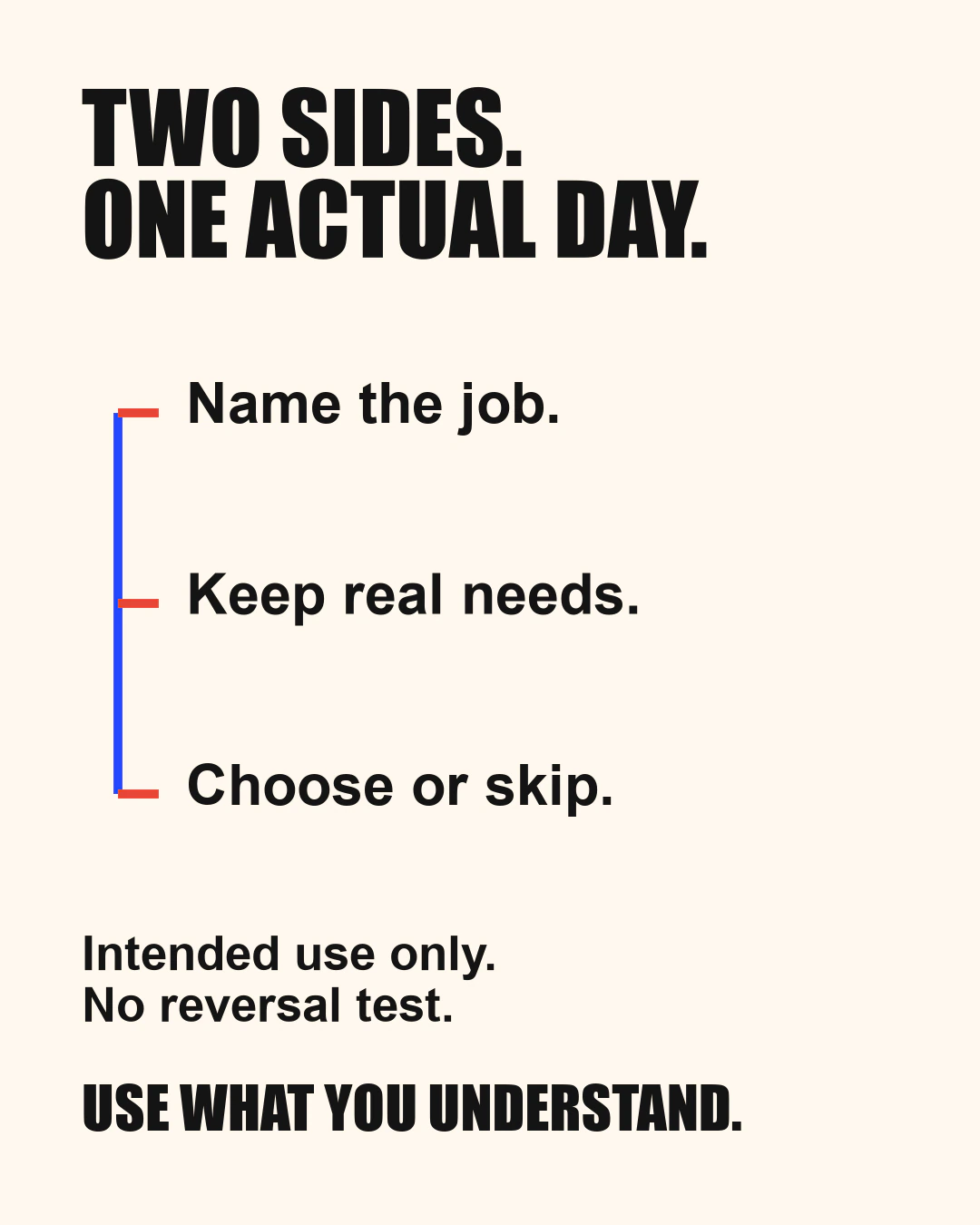
Graphic context — 01-article-hero: This original optional sequence keeps intended reversible clothing use separate from the requirements of the actual day. A familiar suitable option, another outfit, no change or skipping can remain the answer.
Text equivalent: TWO SIDES. ONE ACTUAL DAY. Name the job. Keep real needs. Choose or skip. Intended use only. No reversal test. USE WHAT YOU UNDERSTAND. Two sides refers to the dictionary clothing sense, not a finding about any lining or garment. A neat lining does not establish intended outward wear. Only already understood ordinary intended use is considered; no physical reversal experiment, seam inspection, wear trial, photograph, upload, measurement, purchase, contact, account action, new care or alteration is requested. Essential coverage, movement, access, fastening, weather layers, uniforms, protection and existing instructions or procedures remain first. Having no suitable reversible item does not establish an incomplete wardrobe, and both intended faces may be valid on suitable occasions. Four complete eligible primary publisher documents, not independent outfit studies. Cambridge own undated clothing sense only, accessed 26 October 2026; unrelated general/medical meanings, examples and corpora excluded. ASOS native body includes 13 April 2026 and Katy Seabrook’s buyer role, while the earlier web reading did not expose that dateline and no publication/modification metadata field was found. Footer year and now-live wording do not establish October availability; commercial vocabulary only, no product, urgency, quality, mood, performance or purchase recommendation. WRAP page dated 18 August 2020 records archive on 31 March 2023 and supplies an existing-clothes aim only. FTC native publication 31 October 2018 and modification 4 March 2025 supplies cleaning-information context only. Whole four eligible new native bodies/date scopes read; linked products, standards, reports, data, policies, laws, cases and physical garments were not inspected or tested. Excluded UNIQLO S1 actual403/376-character response and original fetch are preserved; no retry, proxy, login, regional fallback or access bypass. No reversible construction, care, fit, comfort, quality, performance, safety or protection certificate, universal wardrobe sufficiency, tested routine benefit or compulsory purchase, physical reversal trial, photo, contact, new care or alteration. Actual needs and established procedures remain first.
Before you start
You can like a second surface without making a claim about how the garment is meant to work. Keep that preference separate from ordinary information you already understand about your own item. A neat lining is a visual observation. Intended reversible use is a different piece of information.
Commercial use is context, not permission for every item
An ASOS Inside ASOS article by Katy Seabrook, identified in the retained native body as a Senior Assistant Buyer, uses reversible clothing vocabulary in describing a collaboration. The retained body includes a 13 April 2026 dateline. That date was not exposed in the web reading, and no publication or modification metadata field was found in the retained HTML. The footer year and the phrase now live do not establish present availability or a new October launch. [S5]
Here that page supplies an example of the issuer using the term, not an independent product assessment. Its brand history, follower figures, collection size, product links, sales urgency and statements about mood, confidence or premium status are not adopted. No item from the page is recommended, and no linked product has been read, tested or compared.
The example does not make another garment reversible. It also does not supply instructions for swimwear, tying, fastening or changing the orientation of anything you own. Product vocabulary is not a substitute for the information relevant to an actual item and its established use.
Uncertainty also runs in the other direction. Not knowing whether an item is reversible does not prove that it is not, or that its lining is faulty. This guide leaves the question unresolved; it does not authenticate a description or diagnose construction. A suitable familiar alternative can remain the choice without declaring anything defective.
Use known information without inventing a test
Begin with a familiar option whose ordinary intended use you already understand, if one is available. Do not infer reversible construction just because the inside looks finished, has a different color, or reminds you of a commercial image. No new seam inspection, pulling, stretching, fastening experiment, wear trial or care test is part of these prompts.
If an important question remains unresolved, retain that uncertainty. You may leave the optional item out and use an understood alternative. Appropriate item-specific advice can be sought separately when necessary; this guide does not require contacting a maker or seller, and it does not supply an answer on their behalf.
WRAP’s Love Your Clothes page describes an aim of helping people value and use the clothes they already had. The page is dated 18 August 2020 and says the campaign was archived on 31 March 2023. That historical aim supports considering existing options here. It does not promise that everyone owns a suitable reversible item, that the campaign is active, or that using these prompts creates a saving or environmental result. [S3]
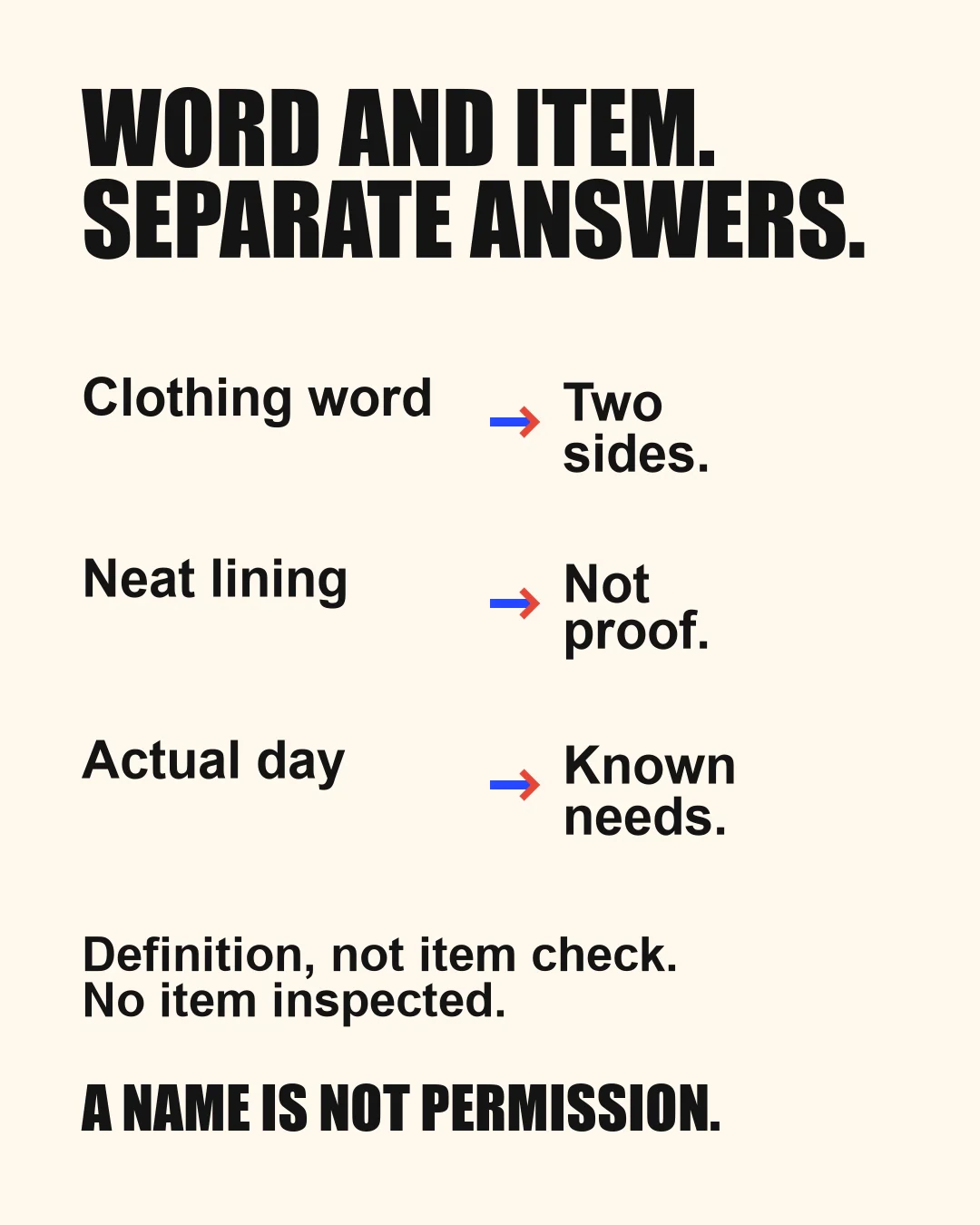
Graphic context — 02-feature-explainer: The first row summarizes Cambridge’s own clothing sense of reversible. The remaining rows are bounded editorial distinctions between a surface appearance, item-specific knowledge and actual clothing requirements.
Text equivalent: WORD AND ITEM. SEPARATE ANSWERS. Clothing word Two sides. Neat lining Not proof. Actual day Known needs. Definition, not item check. No item inspected. A NAME IS NOT PERMISSION. Cambridge describes intended two-sided clothing use; its general change-back, medical, surgery and other senses are excluded. This does not identify a particular garment, certify that any lining is an intended outside, or establish construction, material, care, fit, comfort, quality, protection or performance. The ASOS issuer article supplies separate commercial vocabulary context, not instructions or permission for another item. Unknown reversibility does not prove nonreversibility, defective construction or a faulty lining. Keep consequential unknowns unresolved without authenticating an item or inventing a physical trial. Four complete eligible primary publisher documents, not independent outfit studies. Cambridge own undated clothing sense only, accessed 26 October 2026; unrelated general/medical meanings, examples and corpora excluded. ASOS native body includes 13 April 2026 and Katy Seabrook’s buyer role, while the earlier web reading did not expose that dateline and no publication/modification metadata field was found. Footer year and now-live wording do not establish October availability; commercial vocabulary only, no product, urgency, quality, mood, performance or purchase recommendation. WRAP page dated 18 August 2020 records archive on 31 March 2023 and supplies an existing-clothes aim only. FTC native publication 31 October 2018 and modification 4 March 2025 supplies cleaning-information context only. Whole four eligible new native bodies/date scopes read; linked products, standards, reports, data, policies, laws, cases and physical garments were not inspected or tested. Excluded UNIQLO S1 actual403/376-character response and original fetch are preserved; no retry, proxy, login, regional fallback or access bypass. No reversible construction, care, fit, comfort, quality, performance, safety or protection certificate, universal wardrobe sufficiency, tested routine benefit or compulsory purchase, physical reversal trial, photo, contact, new care or alteration. Actual needs and established procedures remain first.
Actions in order
These are optional planning prompts for a clothing choice, not a practical examination of a garment. You can stop once you have a suitable ordinary answer. No timed exercise, daily rotation, photograph log or number of outfits is required.
1. Give the day one actual job description
Start with what the clothing needs to do for the activity, not with the second face you want to show. Keep required coverage, movement, access, fastening, weather layers, uniforms and established protection in view. Any existing instructions, standards, approvals or procedures remain in place.
A day might call for an understood everyday layer over an outfit already chosen. Another day may require a particular outer layer that has nothing to do with this idea. The optional appearance does not change those conditions, and a commercial description does not certify weather resistance, warmth, security or protection.
It is possible that a detail will be hidden under a necessary coat. That does not make the coat an obstacle to remove. The clothing job remains the same even when the reference is less visible.
2. Separate the word from the item-specific answer
Use two plain sentences if that helps: “Reversible describes intended two-sided clothing use,” and, “What do I already know about this item?” The first is the dictionary distinction. The second may have an answer or may reveal an important gap.
Do not fill the gap with a resemblance to another garment, a finished-looking lining, an outfit photograph or a general instruction found on a different page. Nor does the ability to move fabric into another position establish that it is intended or suitable to be worn there. This guide offers no method for authenticating a reversible claim.
Keep ordinary item information as specific as it actually is. Knowing the word does not identify a fiber, construction, condition, fit, comfort level or care need. A label or description is not a professional inspection performed by this article.
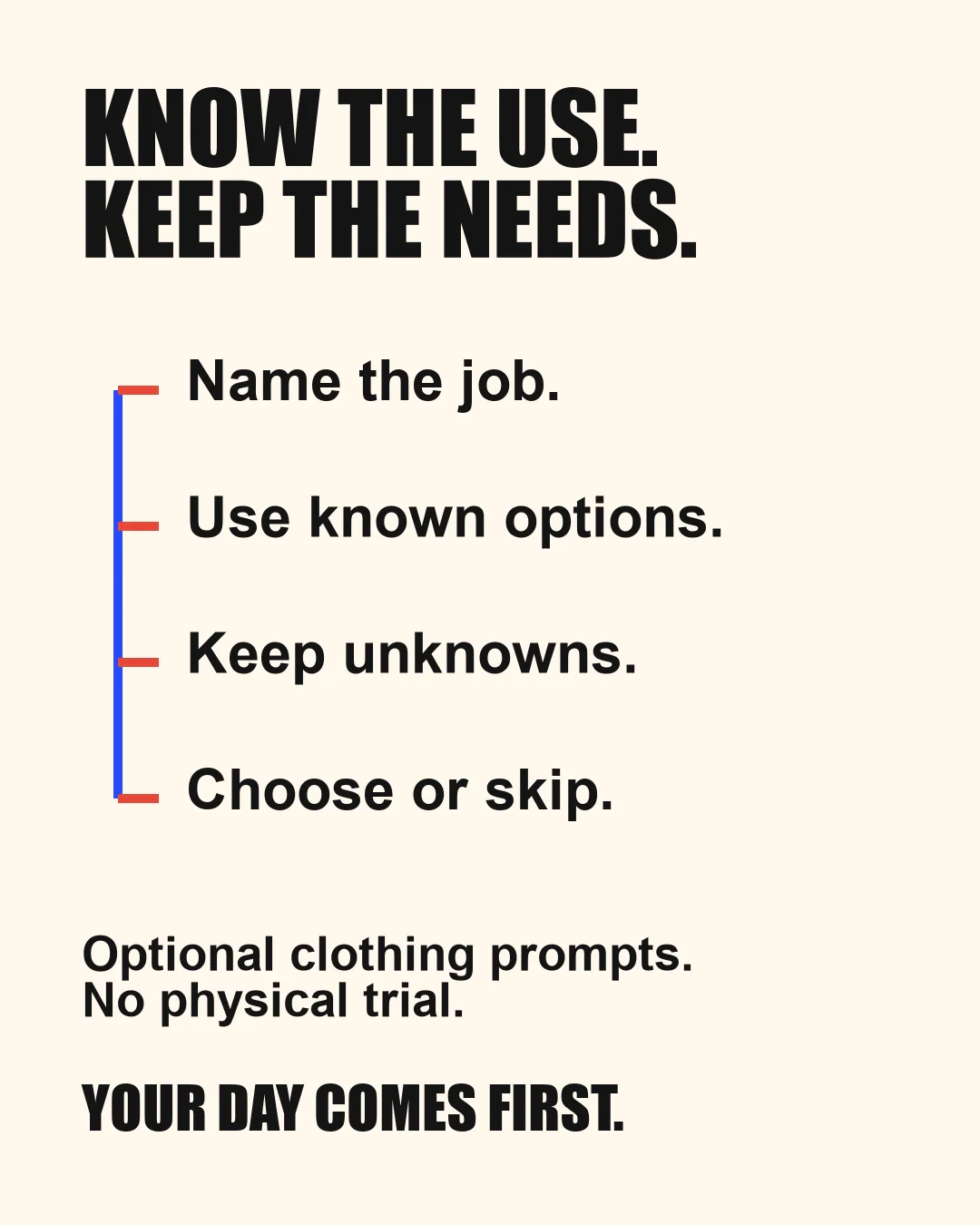
Graphic context — 03-routine-infographic: These original prompts begin with an actual activity and familiar suitable clothing whose ordinary intended use is already understood, if available. They do not create a reversal, testing, inspection or shopping task.
Text equivalent: KNOW THE USE. KEEP THE NEEDS. Name the job. Use known options. Keep unknowns. Choose or skip. Optional clothing prompts. No physical trial. YOUR DAY COMES FIRST. Keep real needs means preserve coverage, movement, access, fastening, weather, uniforms, protection and established instructions or procedures even when another surface would be less visible. Ordinary familiarity does not permanently approve an item after an important change, and no required review is waived. An important unresolved question may mean leaving the optional idea alone and using an understood alternative. Separate appropriate item-specific advice remains available when necessary, without a compulsory contact. No timer, count, rotation, savings estimate, environmental result, legal entitlement or measured benefit is claimed. Four complete eligible primary publisher documents, not independent outfit studies. Cambridge own undated clothing sense only, accessed 26 October 2026; unrelated general/medical meanings, examples and corpora excluded. ASOS native body includes 13 April 2026 and Katy Seabrook’s buyer role, while the earlier web reading did not expose that dateline and no publication/modification metadata field was found. Footer year and now-live wording do not establish October availability; commercial vocabulary only, no product, urgency, quality, mood, performance or purchase recommendation. WRAP page dated 18 August 2020 records archive on 31 March 2023 and supplies an existing-clothes aim only. FTC native publication 31 October 2018 and modification 4 March 2025 supplies cleaning-information context only. Whole four eligible new native bodies/date scopes read; linked products, standards, reports, data, policies, laws, cases and physical garments were not inspected or tested. Excluded UNIQLO S1 actual403/376-character response and original fetch are preserved; no retry, proxy, login, regional fallback or access bypass. No reversible construction, care, fit, comfort, quality, performance, safety or protection certificate, universal wardrobe sufficiency, tested routine benefit or compulsory purchase, physical reversal trial, photo, contact, new care or alteration. Actual needs and established procedures remain first.
3. Consider only an already understood use
Where you have a familiar suitable reversible item and understand its established use, you can consider the appearance you prefer for the occasion. You are not required to demonstrate both sides, change halfway through a day, or find a second event to justify the feature.
If you understand only one relevant use, do not promote the other orientation to an approved option because the word sounds broad. Leave that question where it is. A different understood garment or an unchanged outfit remains a valid answer, without a new physical trial.
Optional styling also does not override a genuine occasion requirement. A particular color, coverage requirement or uniform can remain important even when another face is available. The guide gives no universal rule that two faces are interchangeable for every activity.
4. Use a fictional example to keep the alternatives clear
Teo is an invented example, not an observed person, participant or customer. Teo has a familiar reversible everyday layer whose ordinary intended use is already understood. For an ordinary visit, one appearance is preferred. Teo keeps the rest of the suitable outfit and a necessary weather layer; there is no need to show the alternative face to anyone.
In a different version, a jacket has an appealing lining but Teo does not know whether it is intended for outward wear. The lining is not treated as permission. Teo leaves that optional idea out instead of reversing the jacket experimentally, modifying a seam or guessing from another item.
A third version leaves the item as it normally is because that is the understood option for the actual occasion. A fourth version uses a different familiar outfit because there is no suitable reversible item. None of these versions demonstrates typical fit, performance, comfort or an amount of money saved.
There is also a valid counterexample to unnecessary restraint: if both intended uses are already understood and suitable for their respective circumstances, choosing them on different occasions is not forbidden by this guide. The boundary is unsupported inference and unmet requirements, not a rule that you must always keep one face hidden.
5. End with a choice rather than an outfit quota
Describe the decision you actually made: “I used the familiar option that met today’s needs,” or, “I left the lining idea alone because an important question was unanswered.” Neither sentence certifies the item or requires a second look to make the decision worthwhile.
Two outward appearances do not become two separate garments in a personal wardrobe count merely because an editorial uses that kind of language. This guide provides no counting standard or financial comparison. What matters here is a suitable choice for an activity, not maximizing a claimed number of looks.
You can keep enjoying the idea without using it today. A feature is optional information about a possible choice; it does not have to become a task you complete or a purchase you make.
Graphic context — 04-practical-support: The rows summarize invented Teo alternatives: a necessary weather layer stays, an unfamiliar lining is left unresolved, and both intended faces can be chosen on appropriate occasions when already understood and suitable.
Text equivalent: KNOWN OPTION. UNKNOWN LINING. Needed coat Keep it. Unknown use Leave it. Both faces Your choice. Invented alternatives. No item certificate. THE FEATURE IS OPTIONAL. Teo is fictional, not an observed participant, customer or item assessment. Leave it means leave the optional unfamiliar use alone, not declare the lining defective or dispose of a garment. Your choice does not override an actual occasion requirement, existing instruction or essential clothing function. Choosing one intended face, both on different suitable occasions, another familiar outfit, no change or skipping can all be valid. No compulsory minimalism, rotation or separate-garment counting standard follows. No physical reversal experiment, wear or fastening test, care change, construction change, purchase, photograph, contact, body or identity ranking is requested. Four complete eligible primary publisher documents, not independent outfit studies. Cambridge own undated clothing sense only, accessed 26 October 2026; unrelated general/medical meanings, examples and corpora excluded. ASOS native body includes 13 April 2026 and Katy Seabrook’s buyer role, while the earlier web reading did not expose that dateline and no publication/modification metadata field was found. Footer year and now-live wording do not establish October availability; commercial vocabulary only, no product, urgency, quality, mood, performance or purchase recommendation. WRAP page dated 18 August 2020 records archive on 31 March 2023 and supplies an existing-clothes aim only. FTC native publication 31 October 2018 and modification 4 March 2025 supplies cleaning-information context only. Whole four eligible new native bodies/date scopes read; linked products, standards, reports, data, policies, laws, cases and physical garments were not inspected or tested. Excluded UNIQLO S1 actual403/376-character response and original fetch are preserved; no retry, proxy, login, regional fallback or access bypass. No reversible construction, care, fit, comfort, quality, performance, safety or protection certificate, universal wardrobe sufficiency, tested routine benefit or compulsory purchase, physical reversal trial, photo, contact, new care or alteration. Actual needs and established procedures remain first.
Costs, risks and stop criteria
Considering an owned option does not require buying another one. That is not a claim that a wardrobe has no cost. Existing care, storage, past spending, available time, access to suitable clothing and any separately needed advice differ between people. There is no price, savings estimate, efficiency result or environmental calculation in these prompts.
Keep established care with the actual item
The FTC’s apparel overview explains cleaning information as a separate subject. Its retained native metadata records publication on 31 October 2018 and modification on 4 March 2025, distinct from the dates on linked cases and other listings. Here it supplies cleaning-information context only. [S4]
Reversible is not a new cleaning method. Do not transfer washing, sanitizing, pressing, drying, hanging, storage or repair advice from a dictionary example, a retailer’s other item, or a similarly finished lining. This guide supplies no new care schedule, reversal protocol or alteration procedure. Relevant existing instructions and established procedures remain first.
The linked laws, cases and business guides have not been read or applied as personal legal advice. Nothing here establishes a right, refund, deadline, product certification or performance entitlement.
Stop when the optional idea changes something essential
Leave out a choice that is unfamiliar, uncomfortable, damaged or unsuitable for the activity. Do not compromise required coverage, movement, access, fastening, weather needs, a uniform or protection to show another surface. If a consequential uncertainty requires appropriate advice or an established review, these prompts do not replace it.
No seam removal, label cutting, sewing, pinning, trimming or construction change is part of the guide. No new fit, fastening, loading, stress, material or wear experiment is requested. The task can stop at planning, with no change made to any garment.
An item’s ordinary familiarity is not permanent approval after a relevant change in its condition, the activity or an applicable requirement. Keep the changed question explicit and retain any required review. There is no requirement to make a second orientation work simply because a feature exists.
Keep photographs and personal judgments within their limits
Lighting, pose, lens, distance and editing can change the appearance of a lining, fastening or surface. A photograph cannot diagnose a person or certify an item’s reversible construction, condition, fit, comfort, care needs, safety or protective performance. No new image, upload, body measurement or comparison is needed.
Avoid turning this choice into a judgment about another person’s taste, resourcefulness, identity or spending. If appearance checking is interfering persistently with ordinary life or causing distress, step away from the optional styling task and seek suitable qualified support. This nonclinical guide provides no diagnosis, treatment or textile professional approval.
How to assess the result
You can assess the planning result by whether you can state the actual activity, the relevant item knowledge, an important unknown if there was one, and the option you chose. The answer can be unchanged clothing, an understood reversible use, a different outfit or skipping the reference.
There is no benefit score, ideal rotation or required number of looks. The sources contribute a dictionary clothing sense, an issuer’s commercial vocabulary, an archived campaign aim and a cleaning-information overview. They are four publisher roles, not four garment trials or proof that this routine improves confidence, comfort, spending, environmental impact or daily performance.
A useful second side can remain useful without becoming compulsory. A lining can remain attractive without becoming an outside. Keep the distinction specific, let necessary clothing stay necessary, and choose for the day you actually have.
Myth or Real?

Claim
Social paraphrase: Reversible clothing just means clothing with a lining.
Verdict
FALSE
Facts
Cambridge clothing sense describes intended wear with either side outward, rather than merely having a lining.
Word meaning only. This identifies no item and does not establish that a particular lining is reversible, nonreversible or faulty.
The original archived sewing question asks about lining and reversible clothing and already distinguishes them. It supplies discovery only. This card editorially reframes a word-meaning proposition, not a quote or false belief attributed to the author. Comments, techniques, linked patterns, brands, fabric claims, anecdotes and votes are excluded. Cambridge’s own undated clothing sense describes intended either-side-out wear, not merely the presence of a lining. It does not identify a garment or certify its construction, care, fit, comfort, quality, protection or performance. ASOS supplies separate commercial vocabulary context. Its retained native body includes13April2026, absent from the earlier web view; no publication/modification metadata field was found. Footer year and now-live wording do not establish present availability. Products, figures, urgency and outcome claims are excluded. Both eligible bodies were read in full, accessed26October2026; excluded UNIQLO S1actual403 remains excluded, not evidence. Two publisher roles are not independent trials. FALSE rejects merely-lined as the clothing definition, not every lined item’s reversibility or actual suitability. Unknown reversibility does not prove a faulty lining. Existing item instructions, actual clothing needs and required procedures remain first. No physical reversal experiment, inspection, sewing, wear trial, photo, contact, purchase, new care or alteration is requested.
Takeaway
Keep intended use and lining appearance separate; leave important unknowns explicit without a physical trial.
Sources
Claim discussion: Original lining versus reversible question, editorial reframe.
Evidence: Meaning of reversible in English; Rip Curl x Farm Rio – now live on ASOS.
Checked 2026-10-26. Scope: Nonclinical clothing-definition distinction, not garment authentication, construction/care/fit/comfort/quality/performance/safety certificate or reversal instruction. No physical test/photo/contact/purchase/new care.

Sources
- S2 — Cambridge Dictionary, Meaning of reversible in English. Undated entry, accessed 26 October 2026. Own clothing sense only; general, medical and other senses, examples, corpora and interface material excluded. https://dictionary.cambridge.org/us/dictionary/english/reversible
- S3 — WRAP, Love Your Clothes. Page dated 18 August 2020; campaign archived 31 March 2023. Historical existing-clothes aim only; statistics and underlying reports not adopted. https://www.wrap.ngo/resources/guide/textiles/love-your-clothes
- S4 — FTC, Apparel and Labeling. Native publication 31 October 2018; modification 4 March 2025. Cleaning-information overview only; no linked law, case or business-guide interpretation. https://www.ftc.gov/news-events/topics/tools-consumers/apparel-labeling
- S5 — ASOS plc, Katy Seabrook, Rip Curl x Farm Rio – now live on ASOS. Retained native body dated 13 April 2026; no publication or modification metadata field found. Commercial use of reversible-clothing vocabulary only, accessed 26 October 2026. Products, figures, urgency and outcome claims excluded. https://www.asosplc.com/inside-asos/rip-curl-x-farm-rio-now-live-on-asos/
FAQ
Common questions
Does a neat lining make a garment reversible?
A lining appearance alone does not establish intended reversible use. Cambridge describes the clothing sense as intended either-side-out wear. This guide identifies no particular item and leaves consequential unknowns explicit.
Do I need to turn something inside out to test it?
No physical reversal experiment, inspection, wear trial or construction change is part of these prompts. Consider only ordinary intended uses already understood for a familiar suitable item, or leave the optional idea alone.
Must I use both sides?
No rotation, outfit quota or counting standard is imposed. One intended face, both on different appropriate occasions, another outfit, no change or skipping can all be valid while actual requirements remain first.
Topic hubs
Tags